Biomedical Sciences Division (BioMed)
Decoding Life, Advancing Health
Decoding Life, Advancing Health

The Biomedical Sciences (BioMed) division at KAUST brings together world-class science, technology, and education to address today’s most pressing health challenges. Through interdisciplinary research, advanced computational and digital tools, and strong partnerships across the healthcare ecosystem, BioMed connects discovery with real-world impact - supporting national priorities while contributing to global advances in health and disease.
BioMed will improve health in Saudi Arabia and beyond by harnessing cutting edge science and technology to investigate, educate on, and translate discoveries that make people’s lives better.
BioMed applies the scientific and technical expertise of KAUST by interdisciplinary collaboration and intersectional partnerships both within and beyond the university, leveraging and boosting the efforts of the health care ecosystem to understand, prevent, and treat disease.
We will encourage, educate, and promote expertise in the study and taming of disease to help engineer a healthier life for all, using knowledge generation with widespread deployment of health-translated advances underpinned by our cutting edge, world class technical expertise.
BioMed is KAUST's newest division, harnessing the University's world-class science and technology to advance healthcare outcomes in Saudi Arabia and beyond. We apply cutting-edge computational and digital tools to understanding, combating and preventing disease.
BioMed is at the start of an exciting journey. The division offers a collaborative environment where scientific excellence meets a passion for teaching and mentoring a new generation of graduates who will advance health in the 21st century.
Our priorities are those of the Kingdom, our mission aligned with Vision 2030's aspirations for better health. Our graduate programs uniquely integrate biology with engineering and bioinformatics and, our faculty and students strive to be future-ready for the rapidly emerging challenges and opportunities in biomedical science.
BioMed draws on the KAUST ecosystem of outstanding research and technical capabilities, all set against the backdrop of the Red Sea. We are beginning an ambitious journey, and invite those who share our vision of a healthier life for all.
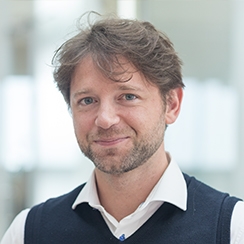
By investigating how sex chromosomes contribute to differences in susceptibility to human diseases, our research lays the foundation for the development of gender-tailored pharmacological therapies.
Professor Antonio Adamo earned his B.S., M.S., and Ph.D. in Medical Biotechnologies and Molecular Medicine from the University of Milan, Italy. He completed postdoctoral fellowships at the Center of Regenerative Medicine in Barcelona, Spain, and the European Institute of Oncology in Milan. In February 2016, he joined KAUST, drawn by its state-of-the-art facilities and collaborative research environment.
Professor Adamo’s research interests focus on use of human embryonic stem cells (hESCs) and patient-derived induced pluripotent stem cells (iPSCs) to model the onset and progression of human disorders linked to sex chromosome aneuploidies “in a dish.” His team combines reprogramming, brain organoid derivation, and genome editing techniques with a multiomics approach to identify the transcriptional and epigenetic signatures underlying human diseases. His lab has developed extensive cohorts of iPSC lines from patients with sex chromosome aneuploidies, including the first Saudi iPSC cohort, to study the molecular dysregulations associated with X and Y chromosomes overdosage.
Professor Adamo’s laboratory focuses on the use of human embryonic stem cells (hESCs) and patient-derived induced pluripotent stem cells (iPSCs) to model the onset and progression of human disorders linked to copy number variations “in a dish.” His team developed the largest cohort of Klinefelter syndrome (karyotype 47,XXY) and high-grade X aneuploid iPSCs (karyotype 48,XXXY and 49,XXXXY), a unique cellular model that they use to study the molecular dysregulations associated with X chromosome aneuploidy during the earliest stages of human development.

FEBS Senior Postdoctoral Fellow, European Institute of Oncology (IEO), Italy, 2012-2015
Postdoctoral Fellow, Center of Regenerative Medicine of Barcelona (CMRB), Spain, 2009-2012
Ph.D. in Biotechnologies applied to Medical Sciences, University of Milan, 2008
M.Sc., Medical Biotechnologies and Molecular Medicine, University of Milan, 2005
B.Sc., Medical Biotechnologies, University of Milan, 2003