Biomedical Sciences Division (BioMed)
Decoding Life, Advancing Health
Decoding Life, Advancing Health

The Biomedical Sciences (BioMed) division at KAUST brings together world-class science, technology, and education to address today’s most pressing health challenges. Through interdisciplinary research, advanced computational and digital tools, and strong partnerships across the healthcare ecosystem, BioMed connects discovery with real-world impact - supporting national priorities while contributing to global advances in health and disease.
BioMed will improve health in Saudi Arabia and beyond by harnessing cutting edge science and technology to investigate, educate on, and translate discoveries that make people’s lives better.
BioMed applies the scientific and technical expertise of KAUST by interdisciplinary collaboration and intersectional partnerships both within and beyond the university, leveraging and boosting the efforts of the health care ecosystem to understand, prevent, and treat disease.
We will encourage, educate, and promote expertise in the study and taming of disease to help engineer a healthier life for all, using knowledge generation with widespread deployment of health-translated advances underpinned by our cutting edge, world class technical expertise.
BioMed is KAUST's newest division, harnessing the University's world-class science and technology to advance healthcare outcomes in Saudi Arabia and beyond. We apply cutting-edge computational and digital tools to understanding, combating and preventing disease.
BioMed is at the start of an exciting journey. The division offers a collaborative environment where scientific excellence meets a passion for teaching and mentoring a new generation of graduates who will advance health in the 21st century.
Our priorities are those of the Kingdom, our mission aligned with Vision 2030's aspirations for better health. Our graduate programs uniquely integrate biology with engineering and bioinformatics and, our faculty and students strive to be future-ready for the rapidly emerging challenges and opportunities in biomedical science.
BioMed draws on the KAUST ecosystem of outstanding research and technical capabilities, all set against the backdrop of the Red Sea. We are beginning an ambitious journey, and invite those who share our vision of a healthier life for all.
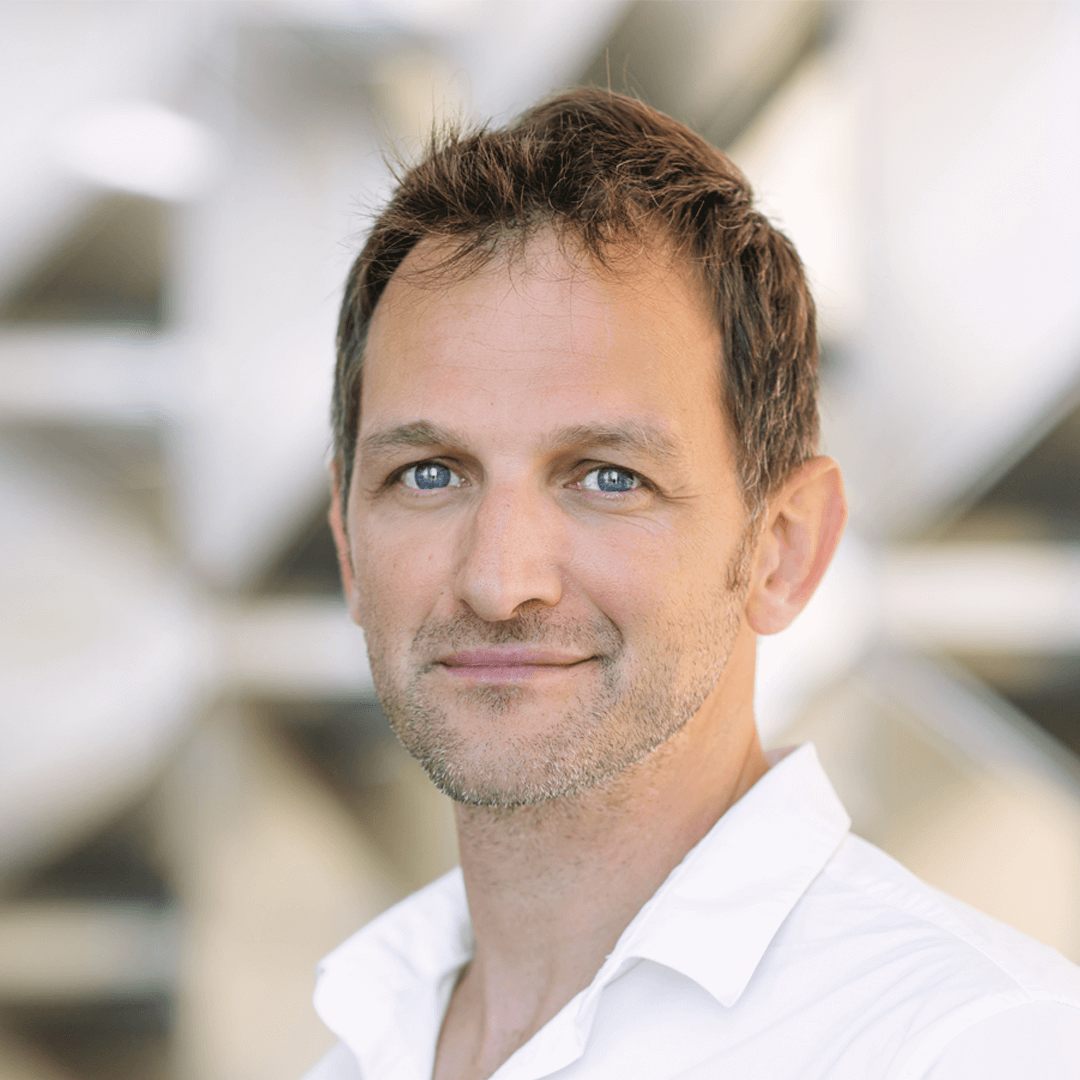
With cryo-electron microscopy, we uncover the precise mechanisms of molecular machines, advancing our understanding of biology and enabling new directions for biomedical innovation.
Professor Alfredo De Biasio leads a research group on the structural dynamics of DNA replication and repair. Prior to joining KAUST in 2021, he held research and teaching appointments at Elettra Sincrotrone Trieste, Italy; CIC bioGUNE, Spain; and the University of Leicester, U.K. His work, employing cryo-electron microscopy to capture dynamic molecular processes at high resolution, has led to publications in high-impact journals including Nature. He holds national habilitations to both Associate and Full Professor in Italy and was recognized as a Young Distinguished Scientist by Elettra Sincrotrone Trieste.
Professor De Biasio’s research focuses on understanding the structure and function of molecular machines that drive DNA replication and repair. Using cryo-electron microscopy, his work captures dynamic structural changes at high resolution, revealing key mechanisms in genome maintenance. His current projects include studying the human replicative helicase, the Pol δ-PCNA complex, and DNA lesion bypass machinery. Through these studies, Professor De Biasio’s research addresses fundamental questions in genome stability, contributing to advances in molecular biology and biomedicine.

Lecturer, Leicester Institute of Structural and Chemical Biology, University of Leicester, UK, 2017
AIRC-Marie Curie Fellow, Elettra-Sincrotrone Trieste, Italy, 2014
Juan de la Cierva Postdoctoral Fellow, CIC bioGUNE, Bilbao, Spain 2009
PhD, International Centre for Genetic Engineering and Biotechnology, Trieste, Italy 2008
M.Sc. in Chemistry, University of Padova, Italy 2001