Biomedical Sciences Division (BioMed)
Decoding Life, Advancing Health
Decoding Life, Advancing Health

The Biomedical Sciences (BioMed) division at KAUST brings together world-class science, technology, and education to address today’s most pressing health challenges. Through interdisciplinary research, advanced computational and digital tools, and strong partnerships across the healthcare ecosystem, BioMed connects discovery with real-world impact - supporting national priorities while contributing to global advances in health and disease.
BioMed will improve health in Saudi Arabia and beyond by harnessing cutting edge science and technology to investigate, educate on, and translate discoveries that make people’s lives better.
BioMed applies the scientific and technical expertise of KAUST by interdisciplinary collaboration and intersectional partnerships both within and beyond the university, leveraging and boosting the efforts of the health care ecosystem to understand, prevent, and treat disease.
We will encourage, educate, and promote expertise in the study and taming of disease to help engineer a healthier life for all, using knowledge generation with widespread deployment of health-translated advances underpinned by our cutting edge, world class technical expertise.
BioMed is KAUST's newest division, harnessing the University's world-class science and technology to advance healthcare outcomes in Saudi Arabia and beyond. We apply cutting-edge computational and digital tools to understanding, combating and preventing disease.
BioMed is at the start of an exciting journey. The division offers a collaborative environment where scientific excellence meets a passion for teaching and mentoring a new generation of graduates who will advance health in the 21st century.
Our priorities are those of the Kingdom, our mission aligned with Vision 2030's aspirations for better health. Our graduate programs uniquely integrate biology with engineering and bioinformatics and, our faculty and students strive to be future-ready for the rapidly emerging challenges and opportunities in biomedical science.
BioMed draws on the KAUST ecosystem of outstanding research and technical capabilities, all set against the backdrop of the Red Sea. We are beginning an ambitious journey, and invite those who share our vision of a healthier life for all.
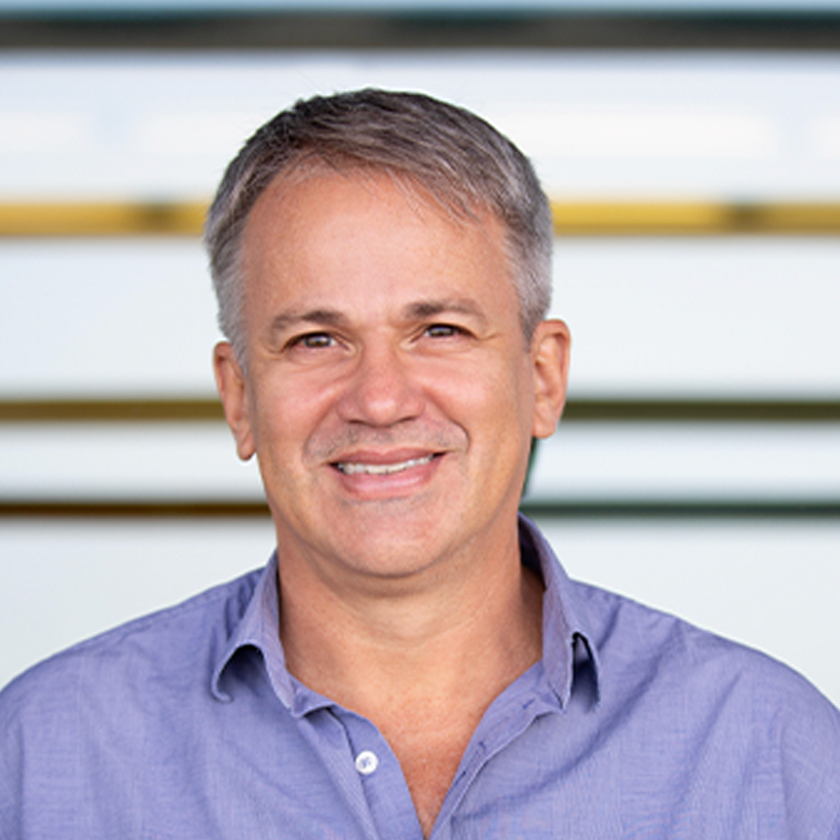
We investigate microbial diversity and function—from extreme environments to host-associated systems—to develop microbiome-based solutions for ecosystem resilience, human health, and biotechnological innovation on Earth and in space.
Professor Alexandre Soares Rosado is a microbial ecologist and Professor of Bioscience at KAUST, where he leads interdisciplinary research on microbial diversity, microbiome-based technologies, and extremophiles. Prior to joining KAUST, he was a Full Professor at the Federal University of Rio de Janeiro, Brazil, and a Visiting Professor at UC Davis, U.S. He has served as Director of the Institute of Microbiology, Vice President of the Brazilian Society for Microbiology, and is a Fellow of the American Academy of Microbiology and The Explorers Club. His research bridges classical microbiology and multiomics to develop microbial solutions for ecosystem restoration, human and planetary health, and astrobiological applications.
Professor Rosado’s research focuses on microbial diversity, novel metabolisms, and microbiome-based strategies to address global challenges in environmental resilience, biotechnology, and planetary health. His group combines classical microbiology with cutting-edge multiomics to study free-living and symbiotic microorganisms, including extremophiles from the harshest environments on Earth. Current projects explore microbial ecosystem functions, host–microbe interactions, and the potential of extremophiles for sustainable agriculture, bioremediation, and astrobiological applications. By integrating evolutionary, ecological, and physiological insights, his research advances both fundamental understanding and practical solutions aligned with the Kingdom’s Vision 2030 and global sustainability goals.

Ph.D. Microbiology, Federal University of Rio de Janeiro, Brazil/ Wageningen University and Research (WUR), The Netherlands, 1997
M.Sc. Microbiology, Federal University of Rio de Janeiro, Brazil, 1993