Menu
Top

Water Desalination and Reuse Research Platform

01

About the Platform

The Water Desalination and Reuse Research Platform's activities aim to influence the future of water science and technology by addressing global challenges and contributing meaningfully to the Vision 2030 agenda. In alignment with this mission, the Platform has defined three flagship research themes that guide our efforts:

  1. 01

    Greener Desalination:

    Advancing technologies to make desalination more energy-efficient, cost-effective, and environmentally sustainable.

  2. 02

    Water to Resource:

    Transforming the byproducts of desalination and wastewater treatment into valuable resources.

  3. 03

    Water Security:

    Improving the sustainability and management of water resources.

02

Platform Infrastructure

The Water Desalination and Reuse Research Platform forms a critical pillar of KAUST’s strategy and research capabilities. Its lab assets, together with KAUST's world-class Core Laboratories, empower faculty, researchers, postdocs, and students to push the boundaries in water desalination research and lay the foundation for future scientific discoveries. Specifically, the Platform’s state of the art laboratories and facilities include an analytical laboratory, a bench-scale laboratory, a field laboratory, and a piloting laboratory.

01

Analytical Laboratory

The state-of-the-art analytical instruments in the Analytical Laboratory accelerate the pace of ongoing research projects in the Water Desalination and Reuse Research Platform. The focus of the facility is to apply multiple methods of chemical and physical analysis to separate, identify, and quantify the chemical components of materials. Analytical testing and analysis are vital to understanding the quality and composition of drinking water, treated wastewater, and materials that are produced in the Platform’s labs. Specialist knowledge and expertise in applying the most relevant methodology are the keys to successful chemical testing and analysis. Advanced analytical instrumentation or a combination of techniques is necessary to solve problems or determine composition. The Analytical Lab is equipped with a wide range of techniques and instrumentation to meet any chemical and or physical analysis requirement and perform testing protocols according to standard methodologies. The staff has expertise in developing tailored analytical methods and performing method validation for specific applications.

02

Bench-Scale Laboratory

This laboratory is equipped with a full range of utilities and services to operate large- and small-scale experimental and pilot units for desalination and wastewater treatment research projects. The laboratory operates its desalination units using a fresh supply of seawater, pressurized air, nitrogen, and chilled water. A 480V and 240V electric service bus runs the entire length of the laboratory. A wide range of experimental setups and pilot units are currently in operation in the lab, including low-pressure prefiltration units, high-pressure desalination units, novel desalination technologies, and wastewater treatment units.

03

Field Laboratory

In the Field Laboratory, the team performs scaling, corrosion, and biofouling studies on industrial cooling tower processes. At several suitable wadi sites, the team performs field-based sampling using high-tech tools, such as a Meteo-Lysimeter, to measure the terrestrial hydrological cycle and study arid land hydrology. The Platform is developing and testing new and novel soil augmentation materials that reduce evaporative losses during irrigation and maximize subsurface water retention to achieve more crop-per-drop.

04

Piloting Laboratory

The pilot-scale research facilities allow the platform to scale up its research ideas and activities to study full-scale implementation and commercialization. In all, the platform plans to have six pilot-scale research facilities at the University, including seawater desalination, innovative desalination, solar adsorption desalination, industrial water treatment, natural water treatment and systems, and wastewater reuse. Among these, four facilities have been completed and are in operation.

03

Equipment

High-impact instruments supporting research

01

Inductively Coupled Plasma Optical Emission Spectrometry (ICP-OES)

Manufacturer: Perkin Elmer

ICP-OES is capable of detecting trace metals in liquid samples. This is achieved by ionizing the sample to produce excited atoms and ions that emit electromagnetic radiation at wavelengths characteristic of a particular element. The intensity of this emission is indicative of the concentration of the element within the sample.

02

Liquid Chromatography-Mass Spectrometry/Mass Spectrometry (LC-MS/MS

Manufacturer: Sciex

LC-MS/MS instrument is a powerful analytical technique used to detect and quantify trace levels of organic compounds and contaminants in water, soil, and biological samples up to parts per trillion (ppt) levels. It offers high sensitivity, specificity, and the ability to analyze complex mixtures, making it ideal for detecting pesticides, pharmaceuticals, toxins, and heavy metals. LC-MS/MS is widely used in environmental monitoring, regulatory compliance, and research for precise identification of pollutants and assessing environmental risks.

03

Inductively coupled plasma mass spectrometry (ICP-MS)

Manufacturer: Agilent

Agilent ICP-MS is essential in water and soil analysis for its high sensitivity and precision in detecting trace elements and heavy metals [up to part per billion (ppb) level]. It can measure multiple elements simultaneously, efficiently analyzing contaminants like lead, arsenic, and mercury. ICP-MS supports environmental monitoring and compliance by meeting regulatory standards and enables isotopic analysis for tracking pollution sources. Its low detection limits and accuracy make ICP-MS invaluable for assessing environmental risks and supporting remediation efforts, thus protecting ecosystems and public health.

04

Liquid Chromatography - Organic Carbon Detection - Organic Nitrogen Detection (LC-OCD-OND)

Manufacturer: Doc-labor

Two LC-OCD instruments one is dedicated to seawater and another to wastewater. This is a unique facility that WDRP has. LC-OCD is important for detailed analysis of organic matter in water and soil. It allows the separation and quantification of organic compounds based on carbon and nitrogen content, providing insights into the composition of natural and treated water. This technique is crucial for understanding organic pollution, identifying dissolved organic matter (DOM), and evaluating water quality and treatment processes. It is especially useful for monitoring complex organic pollutants and assessing the impact of wastewater and industrial effluents.

05

Total Organic Carbon Analyzer (TOC)

Manufacturer: Shimadzu

The TOC-L analyzer measures Total Organic Carbon (TOC) in water and soil, providing insights into organic contamination and ecosystem health. It monitors water quality by detecting organic pollutants in various water types, such as drinking water and wastewater. It helps assess organic carbon content, soil fertility, and carbon sequestration in soil. The TOC-L ensures regulatory compliance by accurately measuring TOC levels for wastewater discharge and environmental standards. With a wide measurement range and options for TC, IC, NPOC, and TN, it’s widely used in environmental labs and water treatment plants for reliable monitoring.

06

Solid Phase Extraction (SPE)

Manufacturer: Dionex

SPE is crucial in water and soil analysis for isolating and concentrating specific contaminants, improving detection limits, and enhancing analysis accuracy. SPE purifies complex samples by removing interferences, allowing for sensitive detection of pollutants at trace levels, which is essential for environmental monitoring and regulatory compliance. Additionally, SPE is versatile, adaptable to various sample types, and efficient, making it ideal for high-throughput testing in environmental labs.

07

Ion Chromatography IC-CD-ECD

Manufacturer: Thermo Fisher Scientific

Customized Three Channels Ion Chromatograph (IC-6000) equipped with conductivity detector (CD) and Electrochemical detector (ECD).

  • Channel one: Separation and Quantification of 7 anions, F-, Cl-, Br-, nitrate, nitrite, sulfate phosphate in various water matrices
  • Channel Two: Separation and quantification of Volatile fatty Acids, VFA, in various water matrices
  • Channel Three: Separation and quantification of sugars in various water matrices
08

Gallery Discrete Analyzer

Manufacturer: Thermo Fisher Scientific

The gallery is effective for a) analyzing matrices such as clean water, wastewater, soil/sludge digests, effluents, and saline; b) determination of nutrients (i.e., silica (dissolved as SiO2)), phosphate, nitrate, nitrite, and ammonia), chloride, bromide, sulfates, and total hardness. Sample - drinking, treated, waste, seawater, and brine water samples with a minimum quantity of 50 mL. Nitrate and nitrite must be stored in a -20 deg.C freezer. Ammonia should be analyzed immediately. Samples for silica, phosphate, chloride, sulfates, bromide, alkalinity, and total hardness analyses have to be stored in a 2-8 deg.C fridge. Samples for silica analysis should not be submitted in glass containers.

09

Gas Chromatography-Mass Spectrometry

Manufacturer: Agilent

Gas chromatography–mass spectrometry (GC-MS) is an analytical technique that combines the features of gas-chromatography and mass spectrometry to separate and analyze (i.e. identification & quantification) volatile and semi-volatile organic compounds.

10

UHPLC-DAD-Fluorescence-RI

Manufacturer: Thermo Fisher Scientific

Ultra-high performance Liquid Chromatograph (UHPLC) equipped with Inline Solid Phase Extraction (SPE) and two-column switching capabilities for method development.

The UHPLC has three different detectors: Diode array detector (DAD), Fluorescence, and Refractive Index (RI), which are excellent for the analysis of environmental contaminants, pharmaceuticals in water matrices, and sugars.

04

Team expertise

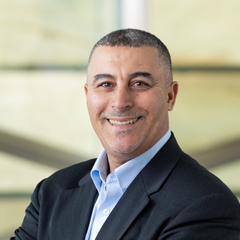
Achraf Boussira

Pilot Technician

Research integration into pilot industrial setting

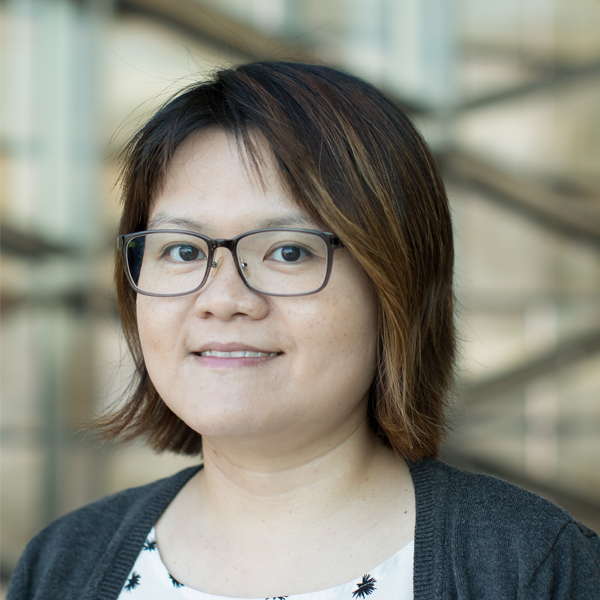
Imene El Tall

Platform Manager

Specialist in Microbiology and Microscopy

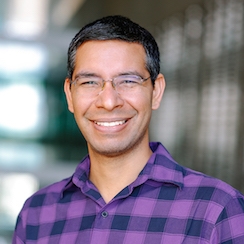
Ajit Kale

Research Technician

Specialist in Synthetic and Analytical Chemistry

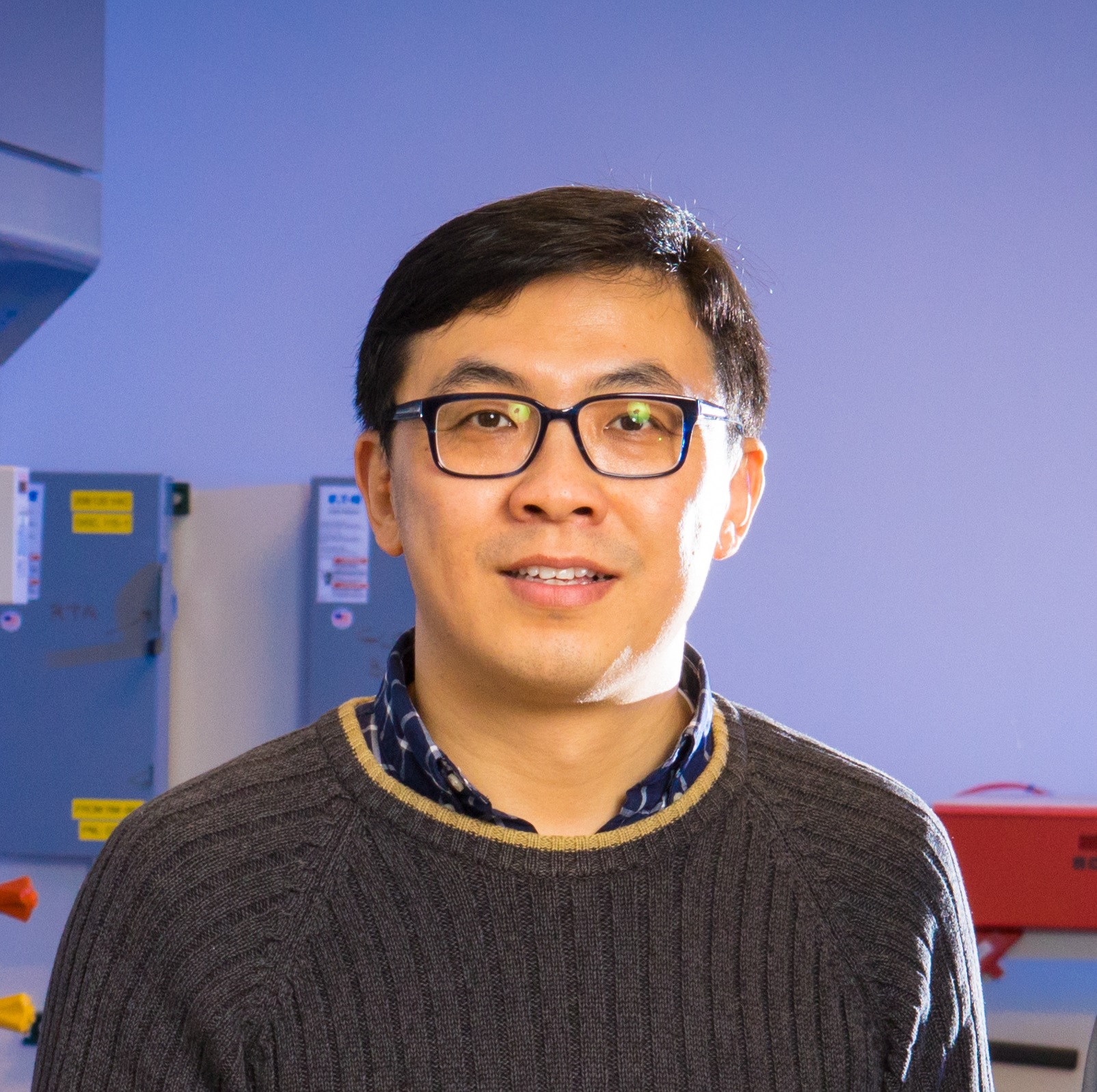
Najeh Kharbatia

Staff Scientist

Specialist in Analytical Chemistry

05

Research expertise

Sample Areas of Expertise:

01

Comprehensive Water Treatment

The advancement of desalination technologies is crucial in addressing global water scarcity. Reverse osmosis remains a leading technology due to its effectiveness in removing a variety of contaminants. However, challenges such as membrane fouling, energy consumption, and operational costs necessitate continuous innovation in process design and digitalization. Our research group focuses on advancing these technologies through two key strategies: Spacer design optimization and AI-driven approaches for membrane (bio)fouling control.

02

Integration of Renewable and Waste Energy

Photothermal membrane distillation (PMD): Solar-driven desalination, which harnesses solar energy to produce heat for freshwater generation, has emerged as a promising and sustainable solution to address water scarcity. Photothermal membrane distillation stands out as a highly effective solar-driven desalination technology, particularly beneficial for remote areas and disaster-affected communities lacking power infrastructure or industrial waste heat.

Fabricating PMD membranes: Our team fabricates novel photothermal membranes using different techniques, such as electrospinning, spray, and spin coating to increase PMD permeate flux and enhance the energy efficiency of PMD by the help of the plasmonic effect of photothermal materials, which leads to self-heating the membrane surface when exposed to sunlight.

03

Microbial Electrochemical Cell (MEC)

Harnessing bacteria for sustainable resource recovery. Our pilot-scale anaerobic electrochemical fluidized membrane bioreactor achieves energy-neutral wastewater treatment by producing H₂ & generating water for nonpotable reuse. In parallel, our microbial electrosynthesis platform converts industrial CO₂ into valuable chemicals (methane, acetate) with enhanced electron transfer.

04

Aerobic granular sludge technology

Enhancing wastewater treatment with energy-efficient, compact, and high-performing sludge systems. We have developed a first-of-its-kind full-scale decentralized wastewater treatment and recycle unit based on AGS-GDM system that integrates aerobic granular sludge with gravity-driven membrane filtration. This approach cuts energy use by over 50% and enables direct water reuse on-site.

05

Biofouling

Is the unwanted development of biofilms. In membrane based seawater desalination, this results in performance decline, increasing costs by up to 25%. In drinking water distribution systems, biofouling can adversely affect drinking water quality. Our group studies biofilms in membranes and distribution systems to develop biofouling mitigation strategies.

06

CarboSoil

This biochar product is derived from the pyrolysis of organic waste materials, such as chicken manure. The technology focuses on improving soil quality and contributing to climate change mitigation. Through its high surface area and porous structure, CarboSoil significantly enhances the nutrient-holding capacity of soils, leading to improved plant growth and agricultural productivity.

07

Advanced Modeling in Water Treatment

Advanced modeling techniques are crucial in understanding, designing, operating, and optimizing systems. Our group focuses on modeling of biocorrosion, membrane performance, and hydrodynamics in water treatment systems.

08

Safe & Sustainable Water Reuse

Part of our research focuses on advancing safe and sustainable water reuse through the surveillance of microbial contaminants, the development of energy-efficient wastewater treatment technologies, and the implementation of science-based management practices. By integrating innovative approaches such as anaerobic membrane bioreactors, advanced oxidation processes, and sensor technologies, the work addresses critical knowledge gaps in water health and supports policy development for improved water management. With direct applications in water safety, environmental protection, and urban sustainability

07

Contact Us

For media inquiries, please contact global.pr@kaust.edu.sa