UV/VIS/NIR Spectrophotometer
Manufacturer: Perkin Elmer
Model: Lambda 1050.
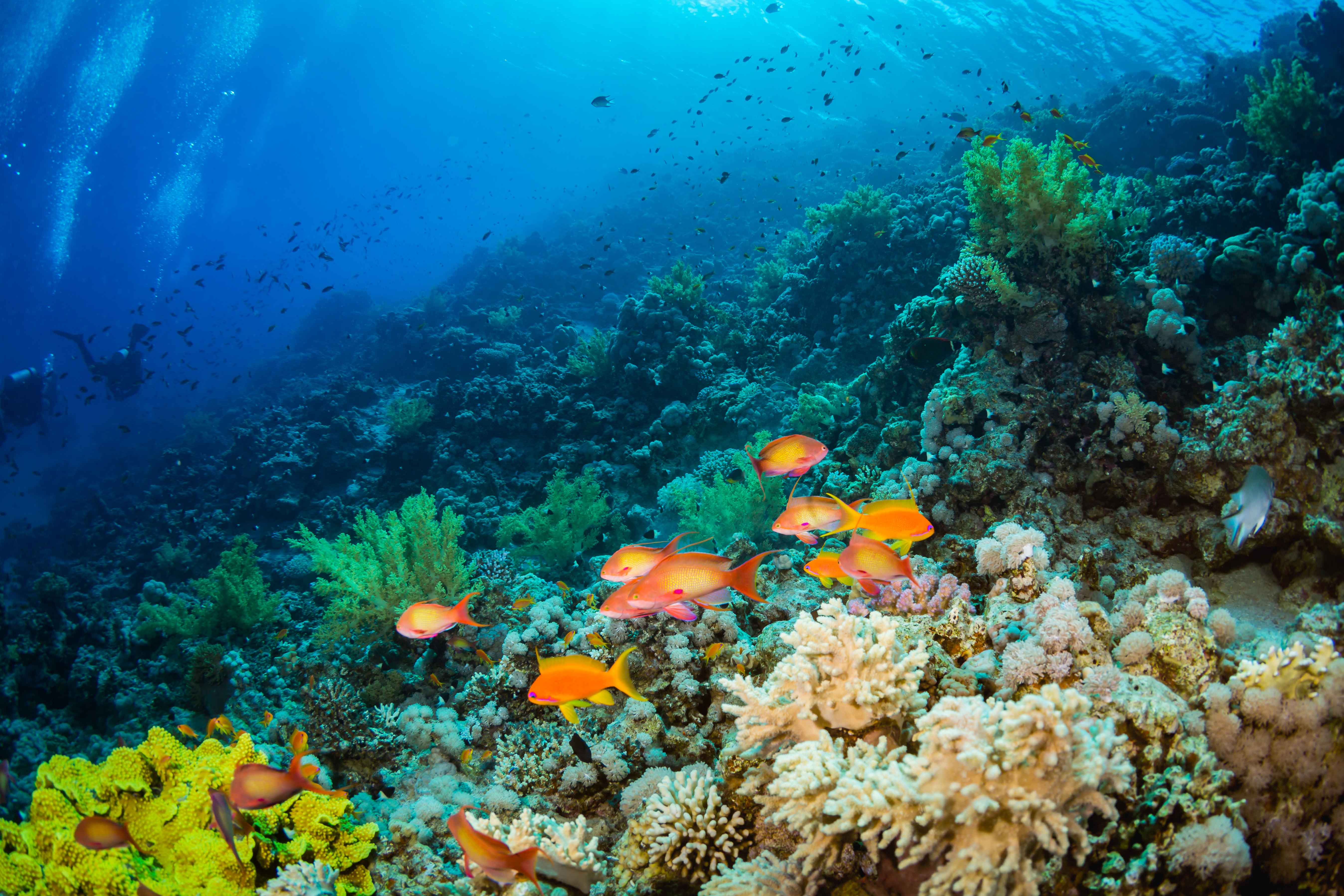
The Red Sea Research Platform at KAUST harnesses cutting-edge technology to advance our understanding of the Red Sea, one of the world’s most unique and understudied oceans. Equipped with state-of-the-art laboratories, high-resolution imaging systems, and next-generation sequencing tools, the Platform enables groundbreaking research in genomics, microbiology, oceanography, and marine ecology.
The Platform also fosters the development of innovative solutions in marine habitats restoration, promoting coral reefs protection and preservation. Under the umbrella of Blue KAUST, a collaborative hub for marine science research for KAUST researchers and national and international colleagues, the Platform connects global researchers and supports multi-disciplinary projects that address pressing environmental challenges.
With its unique technological capabilities, the Platform is redefining how we study, protect, and sustainably manage marine environments — both in the Red Sea and across the world’s oceans.
Members of the Red Sea Research Platform engage with Saudi stakeholders and international collaborators to advance both fundamental and translational research aimed at conserving the marine environment. The platform’s facilities are available to all KAUST faculty. Research supports the sustainable and economical use of ocean resources. It enhances habitat resilience and restoration, addresses pollution and other environmental challenges, and drives the development of new technologies to promote sustainable human-sea interactions.
Effective management of the Red Sea’s ecosystems is essential to preserve this national asset for future generations. The insights KAUST researchers gain from studying the Red Sea are relevant to coastal regions around the world. In line with KAUST’s educational mission, the Red Sea Research Platform also focuses on training the next generation of marine scientists through student and postdoctoral programs. The platform further supports educational outreach to Saudi nationals, including high school students from Thuwal, inspiring future scientists committed to safeguarding the Red Sea for years to come.
High-impact instruments supporting research
Manufacturer: Perkin Elmer
Model: Lambda 1050.
Manufacturer: Perkin Elmer
Model: LS55
Manufacturer: Horiba
Model: Aqualog
Manufacturer: Turner
Model: Trilogy
Manufacturer: Beckton Dickinson
Model: FACS Canto II
Manufacturer: Shimadzu
Model: TOC-L CSH
Manufacturer: Fluid Imaging Technologies
Model: VS Series.
Manufacturer: Leica
Model: DM6000B
Manufacturer: Systec
Model: HX-430
Manufacturer: QIAGEN
Model: QIAxcel Connect

Biological Cultures Tech
Bioinformatics Research Scientist
Lab Manager
Laboratory Technician
The Red Sea Research Platform is formed by the following teams:
KAUST’s location on the Red Sea coastline provides an exceptional opportunity to access diverse coral reefs alongside world-class research facilities. While much of the research is focused on the relatively understudied Red Sea ecosystem, studies are also conducted at various field sites globally. These interdisciplinary projects involve movement ecology, life history studies, food web ecology, and evolutionary biology.
The relationships between marine hosts and their associated microbiomes are complex. Studies aim to describe, understand, and ultimately harness microbial-mediated beneficial mechanisms to develop marine probiotics. Red Sea corals, adapted to withstand the region’s unusually high seawater temperatures and salinity, offer an ideal model for understanding the future of coral reefs in the context of climate change. The unique symbiotic relationships between Red Sea corals and their microbes provide valuable insights for developing tailored microbial consortia that can act as “probiotic medicine” to enhance coral health. This strategy holds great promise for advancing global coral reef conservation, restoration, and rehabilitation efforts.
The molecular foundations of cnidarian-algal symbiosis and how this relationship deteriorates under environmental stress using functional genomics and genetic techniques. The availability of genomic resources has facilitated the use of advanced -omics techniques, significantly advancing research on the key genes involved in symbiosis and the influence of epigenetics on coral adaptation to climate change.
The discovery and classification of new coral species and a comprehensive revision of the entire lineage through employing a multidisciplinary approach.
Understanding the diversity, characterization, and evolution of benthic marine organisms and habitats. in the Red Sea.
Understanding how natural and human-induced stressors shape marine biodiversity and ecosystem functions through both field and laboratory research.
Interdisciplinary monitoring frameworks using standardized methods aligned with international protocols provide a foundation for assessing the impacts of climate change both regionally and globally.
A combination of field and laboratory techniques are used to: 1) evaluate and monitor the structure and function of coral reef ecosystems, 2) measure natural variations in essential environmental parameters such as temperature, dissolved oxygen, and pH, 3)explore how environmental variability affects the ecophysiology of coral reef primary producers, and 4) assess the effects of both local and global environmental changes on these vital coral reef species.
Monitoring the effects of global change stressors—including ocean acidification, warming, hypoxia, and nutrient pollution—on key marine organisms and communities
This interdisciplinary research bridges physiological processes at the level of individual organisms with broader ecological patterns that shape the structure and function of entire reef communities.