

Thermal evaporators
Manufacturer: Angstrom Engineering
PVD chambers for depositing metals, metal oxides, organics, and perovskites
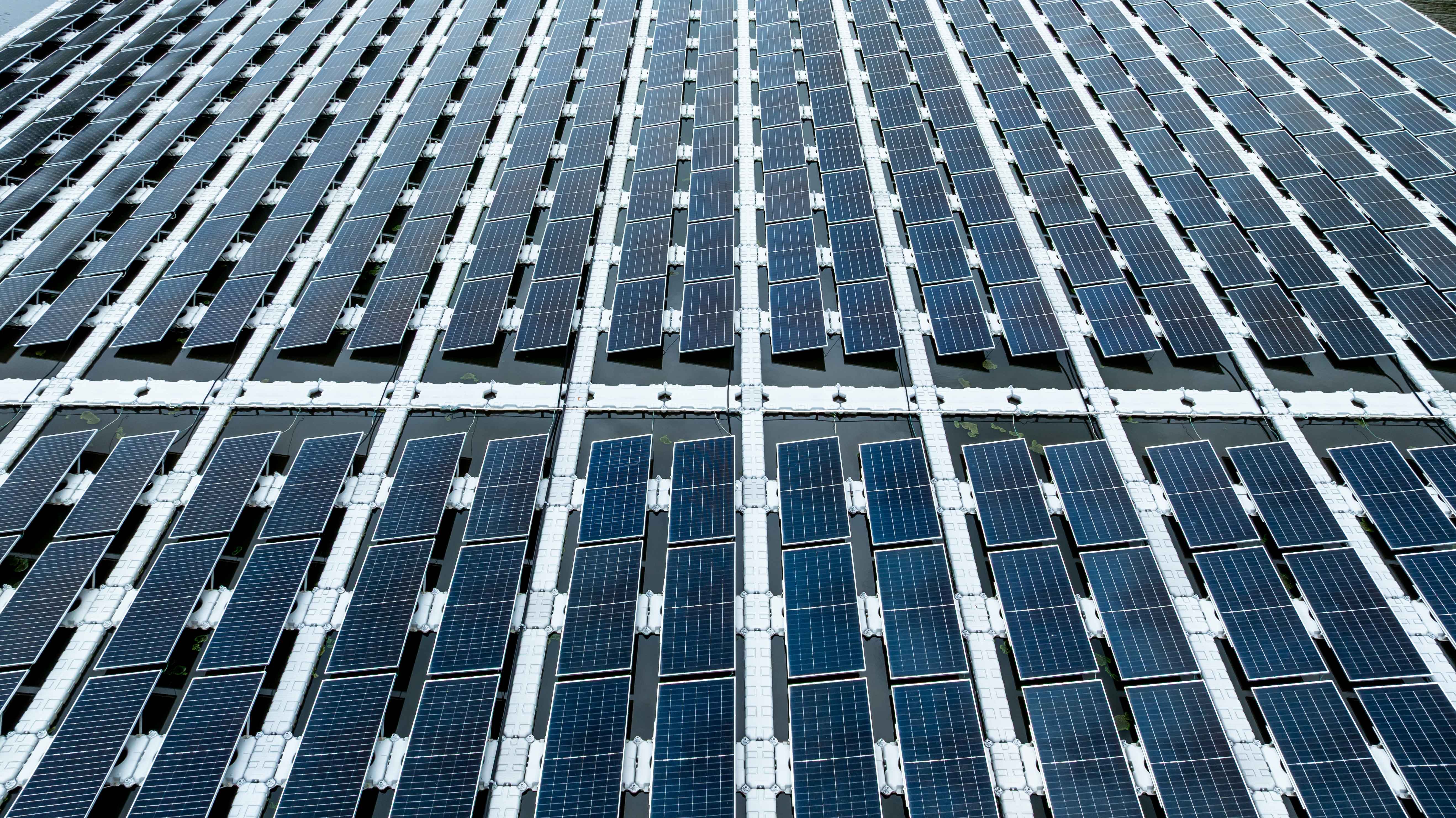
The current expertise in the KAUST Solar Platform is centered on photovoltaic applications based on organic, silicon, and perovskite materials. The Platform capabilities revolve around semiconductor preparation, processing, device fabrication and characterization, with particular emphasis on photovoltaic materials and devices. Some of the research work covers: High-Efficiency Perovskite/Perovskite and Perovskite/Silicon Tandem Solar Cells, Resilient Solution-Processed Photovoltaics, Solar Fuels, Single and Multi-Junction Organic Solar Cells, and more.
The Platform’s laboratories are a critical pillar of KAUST’s strategy and research capabilities. Its lab assets, together with KAUST's world-class Core Laboratories, empower faculty, researchers, postdocs, and students to push the boundaries in energy research and lay the foundation for future scientific discoveries. Specifically,the Platform’s state of the art laboratories, clean rooms and facilities that include physical and chemical vapor deposition systems and characterization facilities, ultrafast laser spectroscopy labs, device fabrication and characterization labs, and a wide variety of solution processing techniques.
High-impact instruments supporting research
Manufacturer: Angstrom Engineering
PVD chambers for depositing metals, metal oxides, organics, and perovskites
Manufacturer: Angstrom Engineering
PVD chambers for depositing metals and metal oxides
Manufacturer: Indeotec
Deposition of thin-film semiconductors
Manufacturer: Eternal Sun B.V.
2300 × 1200 mm testing area; temperature range: 25 C to 90 C
Manufacturer: Zeiss – Auriga
High-resolution SEM equipped with EDS
Manufacturer: Picosun
Highly controlled thin-film deposition method
Manufacturer: Bruker – Dimension Icon with Scan assist
Investigates film surfaces at nanometer-scale resolution
Manufacturer: Photon ETC - IMA VIS
Spectral range: 400–1000 nm; spectral resolution < 2.5 nm
Manufacturer: nea spec - neaSNOM
Spectral range: 650–2200 cm-1; up to 1 mW laser power
Manufacturer: Riken AC-2
Measures a material’s work function (3.40–6.20 eV)

Material Science and Engineering

Material Science and Engineering

Material Science and Engineering

Applied Physics

Chemical Science
Material Science and Engineering

Chemical Science

Laboratory Manager
Senior Technical Specialist
Partnership Specialist, KSC
Principal Technology Lead
Senior Technical Specialist
Staff Scientist
Solution-processed photovoltaics is a promising renewable energy technology with untapped potential. Record power-conversion efficiencies for organic and perovskite-based solar cells are rapidly approaching their theoretical limits. These improvements promise the application and commercialization of solution-processed photovoltaics if, in addition to the power conversion efficiency, the stability of the devices could be increased. However, device stability has only recently drawn increased research attention as a central pillar of photovoltaics research towards the large-scale manufacturing of such devices. This has led to the considerable effort to understand the degradation mechanisms in operational devices, though tackling such degradation pathways is still a challenge.
This research aims to focus on identifying and eliminating the sources of device degradation in photovoltaic devices, which is as crucial as improving the power conversion efficiency to make this technology commercially viable. Several research groups provide collective effort aimed at achieving the goals of this project. Specifically, this involves conducting a comprehensive study of single and multi-junction devices’ stability in controlled laboratory and ambient outdoor environments to elucidate different degradation pathways.
Perovskite solar cells (PSCs) are rapidly emerging as a high-efficiency photovoltaic technology. Owing to their tunable bandgap, PSCs are particularly attractive for building tandem solar cells. In this context, narrow-bandgap (~1.20 eV) Sn-based perovskite bottom cells can be monolithically integrated with wide-bandgap (~1.80 eV) perovskite top cells for fabrication of all perovskite tandems. In such a configuration, the wide-bandgap perovskite sub-cell harvests the blue part of the solar spectrum while letting red and near-infrared (NIR) light pass through to be absorbed in the narrow bandgap bottom cell. Such a combination is expected to overcome the single-junction power conversion efficiencies (PCEs) limit of silicon solar cells (29.4%).
Currently, both narrow-bandgap and wide-bandgap PSCs are already being independently at KAUST and high-efficiency baseline processes are available for these devices. In this project, we are addressing the challenge of how to integrate both technologies into monolithic perovskite/perovskite tandem solar cells. Specific points of attention for this are:
The power conversation efficiency (PCE) of organic photovoltaics (OPVs) has been advancing rapidly in recent years with record values now exceeding 17 and 18% for multi- and single-junction OPVs, respectively. Despite the tremendous progress, however, several scientific and technological challenges still remain. This project aims to address some of these key challenges and demonstrate highly-efficient single cells and monolithic organic/organic tandem solar cells with PCE >20%. The work builds on our recent efforts towards advanced bulk-heterojunction (BHJ) systems, molecular dopants and new interlayer materials. Our recent studies indicate that single junction OPVs incorporating optimal combinations of materials can yield efficiency values in excess of 20%, whilst for tandem cells this upper efficiency limit exceeds 25%. The experimental efforts will be supported by theoretical calculations of the materials interactions and photonic structure of the cells, as well as transient laser spectroscopy measurements to elucidate the key loss processes that would need to be mitigated in order to achieve ultimate performance.
CHAIR, PROFESSOR
Material Science and Engineering
PROFESSOR
Material Science and Engineering
ASSOCIATE PROFESSOR
Material Science and Engineering
ASSISTANT PROFESSOR
Applied Physics
PROFESSOR
Material Science and Engineering
PROFESSOR
Chemical Science
PROFESSOR
Chemical Science