

KAUST unveils landmark coral facility on the Red Sea, advancing Saudi scientific expertise and marine conservation
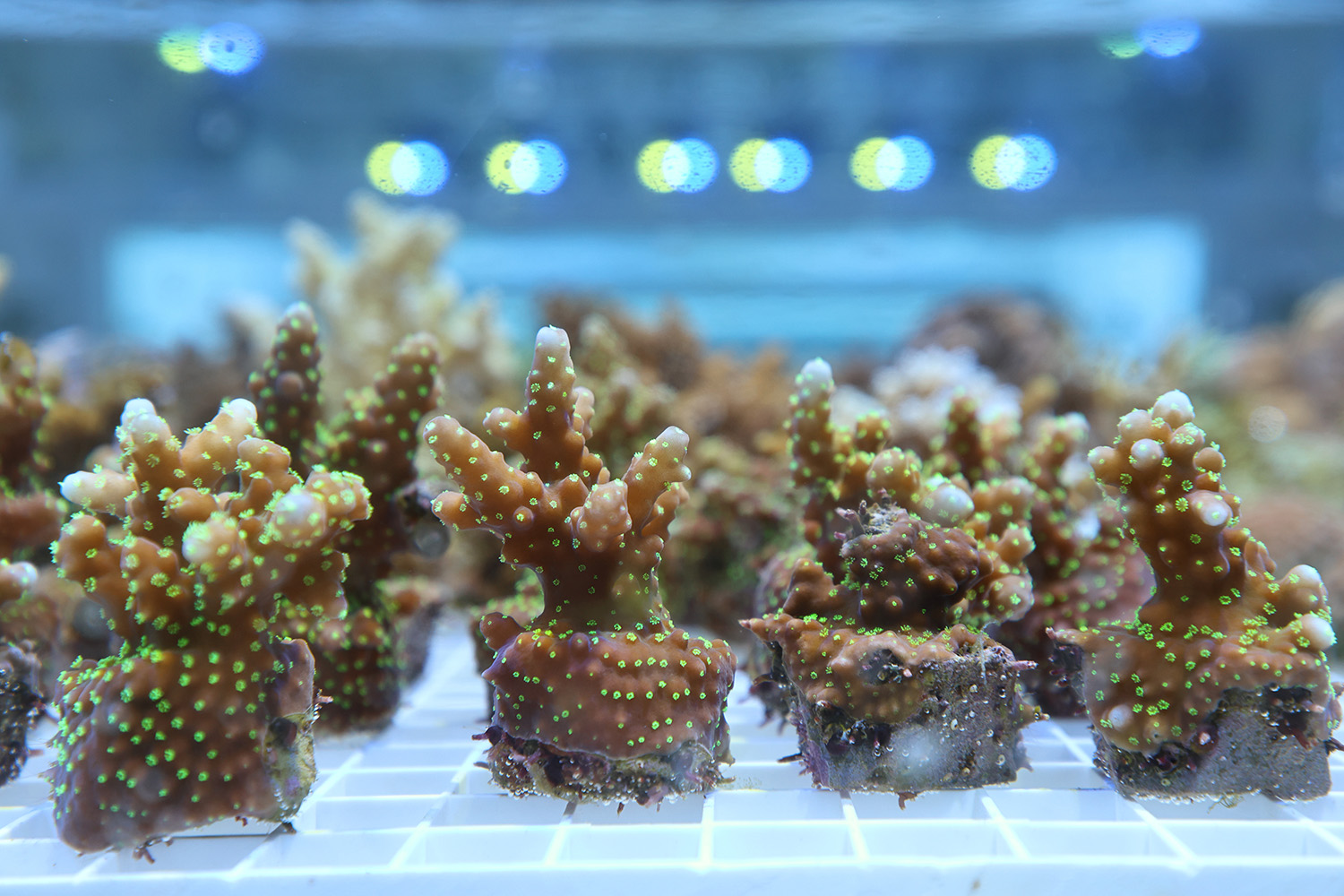
Corals growing in a nursery at the KAUST Coral Restoration Initiative
King Abdullah University of Science and Technology (KAUST) launches KAUST Coral Restoration Initiative’s large-scale coral facility, restoring and advancing one of Saudi Arabia's most precious natural assets. On Saudi Arabia’s Red Sea coast, the KAUST Coral Restoration Initiative (KCRI) land-based nursery and research campus is now growing corals at scale. It is designed to produce up to 360,000 corals a year, to outplant more than two million corals across 100 hectares of reef at Shushah Island by 2030, and to establish a resilient reef ecosystem by 2040.
The opening of the world’s largest coral restoration facility, announced at COP31 in Antalya, arrives at a moment of acute urgency for the world's reefs. The fourth global coral bleaching event, confirmed by NOAA as the most severe in recorded history, affected more than 84% of the world's reef area between 2023 and 2025. With a powerful El Niño forecast to intensify through early 2027, scientists warn of the risk of renewed severe heat stress for vulnerable reefs.
The Red Sea is the right place to start. Its corals live in some of the warmest, saltiest waters on Earth, and they hold lessons about resilience that reefs everywhere will need. KCRI combines the Red Sea’s unique corals with KAUST’s world-class marine science to learn how corals can be grown at scale and conditioned to withstand warmer water before they return to the reef. The initiative also draws on the expertise of the Coral Research and Development Accelerator Platform (CORDAP), which works internationally to accelerate scientific and technological solutions for coral reef conservation and restoration.
KCRI brings four components together in a single restoration system:
- A large-scale land-based coral nursery;
- Sea-based nurseries;
- More than 50 research programs spanning coral probiotics, heat-resilient corals, robotics and AI-driven modelling;
- eCoral, an AI-driven digital twin of the reefscape that guides where and how every coral is planted and monitored.
“For the first time, we don’t just have the technology to predict the future of our oceans. We have the power to change it,” said Prof. Carlos Duarte, KAUST Distinguished Professor and Executive Director of CORDAP. “KCRI shows what becomes possible when scientific ambition is matched by the will to deliver it. It is a beacon of hope for the Red Sea, and a model the world urgently needs.”
Saudi scientists, divers and aquarists are playing an important role in KCRI's restoration efforts, developing specialist expertise in coral cultivation, marine science and reef restoration. Beyond its restoration activities, KCRI represents a long-term investment in Saudi Arabia's marine science capabilities.
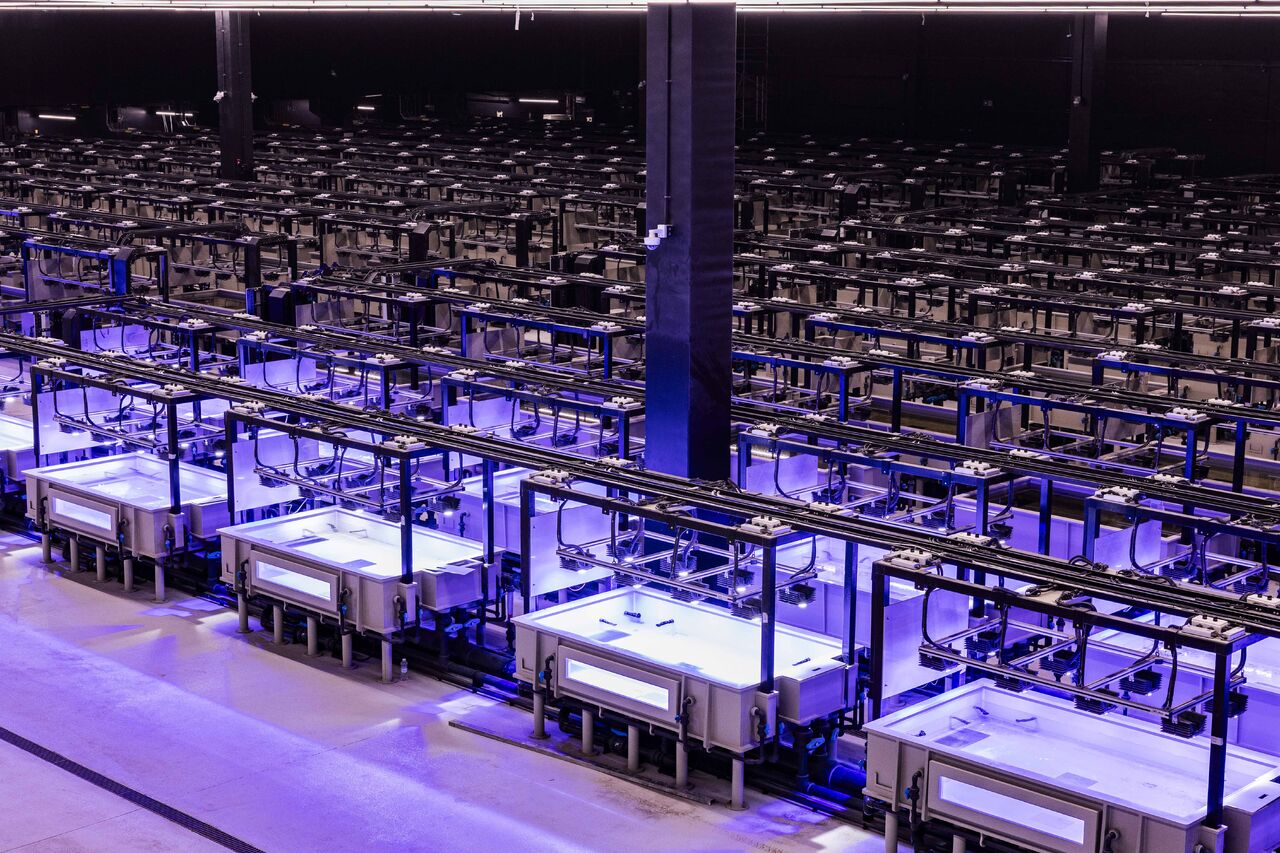
Tanks at KAUST Coral Restoration Initiative.
“When we set out to develop KCRI, the ambition was to tackle a challenge that had never been addressed at this scale,” said Dr Ian Campbell, Senior Vice President, National Transformation Institute, KAUST. “Opening the facility is not the finish line. The real measure of success will be what we achieve in the Red Sea, the expertise we build here in Saudi Arabia, and how that knowledge helps others restore reefs around the world.”
Coral reefs support around a quarter of all marine species, protect coastlines from storms and sustain the livelihoods of more than 500 million people. KCRI is designed to restore the Red Sea reefscape and offer a framework that coral restoration programs worldwide can adopt.
“What stays with me most is seeing young Saudis develop an interest in marine science and build careers around protecting the Red Sea. There's something special about watching people dedicate their careers to caring for an environment that is so much a part of their home. I hope the opportunities we've helped create encourage many more young Saudis to follow that path,” said, Amr Atiah, now KAUST's Vice President of Campus and Community, previously serving as KCRI's Director of Special Projects with the KAUST Coral Restoration Initiative
KAUST is also working with international partners on how coral diversity can be safeguarded for future generations.