

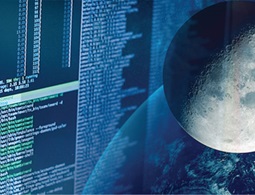
Training an AI eye on the Moon
Machine learning accelerates the search for promising Moon sites for energy and mineral resources.
Machine learning accelerates the search for promising Moon sites for energy and mineral resources.

Honing a growth chamber cultivation technique leads to the identification of novel bacteria from Red Sea mangrove sediments.
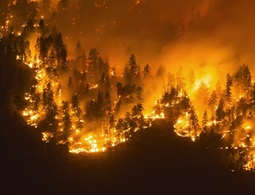
The twin technologies of unmanned aerial vehicles and wireless sensors could be the ideal combination to counter forest fires.
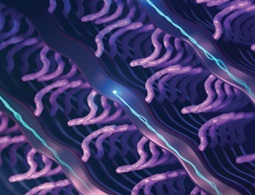
Conquering a chemical challenge to control the structure of a polymer opens a path to better biosensors.
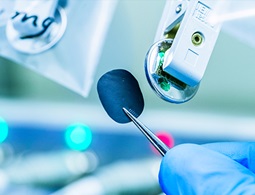
A layer of hierarchically three-dimensional porous graphene greatly suppresses a problem holding back the development of lithium-sulfur batteries.
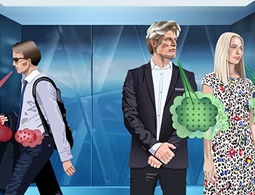
Electrical and computer engineers take on complex modeling questions that can further our understanding of virus spread in small spaces.
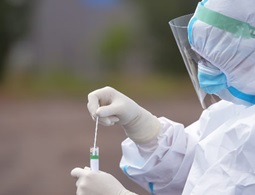
New lateral flow test Vigilant is cheaper, easier to use and as reliable as the current gold standard PCR test for diagnosing SARS-CoV-2 infection.
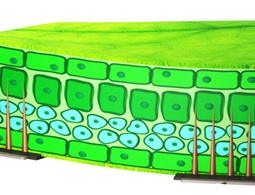
Ultrathin needles for probing plants could help keep crop health in check.
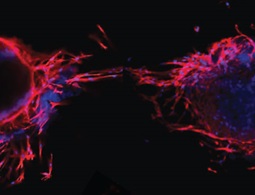
3D models of bone formation provide a tool for tissue engineering, biomedical research and drug testing.
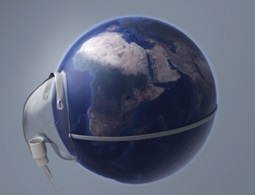
An extended epidemic model that accounts for uncertainty and the latest data can better predict the evolution of pandemics.
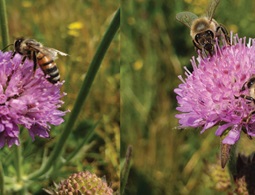
Honeybees bring back more than just nectar from their floral feasts and these microbes may help them survive turbulent times.
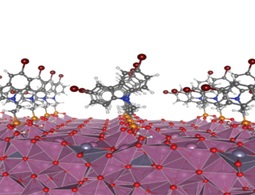
A single-molecule layer that helps to channel electrical charge into an electrode can outperform the best conventional material.
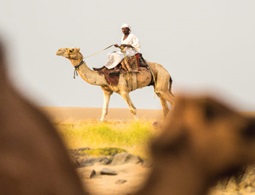
Trends in heat discomfort are more subtle than expected across Saudi Arabia and beyond.
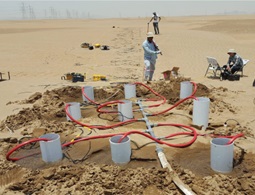
Geologic structures and deposits below planetary surfaces can be mapped faster than ever.
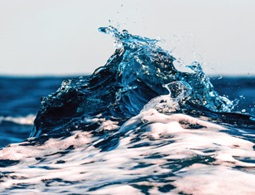
The system offers an economical way to source essential battery material.

Ozone depletion following the Toba eruption around 74,000 years ago compounded the ensuing volcanic winter and caused a human population bottleneck.

Detailed and extensive genome sequencing of a subspecies of rat-infecting malaria parasites should instruct human malaria research.
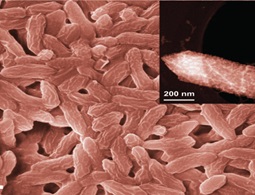
An enigmatic bacterium proves a useful ally for the synthesis of single-atom catalysts to split hydrogen from water.
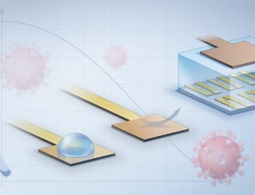
New diagnostic technique could help contain the spread of COVID-19 and other viral outbreaks.
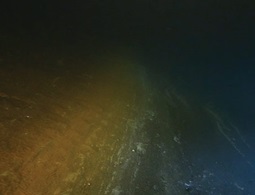
A lot happens and changes within a thin one-meter-thick transition layer between deep Red Sea water and an expansive underlying brine lake.