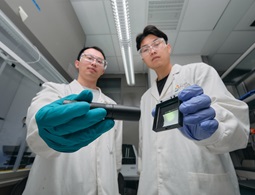
Scintillating new X-ray imaging
Less hazardous and more sensitive and eco-friendly scintillating compounds could greatly improve X-ray imaging technologies.
Less hazardous and more sensitive and eco-friendly scintillating compounds could greatly improve X-ray imaging technologies.
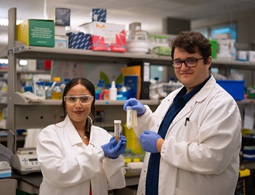
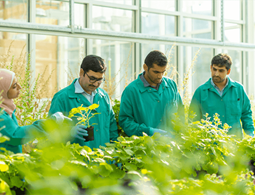
Using nanotechnology for controlled delivery of biostimulants and micronutrients to crops could improve performance and nutritional value.

Assistant Professor Paula Moraga was awarded unanimously the 2023 Letten Prize


A comparison of different solar-cell technologies shows that an organic material is better at staying cool than common silicon, and how a windy environment can help.
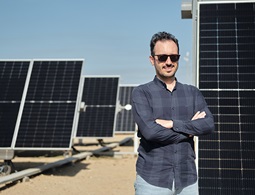

Pulses of light tune MXene's structure to improve energy storage and battery stability.

Priming crop plants with a microbe sourced from the roots of desert plants could be a powerful tool to boost crop plant's resilience to drought.
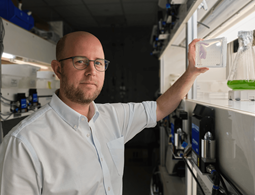
A purpose-built lab is enabling bioprospecting for local strains of microalgae and helping to shape the future of Saudi Arabia’s algal biotech industry.
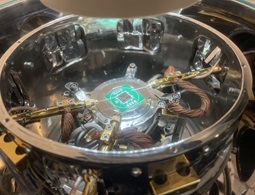
A proton-driven approach that enables multiple ferroelectric phase transitions sets the stage for ultralow power, high-capacity computer chips.

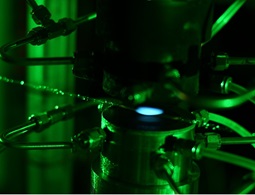
Laser experiments reveal how high voltage affects charged ions in burning fuel.