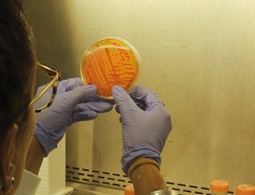
Microbiomes shaped by enzymes’ responses to ocean temperatures
The ability of marine microbiomes to respond to thermal variations in their habitats is controlled by enzyme adaptation.
The ability of marine microbiomes to respond to thermal variations in their habitats is controlled by enzyme adaptation.
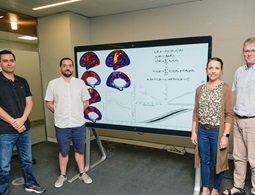
An efficiency upgrade for an already fast approximation method enables accurate near-real-time modeling of complex systems and large datasets.

Air cavities forming around skipping buoyant objects could help reduce drag and enhance underwater maneuverability.

Skin organoids offer a powerful platform for drug discovery in the ongoing fight against the virus formerly known as monkeypox.

Comparison of different nuclear magnetic resonance spectroscopy methods has helped to identify the most robust approach for studying different types of biomolecules.


An innovative AI-based tool leverages varied symptom descriptions, along with evidence from the scientific literature and genomic datasets, to pinpoint disease-associated gene variants.



New research into how humans and animals use complexity to make decisions offers some tantalizing insights into the nature of intelligence.


A residual-based approach that detects and corrects voltage and frequency anomalies could protect power grids against covert cyberattacks.