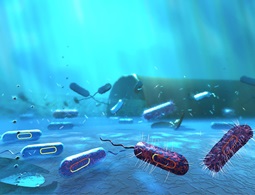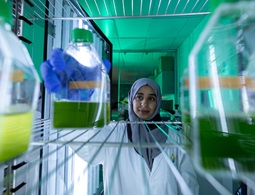
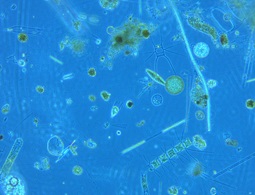
Examining phytoplankton’s past to reduce future algal blooms
Sediment-core analysis highlights clear shifts in regional phytoplankton community trends following urbanization and industrialization on the coast of the Arabian Gulf.
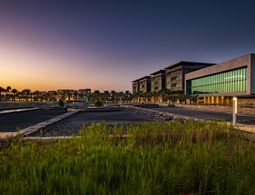
KAUST welcomes 2025 Ibn Rushd Postdoctoral Fellows, strengthening Saudi research talent
KAUST welcomes the 2025 cohort of Ibn Rushd Postdoctoral Fellows. These exceptional Saudi researchers will advance their expertise at top global institutions, strengthening the Kingdom’s research ecosystem. This initiative supports Vision 2030 by developing world-class talent for academic careers and research leadership roles, positioning Saudi Arabia as a leader in innovation and scientific discovery.
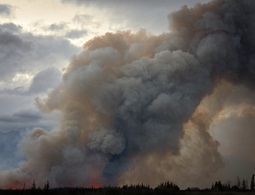
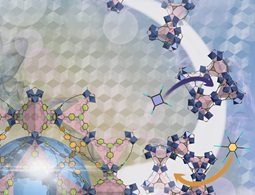
Unveiling the role of biomass-burning aerosols in atmospheric reactions
Insight into how photoexcited biomass-burning organic aerosols boost sulfate formation could help control wildfire-driven air pollution.
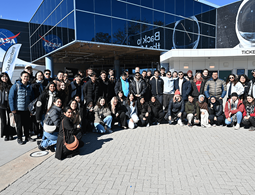
Technology Innovation and Entrepreneurship students stand out at international competition
KAUST Technology Innovation and Entrepreneurship (TIE) students excelled at the International Business Plan Competition (IBPC), securing first, second and third place wins alongside global peers, demonstrating KAUST’s role in developing top-tier entrepreneurial talent and boosting the Kingdom’s reputation for top-tier academic programming. Through TIE, KAUST equips students with the skills to transform research into market-ready solutions, advancing Saudi Vision 2030 and KAUST’s Accelerating Impact strategy.
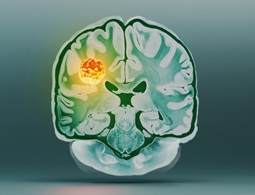
Bringing an old proof to modern problems
A physically consistent and self-adaptive numerical modelling approach opens the door to more accurate and reliable computational simulations of clinical and biological processes.
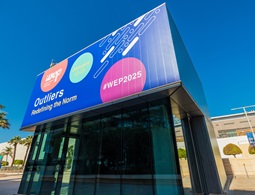
Winter Enrichment Program: KAUST inspires collaborative, creative, and resilient STEM leaders
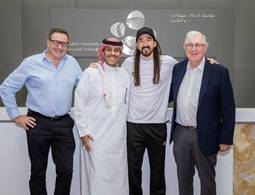
Racing toward a sustainable future: The transformative partnership of KAUST, CORDAP, and E1

Artificial neurons enable neuromorphic computing with light
An adaptive capacitor that can sense and learn through optical stimuli enables learning and recognition tasks.
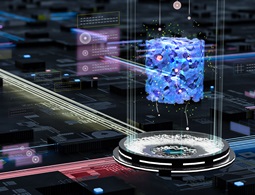
Slashing industrial emissions using a hybrid model approach
The chemical industry could dramatically cut its energy consumption by using machine learning to guide chemical purification protocol selection.
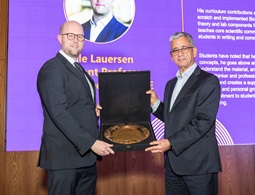
The chops for science: Kyle Lauersen’s journey from karate to biotech
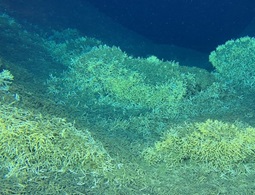
Extensive deep warm-water coral frameworks pinpointed in the Red Sea
A habitat suitability study suggests that two stony coral species may form significant deep-sea frameworks across the northern Red Sea and Gulf of Aqaba.