


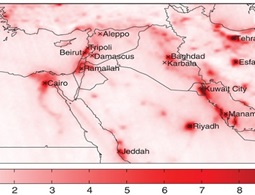
Trend reversals in the Middle East
Conflict and economic crises, combined with pollution control measures, are changing the air above the Middle East.
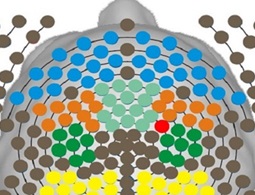
Brain waves in boxes
A statistical method helps to identify abnormal signals in electroencephalograms and locate their source in the brain.
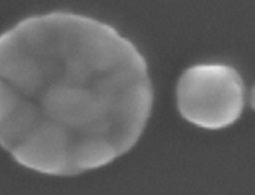
Silver nanospheres expose cancer’s single flaw
Arrays of tiny silver nanolenses can detect a unique mutation with the potential to cause cancer among a mix of human peptides.
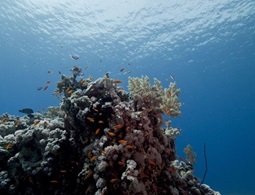
The Red Sea models the future
Detailed analysis of nutrient distribution and circulation in the Red Sea could provide a model for the future of the world’s oceans.
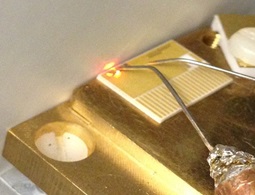
Lasers bridge the rainbow
Subtle changes to the composition of a semiconductor structure enable laser light at colors previously not thought possible.
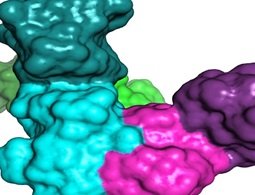
Doubled up protein protects against cancer
Insight into additional functions of a key cancer protein could pave the way for new anti-cancer drugs.
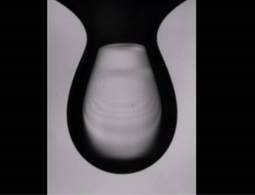
Antibubbles make a splash
Stable air layers that wrap around liquid drops can retain their remarkable geometries a thousand times longer than theory predicts.
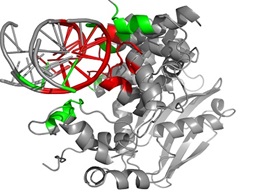
Unlocking complex interactions
Functions of interacting molecular complexes are uncovered through a novel method of aligning the interaction interface of each complex.
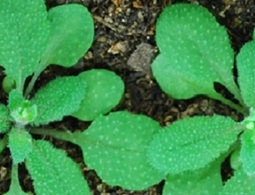
Getting to the roots of microRNA
Proteins that have dual roles in the molecular processing of RNA could be manipulated to produce tougher plants.
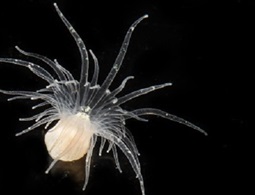
A model for coral-algae relationships
Analysis of sea anemone genome yields unprecedented detail of anemone-algae symbiosis, and may provide a model for coral symbiosis.
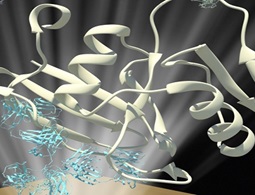
Helping flowing cells make a connection
A modern twist on a traditional biochemistry technique lets scientists study interactions that trap cells in circulation.