

Using supercomputers to enable industrial competitiveness

Everything needs HPC
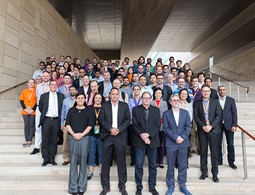
Realizing a new materials horizon
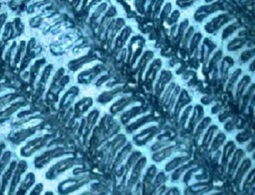
Warming to a new direction for perovskites
Controlling the orientation of hybrid perovskite crystals offers large-scale structural purity and new properties.
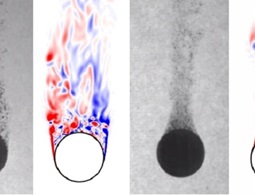
Levitation trick gives drag the slip
Plunging hot spheres into viscous liquids reveals a way to reduce fluid resistance without complex engineering procedures.
Sustainable solutions for Saudi Arabia

Improving connections for spatial analysis
A statistical model that accounts for common dependencies in spatial data yields more realistic results for studies of temperature, wind and pollution levels.
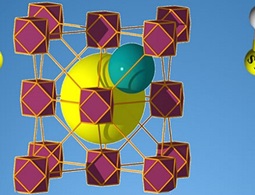
A simple nose for noxious gases
Tunable porous MOF materials interface with electrodes to sound the alarm at the first sniff of hydrogen sulfide.

Signaling success for 5th gen communications
An efficient wireless signal optimization scheme achieves peak performance for next-generation mobile communications.
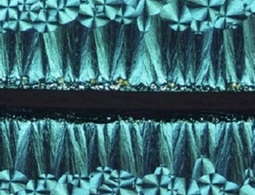
Coffee-ring effect leads to crystallization control in semiconductors
Varying the thickness of crystallizing materials facilitates control over the patterns and properties of crystals.