

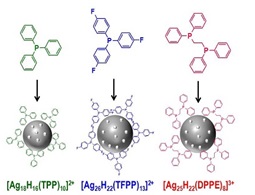
Closer ties for silver clusters
Surrounding silver nanoclusters with hydrogen-rich shells offers new opportunities in catalysis and opto-electronics.
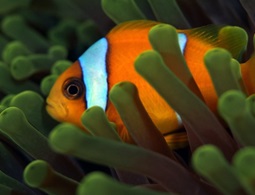
Clownfish adapt for population survival
Identification of candidate pathways in clownfish shows they can control responses to population alterations.

Basset named 2016 NAI fellow
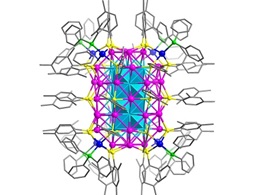
Thinking outside nanocluster’s box
Research at KAUST finds that silver atoms can be crafted into a box-shaped nanocluster by careful selection of ligand molecules.

Assessing Red Sea potential for alternative energy
Advanced numerical models are helping researchers identify potential sites to exploit offshore wind and wave energy in the Red Sea region.
The promise of greener power generation
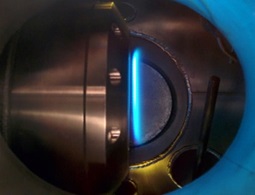
The characterization of compounds produced in combustion could lead to cleaner, more efficient power stations.

Reconstructing the Red Sea’s climate patterns
An advanced numerical model is helping researchers better understand the variability of the Red Sea’s climate patterns.
The race for more efficient engines
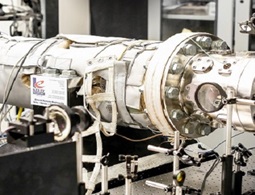
New technique lays the foundation for greener transport fuels and next-generation engines.

Getting the jump on industrial failures
A statistics-driven method for the early detection of emerging problems in industrial processes could improve industrial safety, reliability and productivity.
Color-changing coatings ready for the big time
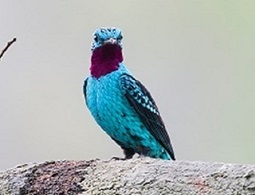
Wafer-thin, scratch-proof films can generate a rainbow of colors using random metallic nanostructures.
Delivering a power punch
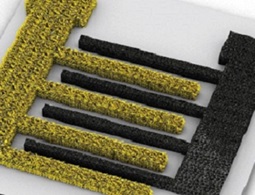
Microscale energy storage units for wearable and miniaturized electronic devices are improved using porous materials.