

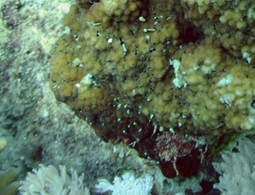
Discovering a new coral species
A coral named for KAUST could provide a glimpse of future reef conditions under climate change.
A coral named for KAUST could provide a glimpse of future reef conditions under climate change.
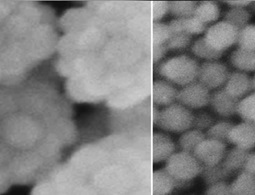
Tiny carriers assembled from oppositely charged nanoparticles open to release their cargo under light exposure.
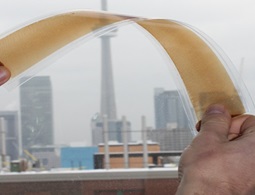
Funding from KAUST is helping to bring innovative solar power technology to fruition with startup company QD Solar.

An improved peak fitting procedure enables a better determination of protein structures.
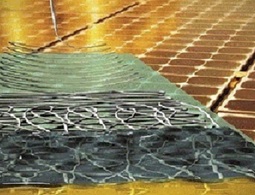
The fabrication of branched titanium dioxide nanomaterials enhances the connectivity in solar cells for a better performance.

An algorithm that maximizes the difference between data categories achieves high accuracy in classifying faces.
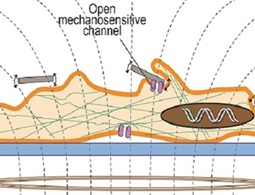
Magnetic nanowires with weak magnetic fields and low frequencies can destroy cancer cells without generating heat.
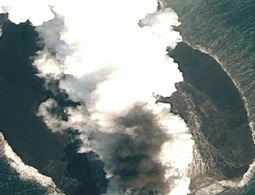
The emergence of two volcanic islands in the Red Sea suggests a larger underlying event linked to African-Arabian plate separation.
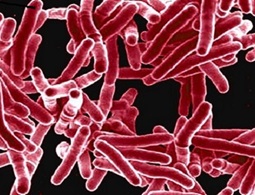
A new computational framework shows how pathogens interact with host cells at the metabolic level.
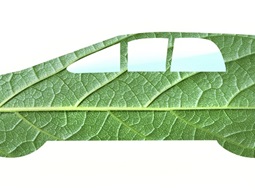
A catalyst that helps develop a new route to break up carbon dioxide uses a renewable source of clean energy.
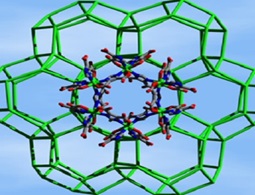
Thin film membranes could efficiently separate carbon dioxide and other gases from mixed gas flow streams.
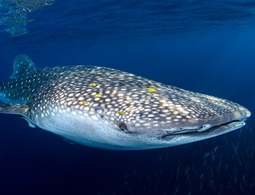
Rather than migrating, whale sharks in Tanzania hide surprisingly close to home year-round.