

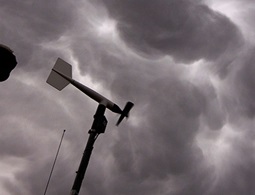
Letting the data speak for itself
A new statistical approach for environmental measurements lets the data determine how to model extreme events.
A new statistical approach for environmental measurements lets the data determine how to model extreme events.
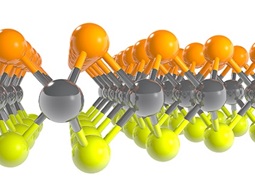
Introducing asymmetry across the two sides of atomically thin materials brings new opportunities in semiconductors.

Coral ecosystems may be able to adapt rapidly to climate change through natural plastic responses.


When faced with high salinity, the tiny plant cells within coral tissue alter their metabolites to better cope with stress.
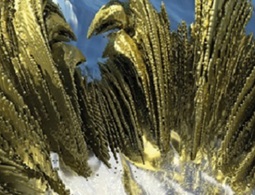
Metallic nanostructures that slow down light dramatically can triple the efficiency of solar-based hydrogen fuel generation.

Photosensitive perovskites change shape when exposed to light.


Smartphones put state-of-the-art 3D particle tracking in the hands of the masses.
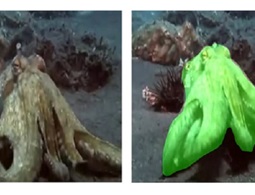
A faster approach for computer detection of moving objects in video takes us a step closer to mimicking the reflexive detection ability of the animal visual system.
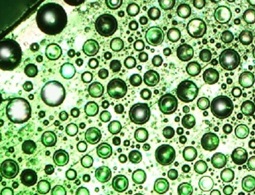
Surface wettability has little effect on atmospheric water gathering, but edge structure is crucial.