

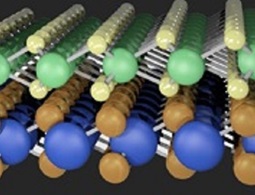
Anderson’s model holds for 2D materials
A simple model is shown to accurately predict the electronic properties of a combination of 2D semiconductors.
A simple model is shown to accurately predict the electronic properties of a combination of 2D semiconductors.

A gene-editing method shows promise for using targeted gene-replacement therapy in living organisms.

Sensitive detection of partial faults in antenna systems could prevent performance degradation in wireless networks.

“Historians will look back on this era as the tipping point for marine agriculture,” said Carlos Duarte.

Pairing two catalysts in a single, illuminated reaction flask proves to be a light-bulb moment for organic synthesis.
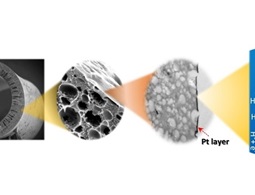
A material made by combining a metal and a polymer can help generate hydrogen and fresh water from wastewater.
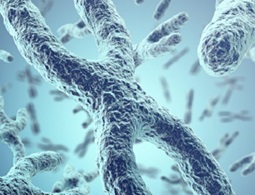
The dynamic three-dimensional organization of chromosomal structure can profoundly influence plant gene expression.
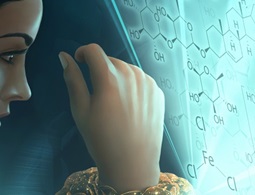
Hybrid organic-inorganic materials can self-assemble into tiny doughnut-like structures.

A highly efficient mathematical solver designed to run on graphics processors gives scientists and engineers a powerful new tool for a common computational problem.

Reliable processing of an efficient solar cell material depends on how the solvent is removed.
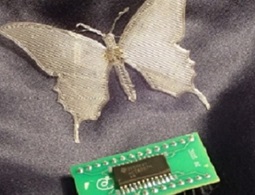
High-speed fabrication developed at KAUST can turn out adhesive and flexible electronic devices in any shape imaginable.

A new data-mining strategy that offers unprecedented pattern search speed could glean new insights from massive datasets.