

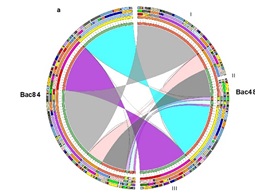
Mining Red Sea bacteria for industrial potential
Genome sequencing of two Red Sea bacteria highlights their potential as industrial workhorses.
Genome sequencing of two Red Sea bacteria highlights their potential as industrial workhorses.
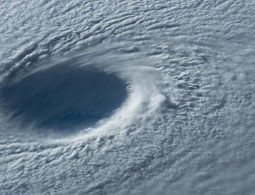
A more efficient approach to modeling spatial data involving thousands of variables keeps computation time in check.
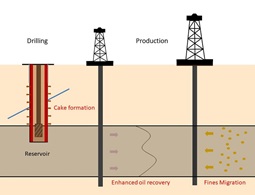
A comprehensive model for simulating mudcake growth during oil extraction could transform well-drilling protocols.
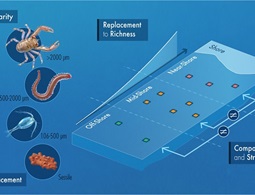
Composition in cryptic fauna assemblages changes across a shelf gradient, a recent study of the Red Sea shows.

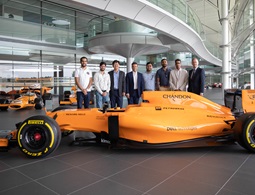
KAUST places great emphasis on translating university know-how into real-world impact, say Kevin Cullen, vice president of Innovation and Economic Development, and John Tannaci, associate vice president for research.
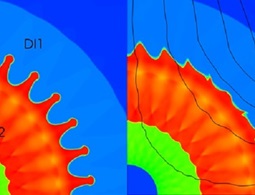
A numerical study reveals how to reduce instabilities in the complex flow of plasma in converging geometry of particles in fusion reactions.
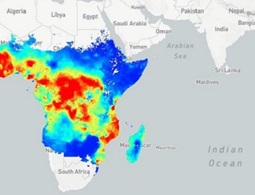
A tool developed by Håvard Rue has transformed data analysis, interpretation and communication. It has been applied broadly: from modeling the spread of infectious diseases to mapping fish stocks.
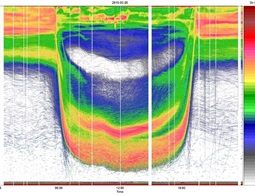
A carbon source stemming from daily fish migrations is implicated in the global carbon cycle.

Nanoparticles with a shell structure improve the performance of zinc-oxide photodetectors.