

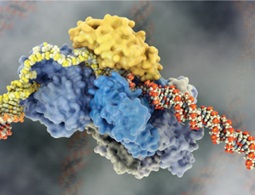
Explaining the DNA repair mechanism
Better understanding of the mechanisms involved in DNA repair may pave the way for developing inhibitors to improve the effectiveness of radiation therapy.
Better understanding of the mechanisms involved in DNA repair may pave the way for developing inhibitors to improve the effectiveness of radiation therapy.

Computer simulations show how nitrogen injections can help flush oil from underground storage.
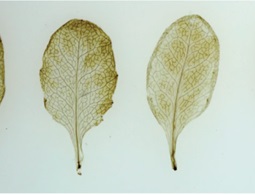
Stress-response protein promotes the accumulation of metabolites that help anti-pathogen defenses.
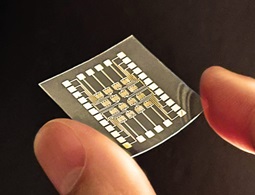
Compliant and conductive carbon nanomaterial could be the perfect fit for on-skin electronics.

Laboratory parameters maintained at physiologically relevant levels allow for more robust experiments with human cells.

An inexpensive piece of hardware integrated with solar panel controllers can protect isolated power networks from cyberattacks.
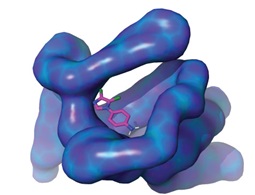
Studying the molecular motion of proteins reveals previously unseen binding sites that could be targeted by new drug candidate molecules.

Nanostructured surfaces enable lab-on-a-chip lung cancer diagnosis.

Resonating silicon microbeams sense temperature shifts induced by airborne molecules.

An asymmetric statistical model provides a better fit for imbalanced data with rare "positives," such as longitudinal health datasets.

A deep-learning technique could offer accurate large-scale predictions in the field of geospatial statistics.
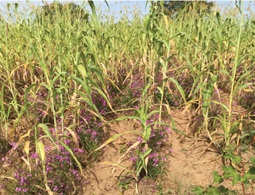
Crop resistance to a significant parasitic plant could be increased through gene editing or chemical treatment.

Smart windows that can polarize sunlight could offer a low energy alternative to Wi-Fi.

Machine learning could fast-track the formulation of tailor-made mixtures, including “greener” fuels.
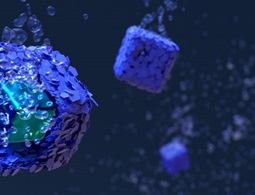
Clean hydrogen fuel is easier to produce from seawater with stable hierarchical electrocatalysts.

A flat all-dielectric reflector metalens design could benefit optical imaging, manipulation and communications.

An enzyme from a Red Sea bacterium suppresses the formation of a slimy biofilm that helps propagate hospital-acquired infections.

Revealing zinc’s interaction with a critical transport protein underscores the need to study biological pathways under physiologically relevant conditions.

Elaborate interaction discovered between epigenetic regulatory protein and its activating lipid partner.
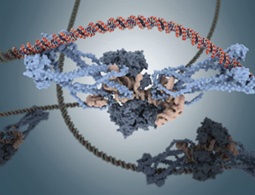
Blocking the overexpression of specific repeat RNA sequences could prove promising for the treatment of premature aging syndromes.