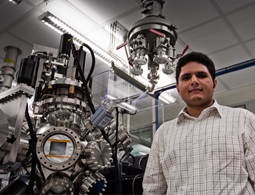
Dynamics of deep-sea carbon deposits spike interest
Analyses of marine bacteria offer insights into processes of carbon storage and release beneath the sea.
Cloth holds the power for storing energy
A woven carbon cloth coated in a conducting polymer and an oxide-material provides a stable way of storing energy.
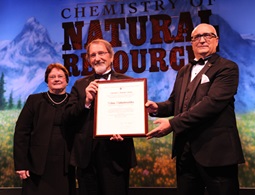
Electronics conference gives a positive charge
Highlighting sustainability and the work of female researchers was a strong focus of the international KAUST-US NSF electronics conference.
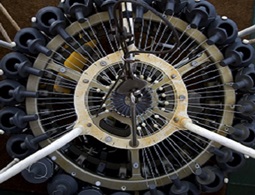
An origami ‘slinky’ that harvests incidental energy
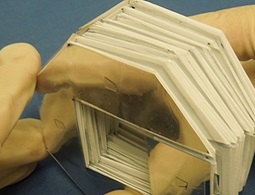
Lightweight and low-cost device uses friction inside paper-based coils to transform mechanical motion into electricity.
Taking computing to the next level
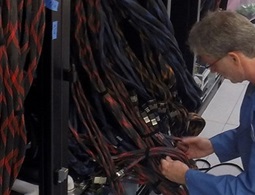
KAUST’s new supercomputer will enable ground-breaking scientific modeling and analysis in Saudi Arabia and worldwide.
Still time to submit WEP 2016 proposals
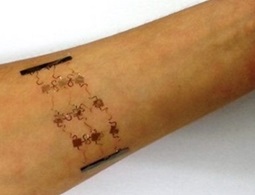
Nano therapeutics heat up
Smart, stretchable pads open up a new approach for thermotherapy.
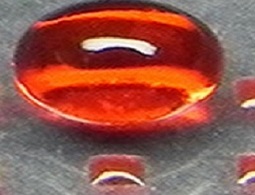
Using nature’s tricks to harvest atmospheric water
An inkjet-printed surface can turn fog into drinking water using bio-inspired micropatterning and adhesion technology.
Solar cells: a solution for better crystals
A fast and cost-efficient fabrication process for high-quality perovskite crystals bridges the gap to silicon.
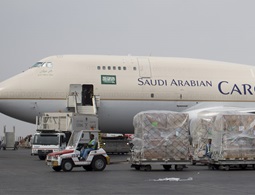
Shaheen-Cray XC40 supercomputer arrives at KAUST