

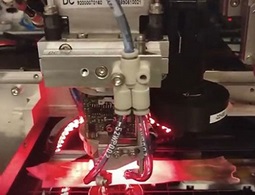
Carving out circuits that click into place
An easy and reliable assembly approach, inspired by building blocks, challenges the current fabrication of electronic systems.
An easy and reliable assembly approach, inspired by building blocks, challenges the current fabrication of electronic systems.
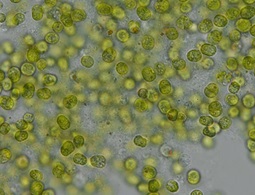
Jumping genes could make an alga, and its coral host, more tolerant to warming sea temperatures.

Some species of fish have special adaptive mechanisms that could improve their chances of surviving the greenhouse effect.
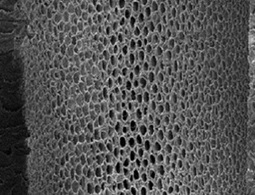
Tailor-made membranes offer a cleaner method for the industrial-scale separation of chemical mixtures, says Suzana Nunes. But first we need to make their manufacture greener.
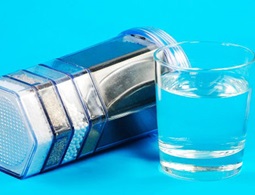
Trapping molecules on custom-designed porous surfaces becomes easier with a new model that unifies previous theories of adsorption.
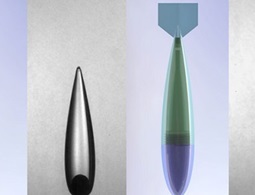
Creating teardrop-like gas cavities around metal spheres enables practically friction-free travel through liquids.
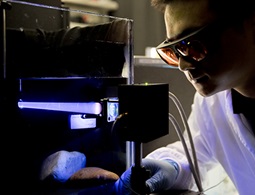
High-speed communication systems based on ultraviolet radiation are now in sight.

Silicon microelectronics and biomedical fields could benefit from a safe and cost-effective way to synthesize nanoparticles.


A new soil classification system, and tools to implement it, helps understanding of the properties of the ground underpinning geo-engineering projects.
Large-area, two-dimensional semiconductors wired through transparent oxide conductors produce high-performance see-through electronics.
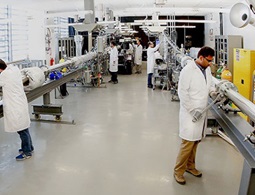
Simple two-component mixtures are good surrogates for studying the ignition properties of next-generation gasolines.