

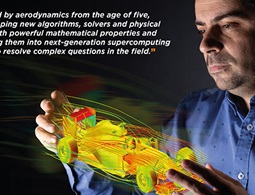
Better racing car design through an industry partnership
The Formula 1 race track is the ultimate testbed for a KAUST researcher's latest work.
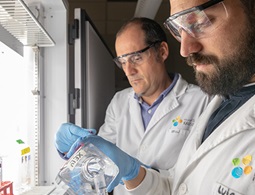
Growth and death in bacterial communities
Predation, not resource availability, limits the abundance of coastal Red Sea bacteria.
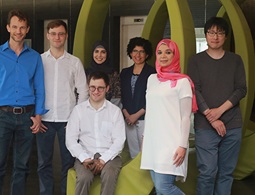
Global study links newly named syndrome with other disorders
Mutations in a repetitive protein motif are responsible for a rare cognitive disorder.
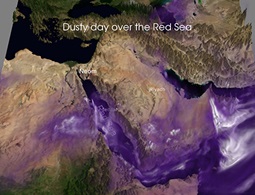
West Africa warms but airborne dust keeps the Red Sea cool
World-class computing facilities at KAUST enable researchers to tackle complex questions in climate science and oceanography.
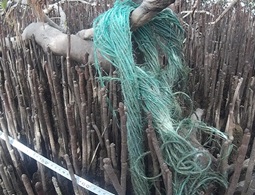
Mangrove forests trap floating litter
Marine plastic pollution accumulates in mangrove forests and is a danger to sea life.
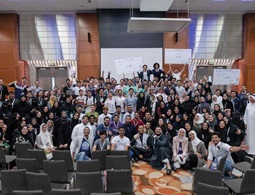
STEAM Innovation Challenge brings Saudi university undergraduate entrepreneurs to KAUST
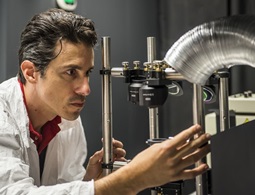
KAUST Associate Professor Andrea Fratalocchi’s research leads to Institute of Physics Fellowship
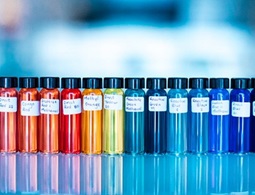
Colorful solution to a chemical industry bottleneck
A graphene-oxide membrane design inspired by nature swiftly separates solvent molecules.
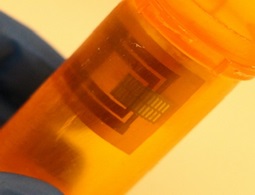
Smart pill bottle keeps drugs safe
Low-cost, stretchy sensors can be assembled inside the lid of a drug container to help monitor patient safety.

Taking aim at outliers
Automatic detection of uncharacteristic data sequences could change the way data is processed and analyzed.
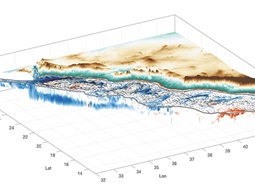
Eddy currents affect flux of salt more than heat
Modeling the 3D structure of Red Sea eddies shows how transport of energy and biochemical materials influences circulation patterns in the Red Sea.