

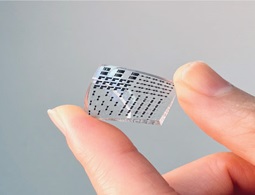
Electronic skin has a strong future stretching ahead
Soft, stretchy, slimline and strong electronics could accelerate the arrival of artificial skin.
Soft, stretchy, slimline and strong electronics could accelerate the arrival of artificial skin.

A model for the southeastern California lithosphere suggests that a strong upper crust overlies weaker lower rock layers.
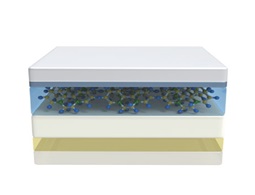
Small molecules could hold the key to enhancing the efficiency of organic solar cells.

Harnessing the power of deep learning leads to better predictions of patient admissions and flow in emergency departments.
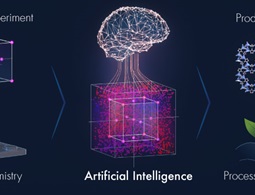
Chemistry computer algorithm does more with less experimental data to reveal the optimal way to make green materials.

Modeling shows that volcanic eruptions can cause changes in global climate, if the timing is right.
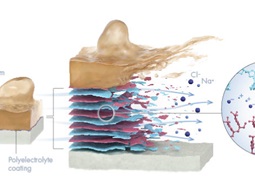
A polyelectrolyte coating enables clean seawater desalination systems without harmful chemicals.

An all-inclusive climate model for the entire Red Sea region is supporting Saudi Arabia’s plans for a sustainable future.

Laser writing breathes life into high-performance sensing platforms.
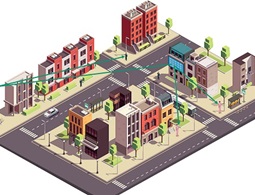
A mathematical model shows specialized reflective panels could be deployed on a large scale to enhance communication networks in urban areas.
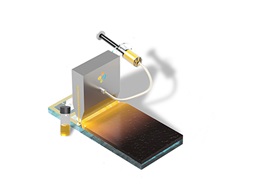
High-performance perovskite solar cells are made using a manufacturing-friendly liquid-based process suitable for roll to roll production.
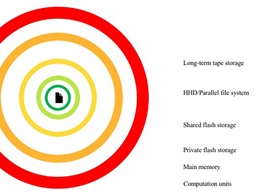
A continuous data supply ensures data-intensive simulations can run at maximum speed.

Microscope and protein data are incorporated into an easy-to-use-and-update tool that can model an organism’s 3D appearance.
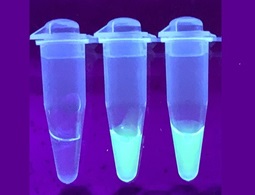
A new test kit could enable quick and effective COVID-19 tests for people arriving at airports.
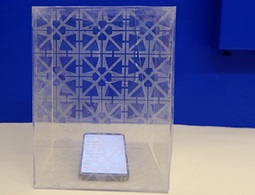
A printable ink that is both conductive and transparent can also block radio waves.
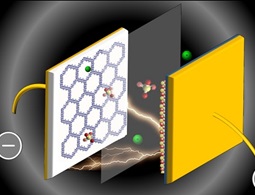
Carefully designed covalent organic frameworks could make supercapacitor electrodes that have a greater ability to store electric charge.

An experiment, elegant in its simplicity, helps explain why water becomes electrified when it touches hydrophobic surfaces.

A newly sequenced coral genome offers tools to understand environmental adaptation.
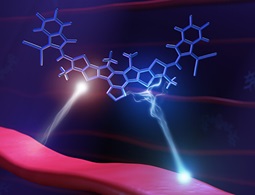
A deeper understanding of efficiency-limiting processes provides design rules for organic solar cell materials.

Treating silicon with carbon dioxide gas in plasma processing brings simplicity and control to a key step for making solar cells.