


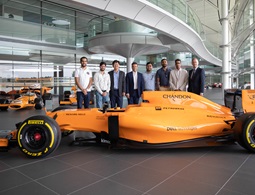
Pushing the limits of science on the track

Science for society: innovation and translation research
KAUST places great emphasis on translating university know-how into real-world impact, say Kevin Cullen, vice president of Innovation and Economic Development, and John Tannaci, associate vice president for research.
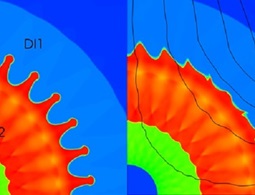
Attempting to tame plasmas in fusion
A numerical study reveals how to reduce instabilities in the complex flow of plasma in converging geometry of particles in fusion reactions.
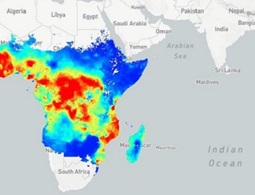
Solving real-world problems
A tool developed by Håvard Rue has transformed data analysis, interpretation and communication. It has been applied broadly: from modeling the spread of infectious diseases to mapping fish stocks.
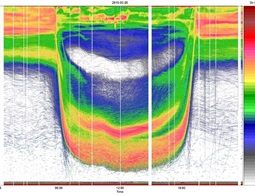
Novel carbon source sustains deep-sea microorganism communities
A carbon source stemming from daily fish migrations is implicated in the global carbon cycle.

Shells absorb light from all directions
Nanoparticles with a shell structure improve the performance of zinc-oxide photodetectors.
Giving old technology a modern update
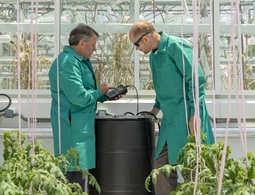
Reusing water to grow quality food in cities
Research to optimize aquaponics systems could inform a new era of urban food production.
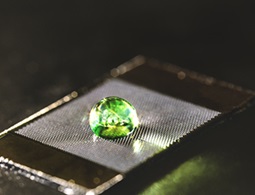
Bio-inspired materials decrease drag for liquids
Tiny nature-inspired cavities that trap air can stop liquids from sticking to surfaces without the need for coatings.
The holistic approach to catalyzing change
Rethinking industry-scale catalytic processes could slash global energy consumption and even turn carbon dioxide into a valuable commodity.

How extreme weather exacerbates air pollution
Simultaneously modeling air pollutants and weather under extreme conditions highlights the potential for serious health risks.