

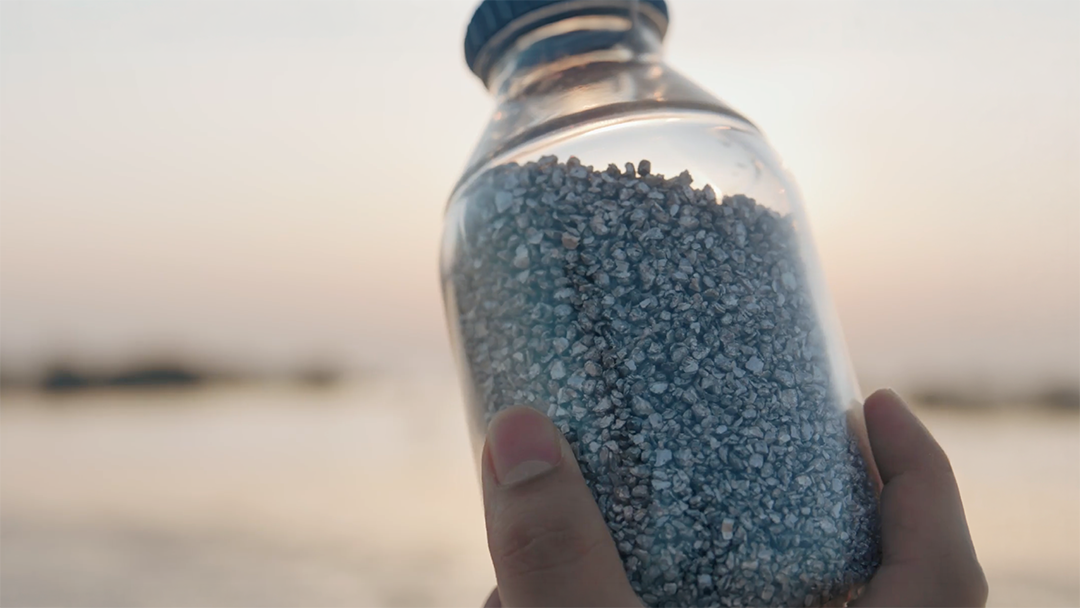
Turning seawater into a magnesium supply chain.
The Kingdom is rich in magnesium but produces none of the metal
Saudi Arabia is very rich in magnesium — its dolomite alone could supply three times the Kingdom's demand, and brine resources could meet several times world demand — yet it produces no magnesium metal. Global production is concentrated in China at over 90% of supply, creating a high supply risk for a mineral the USA, EU, Japan and South Korea all classify as critical.
Solar-powered electrolysis from brine
Magnesium can be made by thermal (coal-powered) or electrolytic (electricity-powered) routes. The thermal Pidgeon process accounts for over 99% of China's primary magnesium and carries 5x more labor and 4x the CO2 emissions. Powered by Saudi solar, electrolysis removes the fossil energy input that drives both the cost and the carbon of the incumbent route.
Green Magnesium in action
Brine to magnesium ingot, proven at pilot
At the KAUST pilot, brine is processed through treatment, magnesium hydroxide and magnesium chloride into finished magnesium metal, at up to 750 tonnes per year. The same metal underpins next-generation energy technologies: large-scale storage, energy shipping, green ammonia, solar panels, cement and catalysts.
- Resource
- KSA dolomite ~39,000 t/yr MgO (3x Kingdom demand); brine (4x world demand)
- Process
- Solar-powered electrolysis (vs coal-powered thermal)
- Feedstock scale
- Saudi Arabia produces 22% of the world's desalination brine
- Environmental edge
- Thermal route uses 5x labor and 4x CO2
- Process route
- Brine → magnesium hydroxide → magnesium chloride → magnesium metal
Creating impact where it matters most
Localizing a critical metal
Establishing domestic magnesium metal production to serve Kingdom and regional demand.
De-risking global supply
Offering an alternative to supply concentrated in a single country.
Lowest-cost, low-carbon
Using solar electrolysis to undercut thermal production on both cost and emissions.
Enabling the energy sector
Feeding storage, shipping, ammonia, solar, cement and catalyst technologies.
KAUST. On a mission for Saudi Arabia and the world.
Whether you’re a researcher, entrepreneur, industry partner or investor, we invite you to be part of the journey.
Partner With UsBuilding 34, KAUST Research & Technology Park, Thuwal 23955-6900, Kingdom of Saudi Arabia