

KAUST Coral Restoration Initiative (KCRI)
Restoring the future of coral reefs in the Red Sea.
Overview
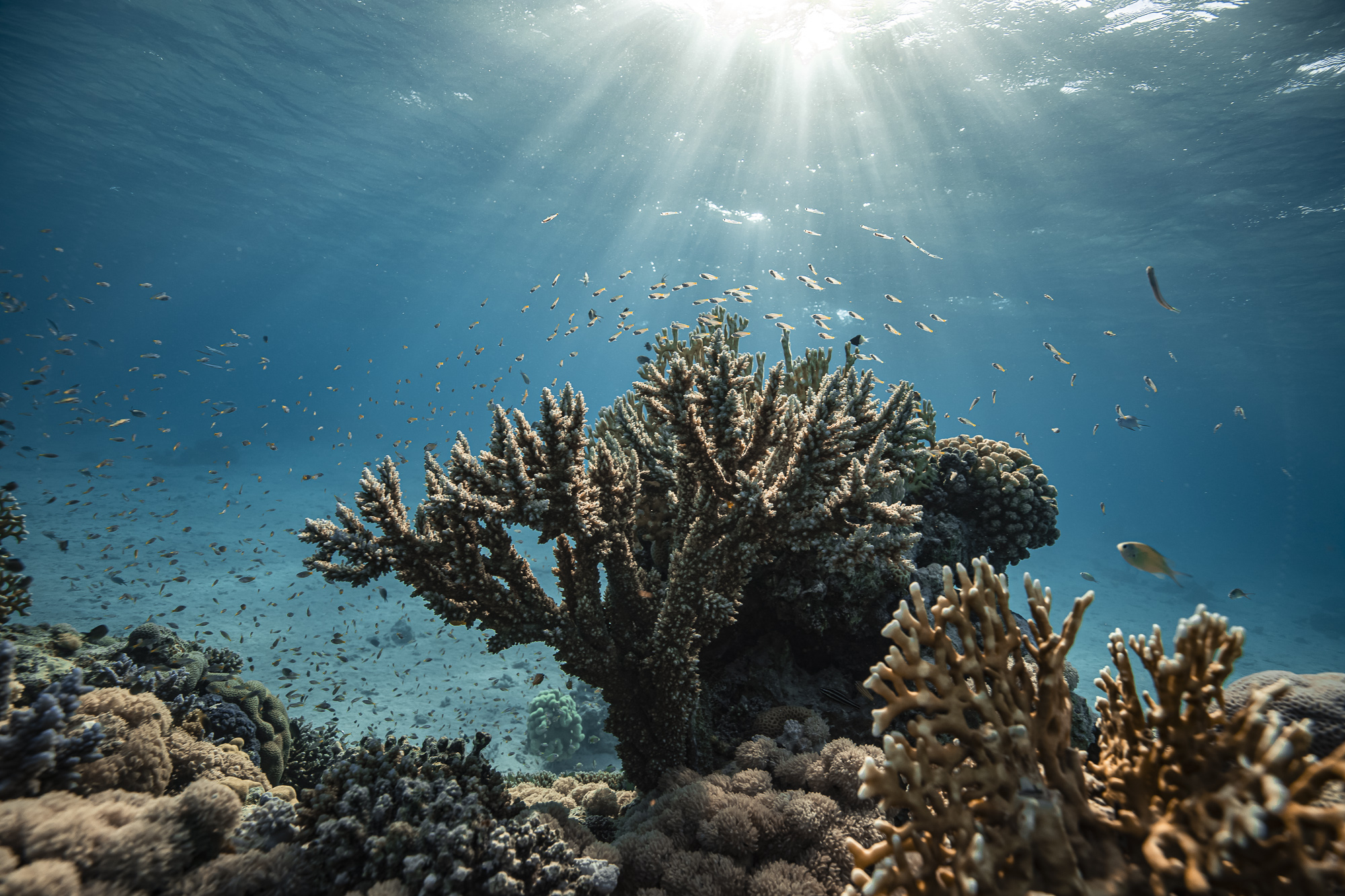
The KAUST Coral Restoration Initiative (KCRI) is the world’s largest coral reef restoration program, dedicated to restoring, enhancing, and preserving the unique coral reef ecosystems of the Red Sea. This groundbreaking initiative, supported by KAUST, utilizes cutting-edge technology, scientific research, and strategic partnerships—including a collaboration with NEOM—to ensure a sustainable marine environment for future generations.
A 30-Year Partnership
The KAUST-NEOM partnership is a 30-year collaborative agreement to establish Saudi Arabia as a global leader in coral restoration.
- Restore 100 hectares of coral reefscape at Shushah Island
- Construct the world’s largest land-based coral nursery
- Advance marine science research and coral resilience studies
- Establish Saudi Arabia as a global hub for marine conservation innovation
- Enhance eco-tourism and blue economy opportunities
- Environmental: Combat global coral reef decline, ensuring biodiversity
- Economic: Boost Saudi Arabia’s blue economy through sustainable tourism
- Scientific: Elevate KAUST’s reputation in marine research and sustainability
- KAUST: Leads research, coral nursery design, and operational management
- NEOM: Provides land, infrastructure, and long-term support
- Intellectual Property (IP): Joint ownership of new innovations, ensuring technological advancements remain in the Kingdom
Reefscape: A Vision for 2040
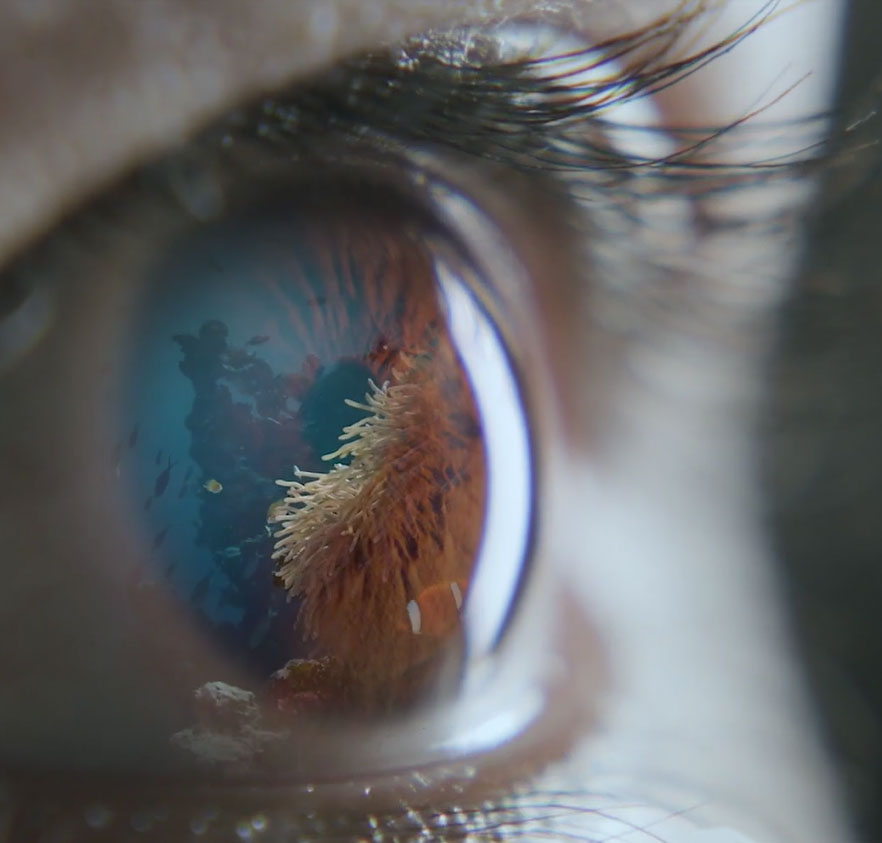
KCRI’s Reefscape Project is an ambitious restoration effort covering 100 hectares of coral reef adjacent to Shushah Island. This area has been systematically divided into operational grids to facilitate efficient planning and execution. Restoration efforts include coral outplanting, habitat enhancement, and augmentation using both natural and artificial structures. By 2040, this area will be transformed into a thriving, resilient marine ecosystem.
- Systematic restoration across 100 hectares
- Habitat enhancement with natural and artificial structures
- A fully operational predictive digital twin for ecosystem monitoring
KCRI integrates eCoral™, an end-to-end digital ecosystem developed by KAUST. This platform combines AI and ML-driven analytics to streamline coral restoration, scenario modeling, and decision-making. eCoral™ enhances restoration efficiency by automating monitoring, reducing reliance on human intervention, and providing real-time data for strategic planning.
- AI-powered reef health assessments
- High-fidelity 3D modeling of coral structures
- Predictive analytics for reef resilience forecasting
- Automated drone-based coral health surveillance
KAUST Coral Restoration Initiative
Innovative Coral Propagation: In-Situ Nurseries
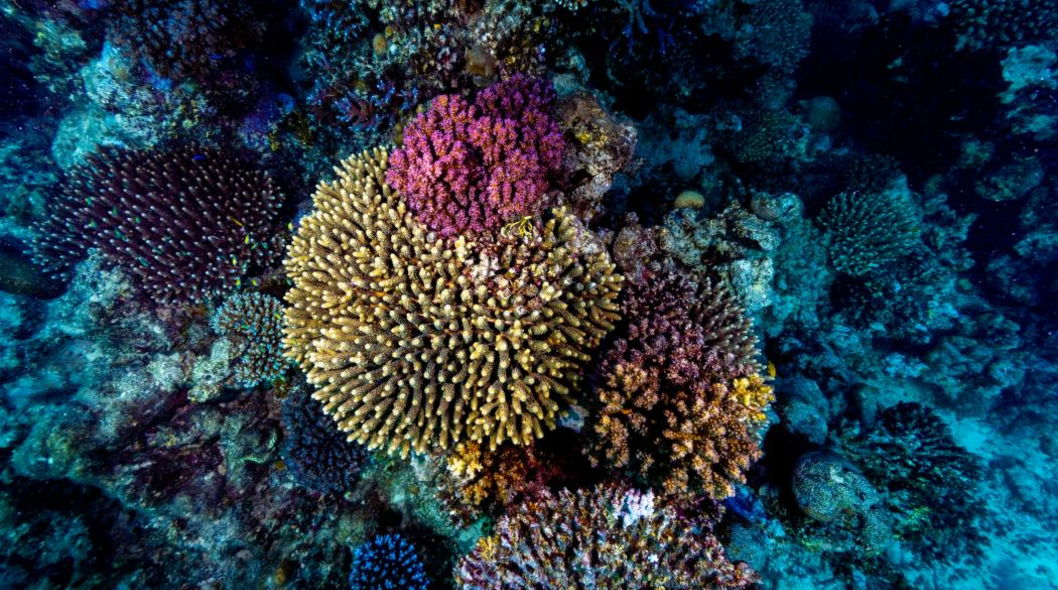
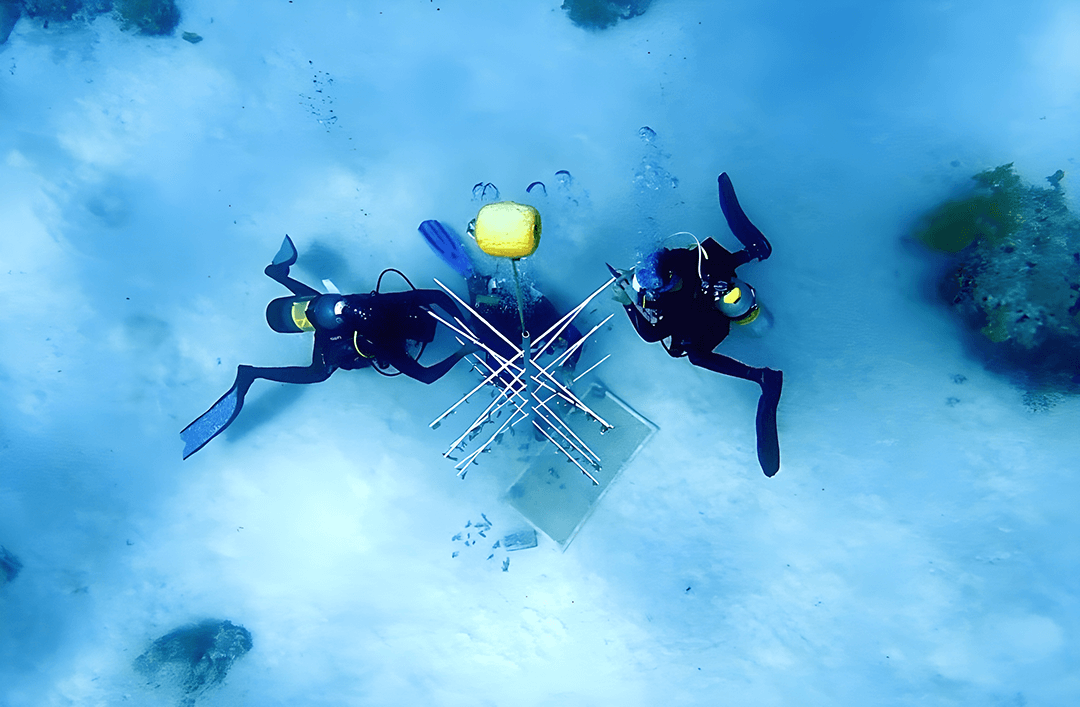
Located at Shushah Island, KCRI’s in-situ nurseries serve as living laboratories for coral propagation. These ocean-based nurseries facilitate the growth of coral species under controlled conditions before they are transplanted to reef restoration sites. With a capacity to produce up to 100,000 corals per year, this method accelerates coral rehabilitation efforts.
- Autonomous Underwater Vehicles (AUVs) for monitoring
- LiDAR & Photogrammetry for 3D mapping
- AI & Machine Learning for real-time ecosystem tracking
- Coral Microfragmentation Techniques to speed up coral growth
Land-Based Coral Nursery: Scaling Restoration Efforts
This 1,000 sq.m pilot facility is the largest ex-situ coral propagation site globally. Operational since April 2024, it serves as a testing ground for advanced coral propagation methods, including sexual and asexual reproduction techniques. By pioneering micropropagation and larval reseeding, the facility enhances coral survival rates and biodiversity.
KCRI is constructing the world’s most advanced land-based coral nursery at Haddah Beach, spanning the size of five soccer fields and housing over 400 tanks. This facility is designed to produce up to 400,000 corals annually, utilizing cutting-edge automation and robotics to enhance propagation efficiency. The integration of automated feeding, water quality monitoring, and climate adaptation studies will ensure optimal coral health.
Shushah Island Research Center: Advancing Marine Science
The Shushah Island Research Center, a vital part of KAUST’s Core Lab ecosystem, is dedicated to oceanographic and geological studies. Researchers at the center focus on reef ecology, genetic diversity, and coral disease mitigation. With cutting-edge facilities, the center attracts global scientists looking to advance marine restoration efforts.
Scientists, engineers, and marine biologists from around the world are encouraged to participate in KCRI’s research initiatives. Through knowledge-sharing and technology exchange, KCRI aims to create a worldwide network of coral restoration experts.
Saudi Talent Development Program: Empowering the Future
KCRI is deeply committed to training the next generation of coral restoration experts through its Saudi Talent Development Program.
Launched in 2023, this initiative bridges the gap between higher education and the workforce, equipping Saudi graduates with expertise in coral conservation, marine biology, and ecosystem restoration.
- One-year immersive training for Saudi graduates
- Hands-on experience in coral propagation, outplanting, and monitoring
- Expert mentorship and cutting-edge restoration techniques
- Exposure to global research partnerships in marine conservation
KCRI at a Glance
corals planned for outplanting by 2030
hectares of restored reefscape
corals propagated annually at land-based nurseries
corals propagated in ocean-based nurseries
nursery structures deployed
active R&D projects driving innovation
Climate-Resilient Coral Species
Join Us in Preserving Our Oceans
At KAUST, we believe in pioneering solutions for a sustainable marine future. The KAUST Coral Restoration Initiative is a global demonstration of how science, technology, and commitment can come together to protect one of the planet’s most vital ecosystems.
- Collaborate: Join KCRI’s research efforts and contribute to cutting-edge marine conservation.
- Educate: Raise awareness about coral reef restoration and sustainability.
- Support: Advocate for policies that protect marine ecosystems.
Be part of this groundbreaking journey. Together, we can restore our reefs and ensure a thriving marine future for generations to come.