

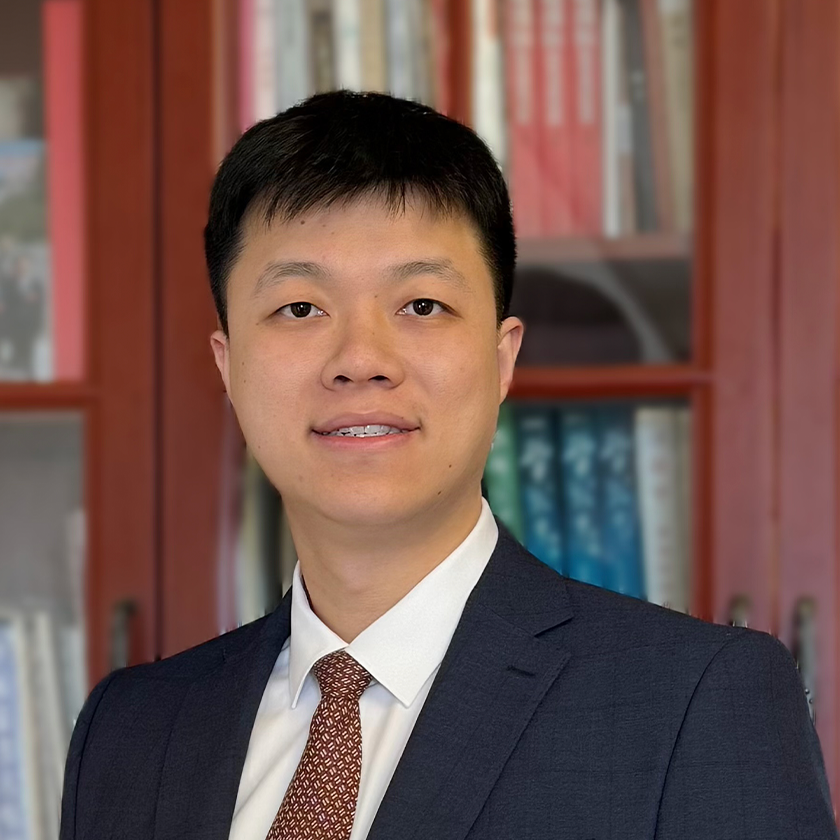

By uniting clinical data and AI, we can empower earlier diagnoses, reliable medical decisions, and healthier lives for people everywhere.
Program Affiliations
Center of Excellence
Biography
Prof. Yanda Meng is an Assistant Professor of Bioengineering at KAUST, where his research focuses on developing advanced artificial intelligence methods for healthcare and biomedical sciences. Prior to joining KAUST, he was a lecturer in the Computer Science department at the University of Exeter and completed postdoctoral and doctoral training in medical school (eye and vision science) at the University of Liverpool. He has published extensively in leading venues across medical imaging and AI, securing multiple external grants as principal investigator and contributing to impactful clinical collaborations with the NHS Foundation Trust in the U.K. and the clinical sectors in Saudi Arabia. Prof. Meng also serves in several leadership and editorial roles, including Section Editor of Thrombosis and Haemostasis, Guest Editor for multiple journal special issues such as IEEE-Journal of Biomedical and Health Informatics, and Area Chair for MICCAI 2025 & 2026 and MIDL 2026.
Research Interests
Prof Yanda Meng’s research focuses on developing artificial intelligence methods for healthcare, with an emphasis on medical imaging, vision-language models, multimodal learning, and trustworthy machine learning. His work integrates visual, clinical, and physiological data to improve disease detection, diagnosis, and risk prediction. He specializes in creating robust and reliable AI systems that can work effectively with the complexity of real biomedical data. Ultimately, his research aims to build interpretable and impactful technologies that support clinicians and enhance patient care across diverse healthcare settings.

Education Profile
Ph.D. Eye and Vision Science, University of Liverpool, Liverpool, UK, 2022
M.S. Computer Science, University of Leeds, Leeds, UK 2018
B.Eng. Computer Science, Capital Normal University, Beijing, China, 2017