

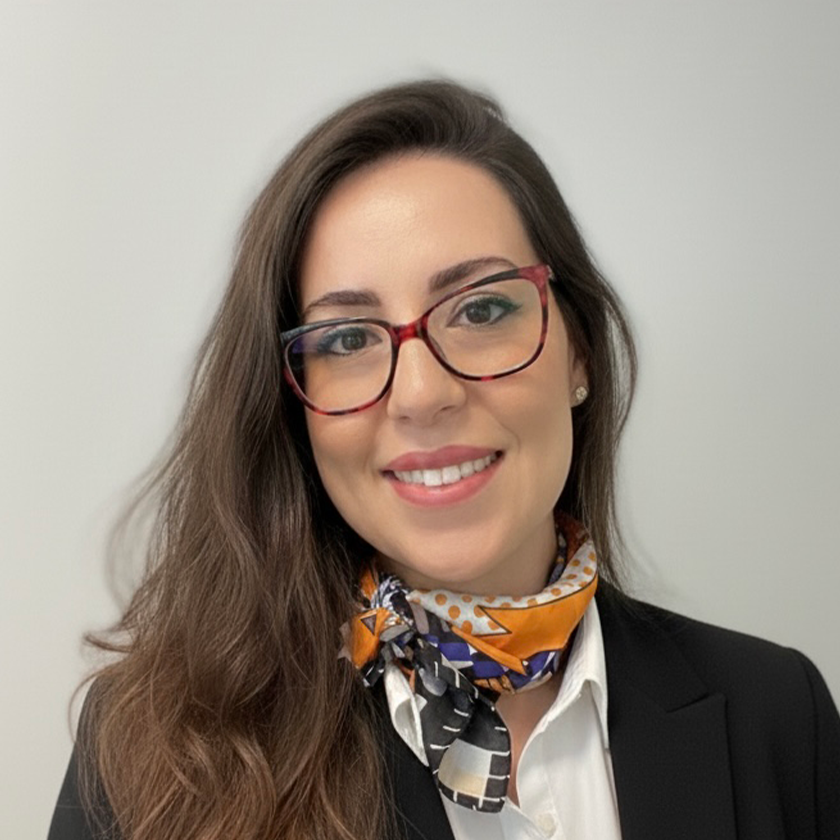
Denise Abboud
Professor of Practice

Science owes society more than discovery; it owes delivery. While we push the frontiers of innovation, we carry a responsibility to ensure that enduring problems are addressed at scale, with fairness, and with purpose.
Biography
Dr. Denise Abboud is Professor of Practice at King Abdullah University of Science and Technology, where she leads the Science, Technology and Innovation for Good (STI for Good) initiative within the Office of the Vice President for Research. With over a decade of international experience, she previously served on the Forensic Global Management Team of the International Committee of the Red Cross and led forensic operations across the Near and Middle East, working at the intersection of forensic science, human rights, and humanitarian action. Dr. Abboud has led multinational teams in complex contexts, including conflict, disasters, and migration, contributing to negotiations on detainee release, the dignified management of human remains, and the establishment of national mechanisms for missing persons. She also brings extensive academic and capacity-building experience, having developed Humanitarian and Criminal Justice Reform programs across the MENA region in partnership with international institutions and continues to advance a human-centered approach to science that places social impact at the core of research and innovation.
Research Interests
Dr. Denise Abboud’s research focuses on the intersection of forensic science, humanitarian action, and responsible innovation, with an emphasis on human-centered approaches to science and technology. Her work explores forensic human identification, missing persons, and the ethical application of science in complex contexts such as conflict, disasters, and migration. She is particularly interested in embedding social impact within research systems, advancing Science, Technology and Innovation (STI) for Good, and promoting locally grounded, co-created solutions to global challenges. Through interdisciplinary methods that combine scientific rigor, field-based practice, and policy engagement, her research seeks to ensure that innovation addresses real-world needs while upholding dignity and justice.

Education Profile
Ph.D. at the Institute for Criminal Justice Studies, University of Portsmouth, England, U.K. 2020
Master of Science (MSc) in Forensic Science, University of Strathclyde at Glasgow, U.K. 2012
Postgraduate University Diploma in Forensic Toxicology, American University of Science and Technology, Lebanon 2010
Bachelor of Science in Biology & Biochemistry from University of Saint Joseph (Lebanon) & University of Blaise Pascal (France) 2009