66 startups raised US$338 million between July 2025 and June 2026, an increase of more than 30% year-on-year
Ninety percent of the portfolio’s funding from external investment
Portfolio spans healthcare, agriculture, enterprise software, financial services, advanced technologies, and more
Startups supported by King Abdullah University of Science and Technology (KAUST) have raised US$1.4 billion in cumulative funding, with investment activity accelerating as companies across the University's entrepreneurship ecosystem attract capital to develop and scale their businesses.
While KAUST has contributed approximately US$77 million in funding to date, 90 percent of the portfolio’s funding comes from external sources, including US$33 million from the National Technology Development Program (NTDP). This reflects the substantial investment portfolio companies are attracting from outside the University.
Sixty-six startups raised a combined US$338 million in the financial year from July 2025 to June 2026. This is a year-on-year increase of more than 30% from the previous year, bringing total funding raised by portfolio startups to date to approximately US$1.4 billion.
Among the largest reported funding rounds were US$200 million for quantum computing company Pasqal and US$9.2 million for cybersecurity company COGNNA, followed by Aajil (Buildnow), Iyris, and Agellus Tank Robotics.
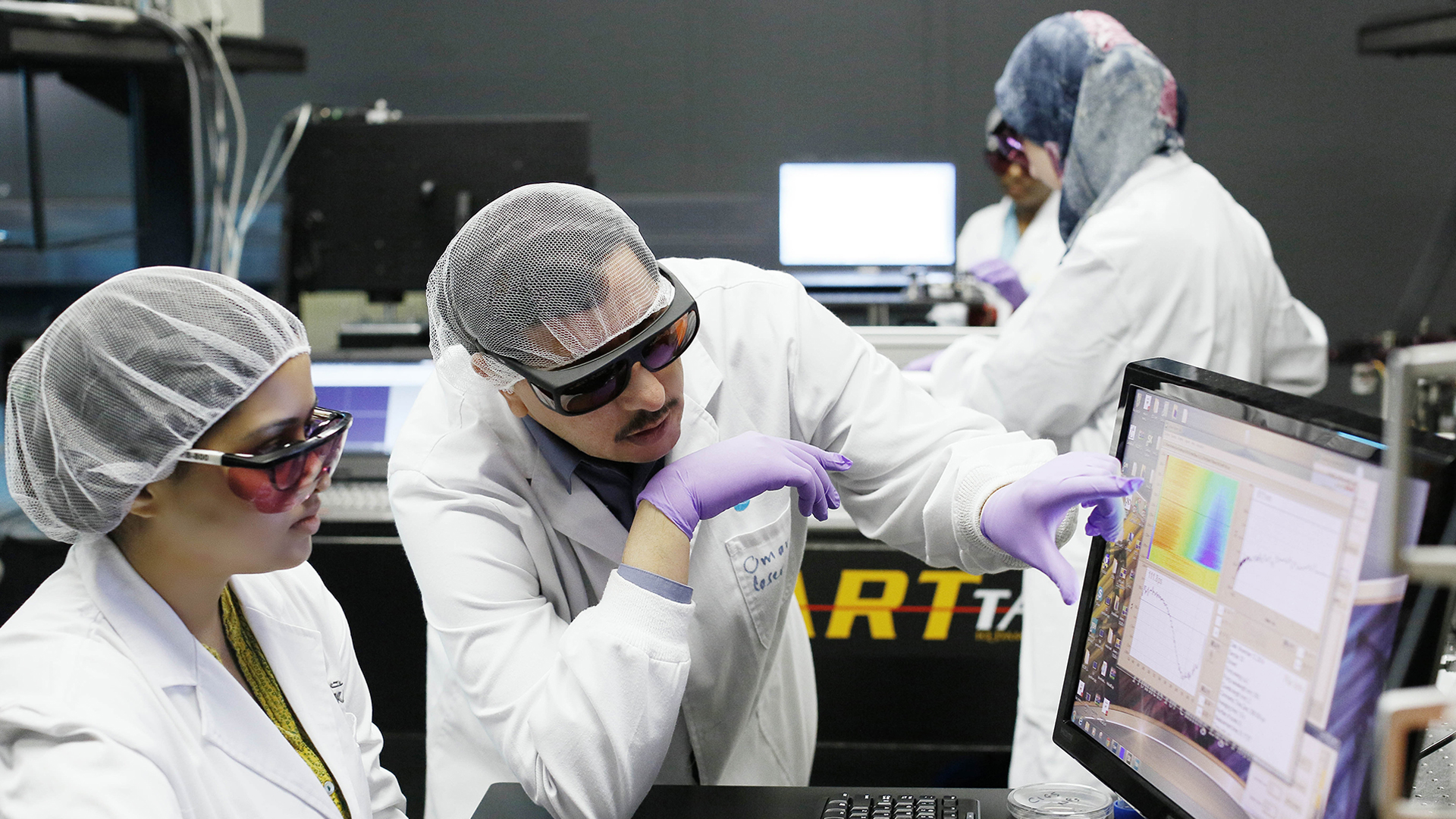
KAUST researchers review experimental data
KAUST’s portfolio includes 282 active startups with a combined valuation of US$5.7 billion across artificial intelligence, enterprise software, financial technology, healthcare, agriculture and advanced technology sectors. Companies across the portfolio have generated US$1.1 billion in cumulative revenue, as economic diversification remains a priority on Saudi Arabia’s national agenda.
“The success of so many of our portfolio companies is a testament to the fact that Saudi Arabia is a great place to grow and scale as a business,” said Dr. Ian Campbell, Senior Vice President, National Transformation Institute (NTI) at KAUST. “KAUST is a vital part of this thriving ecosystem, supporting startups to find commercialization opportunities that help bring their innovations from the lab to the market.”
KAUST combines early-stage investment with access to core laboratories and specialized facilities to help founders build and develop their companies. KAUST leverages longstanding impact partnerships with SAB, NTDP and NIDLP, as well as in-Kingdom venture capital firms and institutional partners to commercialize and localize technologies through programs like TAQADAM, NextEra, ScaleX, the KAUST Venture Studio program and the KAUST 4th Industrial Revolution Center.
“KAUST spinouts and spin-ins are delivering solutions to a wide range of real-world issues and driving growth as they do so,” said Haitham Al Humsi, Director of Innovation Ecosystem Development at KAUST. “The Venture Studio is a new initiative that we are expanding. It focuses on building startup ventures and commercializing intellectual property aligned with the Kingdom’s strategic priority areas from the start and allows us to bring new materials, new industrial processes, and sensor-based healthcare innovations to the market.”
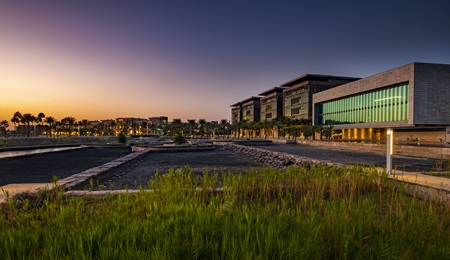
The KAUST Research and Technology Park connects startups with KAUST’s researchers, faculty, talent and facilities, and introduces them to companies across the Kingdom, as well as anchors international scaleups into the KAUST R&D ecosystem. These connections help startups draw on KAUST’s research capabilities, test technologies and develop commercial expansion.
Examples within the portfolio include iStoria and Faheem in education, Kestrl and EdfaPay in finance, and Cura and Atomica AI in healthcare. Food-related businesses include Barakah and Aqua Development, while TileGreen and Edama feature among companies working in waste reduction, recycling or reuse.
This latest annual assessment of the KAUST entrepreneurship portfolio applies standard methodologies, covering 282 active startups, using self-reported data from 83% of companies.
By understanding where value and success are being delivered, KAUST can determine where further development of its ecosystem is required, supporting broader innovation expansion and attracting investment to the Kingdom.