

KAUST study explores underground hydrogen storage using existing oil reservoirs
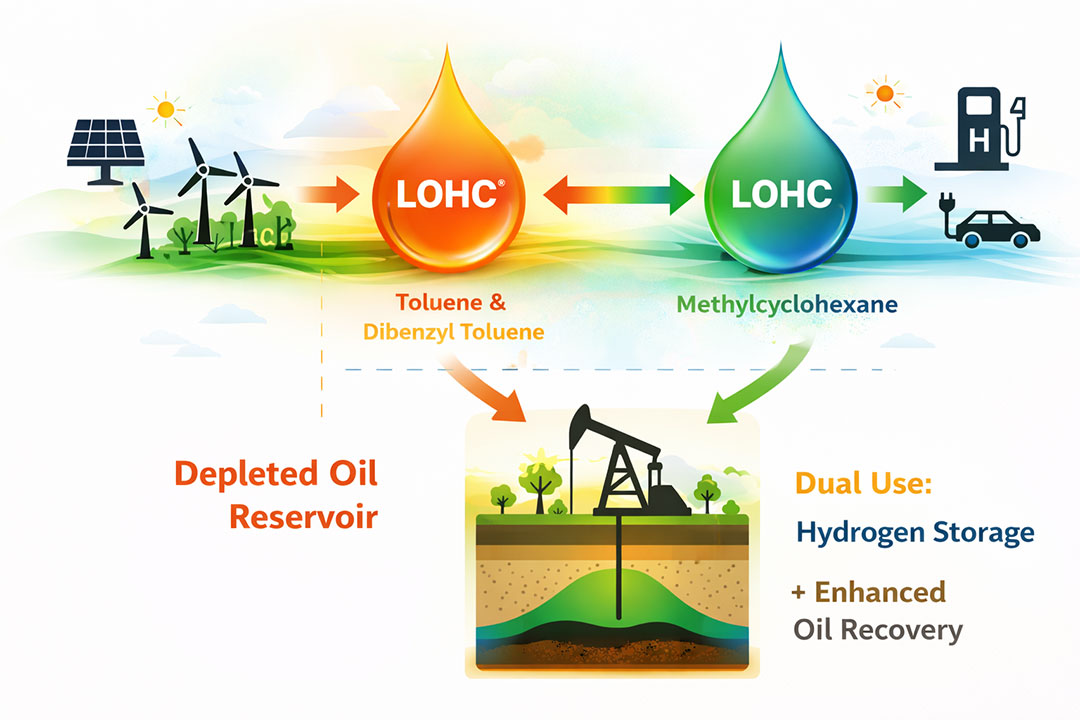
Researchers at King Abdullah University of Science and Technology (KAUST) have examined whether depleted oil reservoirs could be repurposed to store hydrogen energy underground using liquid organic hydrogen carriers (LOHC), which chemically bind hydrogen for safer storage. The study investigates how this approach could support energy storage while enabling additional oil recovery.
Led by Professor Hussein Hoteit and Zeeshan Tariq from KAUST’s Energy Resources and Petroleum Engineering program, the research team also includes Mutaz Alsubhi, Ph.D. candidate; Narendra Kumar, postdoc; and Muhammed Ali, research scientist. The study analyzes the technical feasibility of storing hydrogen underground in chemically bound form. By combining hydrogen storage with incremental oil recovery, the approach could improve the economic viability of large-scale hydrogen storage while making use of existing subsurface infrastructure.
The analysis suggests that depleted oil reservoirs could play a role in supporting the energy transition by serving as long-duration hydrogen storage sites, rather than remaining unused. Reusing existing reservoirs could reduce the need for new infrastructure and align with broader efforts to develop integrated and sustainable energy systems.
“As energy systems evolve, it’s important to consider how existing infrastructure can continue to serve a purpose,” said Professor Hussein Hoteit. “Our findings indicate that, with the right scientific understanding, reservoirs developed for conventional energy production may be adapted to support emerging energy needs.”
The study highlights how Saudi Arabia’s eventually maturing and depleted hydrocarbon reservoirs could contribute to future hydrogen storage strategies as part of the Kingdom’s broader energy transition. Storing hydrogen in a chemically bound form may also enhance safety and support long-duration energy storage applications.
The research contributes to ongoing work at KAUST focused on sustainable subsurface energy systems and provides insights relevant to hydrogen storage efforts in regions with established oil and gas infrastructure worldwide.