

KAUST converts Red Sea seaweed into economic and environmental value

King Abdullah University of Science and Technology (KAUST) is transforming unexploited Red Sea seaweed into a profitable commodity, supporting local employment, a circular economy, and more sustainable fisheries in the process.
Through KAUST Beacon Development (KBD), the University’s consultancy arm, researchers have been working with Coastline Company, based in Thuwal and also active in the Rabigh area where the KAUST team conducts additional harvesting, to collect a local brown seaweed called Sargassum — a practice that could expand in scope and cover the entire Red Sea Saudi coast.
Every year from September to February, massive blooms wash up on Red Sea shores, which municipalities either dump in local landfills to keep beaches pristine for tourism or leave along the coast, where the blooms become a public hazard as decomposing seaweed releases hydrogen sulfide gas with a distinct rotten-egg odor.
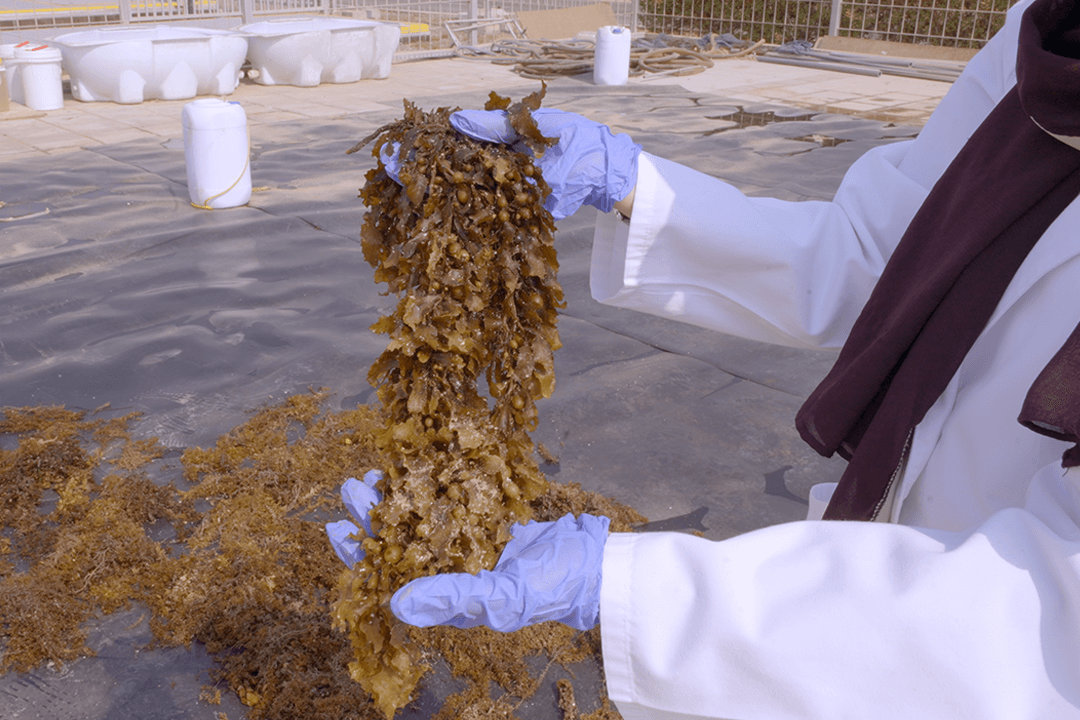
Dr. Claudio Fuentes Grünewald, director of KAUST’s algae program, highlighted KBD’s work with the KAUST Core Labs, researchers, and collaborators to identify untapped marine biomass resources and convert them into viable materials for agriculture, food, textiles, and other industries aligned with the Kingdom’s sustainability priorities.
“There is a massive opportunity in Saudi Arabia to exploit seaweeds,” Grünewald said, noting that the strongest commercial opportunities lie in using Sargassum to produce fabric raw materials; alginate (a water-soluble polysaccharide) for food applications; biostimulants, which help plants absorb nutrients more efficiently, improve stress tolerance, and enhance crop quality; and fucoidans, which are valuable natural compounds with antioxidant, antiviral, anti-inflammatory, and therapeutic properties.
KAUST can process Sargassum in a “biorefinery” way, Grünewald added, extracting alginate first, then using the leftover material to make other valuable products. The University has already demonstrated the concept at pilot scale.
“It is also important to highlight that another environmental gain from deploying this industry in Saudi Arabia is that, because seaweeds are natural carbon sinks, it will help keep carbon in the cycle and reduce the emission of carbon dioxide to the atmosphere.”
Fashion matters
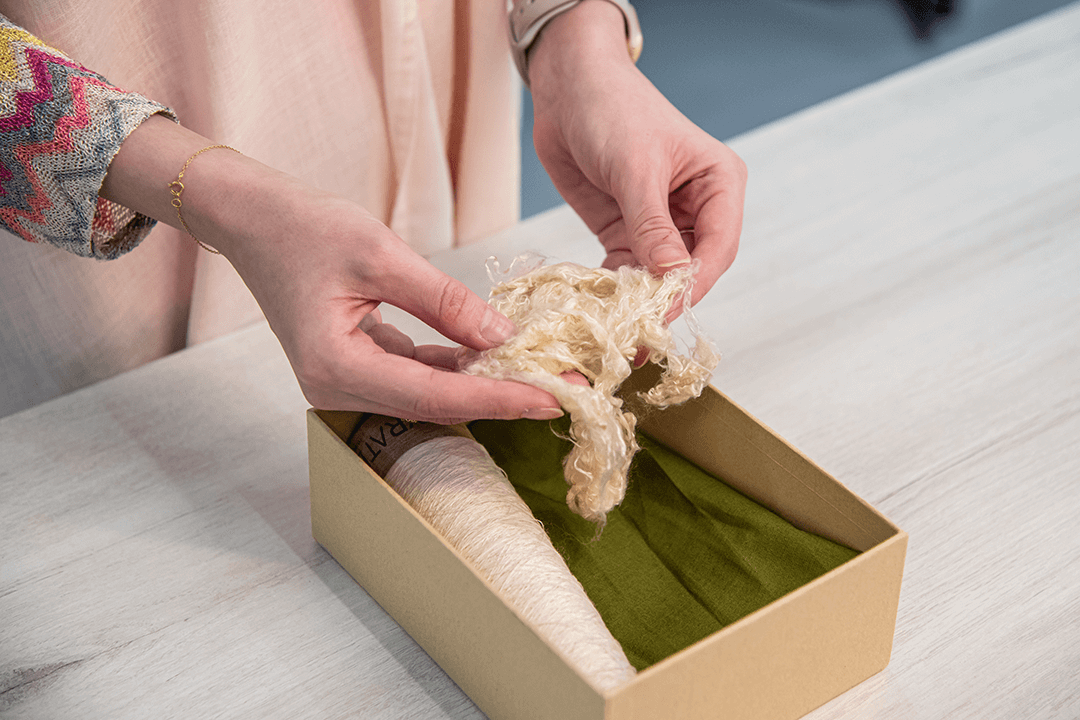
Alongside its environmental and agricultural potential, Red Sea Sargassum is also at the center of a new fashion collaboration. Through the Red Sea Seaweed Project, the Saudi Fashion Commission, part of the Ministry of Culture, the Spanish company PYRATEX®, and KAUST are working to turn this underused seaweed material into fully traceable, sustainable fibers. The initiative, showcased at the Misk Global Forum, demonstrates how KAUST research can feed directly into next-generation textile innovation.
Researchers with KBD have helped identify the most suitable seaweed species for fabric production and supplied the biochemical data needed to turn Sargassum into yarn. Textile performance also depends on milling Sargassum to a uniform particle size, ensuring the powder meets the mechanical requirements for fiber production.
“The natural composition of Sargassum — rich in carbohydrates and especially cellulose — makes this seaweed an excellent candidate for fabric production,” Grünewald said.

In fact, PYRATEX carried out fiber spinning, while The Lab — the Fashion Commission’s product development studio — handled the fabric knitting and the creation of the garment pieces using PYRATEX technology. The resulting lyocell, a cellulose-based fiber spun together with Red Sea algae and organic cotton, hints at a circular, seaweed-based fashion value chain that could support coastal communities and diversify the Saudi economy.
“What we need to do, and what we are doing, is understanding exactly when the seaweed is reproducing,” added Grünewald. “After that point, we can harvest the biomass.”
Wild opportunities
Part of KBD’s research has resulted in a large open-system raceway. This long, shallow artificial outdoor pond with circulating seawater is used to grow seaweed at scale under controlled conditions.
After a period of growth in this artificial pond inoculated with seaweed produced at KAUST, the biomass is manually harvested, sun-dried, and processed for a range of uses, including bioremediation and fish feed. Since December 2024, however, Coastline teams have also collected natural biomass from Thuwal and neighboring area shores, transporting it to the microalgae facility and seaweed pilot plant for processing.
“For coastal villages, this new industry can bring strong revenues for local fishermen and, most importantly, will help the environment by diminishing fishing pressure, especially during the months when fishermen can harvest this seaweed, allowing ecosystems time to recover from intensive fishing,” Grünewald said, noting that harvesting wild seaweed has significant ecological and economic benefits by providing local work that reduces pressures on fisheries.
“We are talking about potentially millions of tons of this along the Red Sea coast because it stretches all the way from NEOM down to Jazan,” he added. “It is everywhere along the coastline.”
Phase II
In the Red Sea Seaweed Project’s next phase, KBD is advancing material optimization, supplying finely milled Sargassum powder for mechanical and rheological testing to reach a 50 percent fiber inclusion target.
The work builds on KBD’s controlled cultivation of high-value seaweed species such as Ulva, where researchers have grown the seaweed through its full life cycle in the lab and shown that large outdoor raceway ponds can naturally clean nutrient-rich aquaculture water.
For the project, producing a public guide for easy species identification will be an essential part of this next phase — a key element when engaging coastal communities in harvesting activities. Given the high natural abundance of Sargassum, averaging about 2.2 kilograms of wet biomass per square meter, the most efficient approach is to harvest it directly from the sea or immediately after it reaches the coast in fresh condition.
“The future looks very promising for the seaweed industry in Saudi Arabia,” Grünewald said, adding that local production of alginate — a widely used food thickener now imported from China — could make the Kingdom self-sufficient, create an export stream, and open a new revenue-generating industrial sector along the Red Sea coast. It represents one example of many seaweed opportunities, ranging from medical applications to animal feed to fashion.
“We have done the baseline research at KAUST, and now we know the best seaweeds to be exploited, the products that we can obtain from them, and the processes needed to produce those products.”