

H.R.H. Prince Abdulaziz celebrates KAUST’s largest graduating class in its history
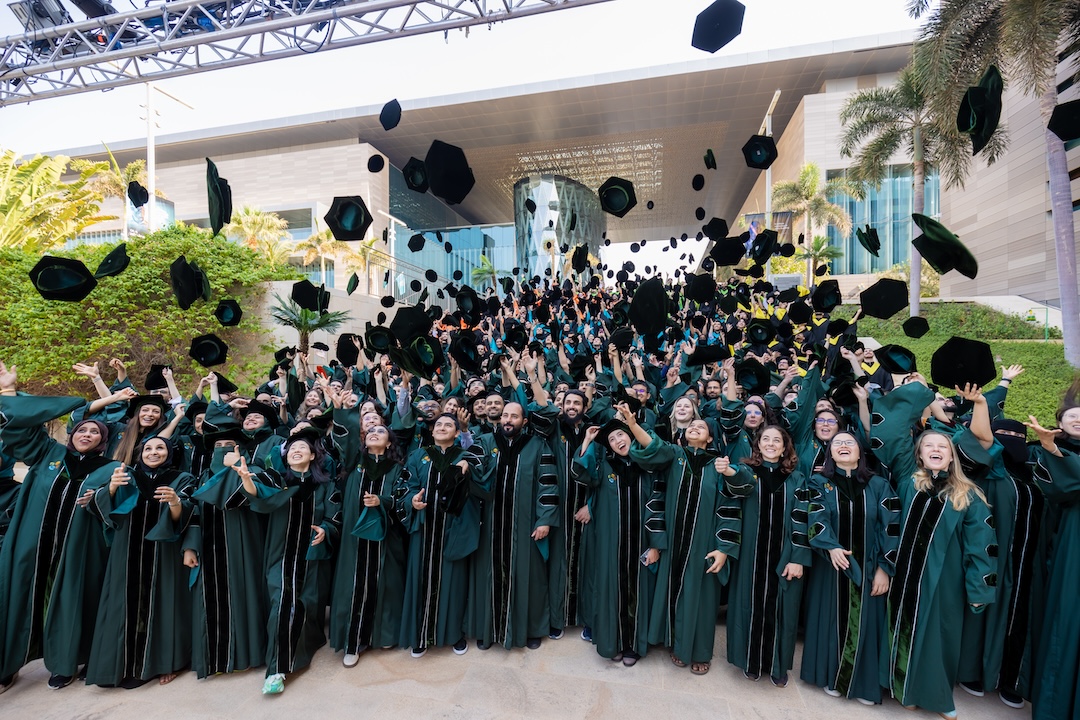
In the presence of His Royal Highness Prince Abdulaziz bin Salman bin Abdulaziz, Minister of Energy and Chair of the King Abdullah University of Science and Technology (KAUST) Board of Trustees, 593 graduates — the largest graduating class since the University’s inauguration — received their degrees at the 16th commencement ceremony.
Prince Abdulaziz joined members of the KAUST Board of Trustees, leadership and faculty, as well as graduates, their families, and friends, in celebrating students’ achievements and reaffirming KAUST’s position as a global leader in research and education.
“As you begin the next phase of your lives, whether through further studies or by entering the workforce, remember that the challenges ahead of you are not obstacles to progress — they are invitations to greatness,” KAUST President Sir Edward Byrne AC told graduating students. “You have been prepared not just to face the future but to shape it with intelligence, integrity, and imagination.”
In total, the November 26 ceremony at KAUST honored 267 Ph.D. candidates, 253 Master of Science graduates, 66 Master of Engineering in AI graduates sponsored by the Saudi Ministry of Interior, and seven postgraduate diploma recipients. Of this year’s graduates, 35 percent are female, 41 percent are Saudi, and more than 45 countries are represented in the Class of 2025.
KAUST graduates advancing national priorities
This year’s graduating class includes many examples of students already contributing to Saudi Vision 2030 goals and global scientific progress:
Jana Alghamdi, a Technology, Innovation, and Entrepreneurship (TIE) master’s student and alumna of the KAUST Gifted Student Program (KGSP), co-founded Furat, a deep-tech startup using AI and connected sensors for real-time water monitoring supporting Saudi Arabia’s sustainability and water security priorities.
Katya Aguilar Perez, a Ph.D. graduate in chemistry, received a Bayer Foundation fellowship and will join Kiel University in Germany to advance drought-resilient crop technologies through nanocarrier-based delivery systems.
Abdulrahman Alharbi, who completed his Ph.D. in applied mathematics, developed advanced models to understand large-scale human behavior and serves as a lecturer at the Islamic University of Madinah.
In her address, bioscience Ph.D. graduate Lila Aldakheel highlighted her research on plastic-degrading microbes aligned with national environmental objectives. “Science, when guided by purpose, can create hope, and even small discoveries can make a meaningful difference,” she said.
The Class of 2025 now joins a growing community of KAUST-trained scientists, innovators, and entrepreneurs driving breakthroughs across energy, water, food, climate, health, and AI. This collective effort is helping advance the Kingdom’s ambitions to build a thriving, knowledge-powered future.