

From gas to stone: KAUST demonstrates CO₂ sequestration underground with reduced water usage
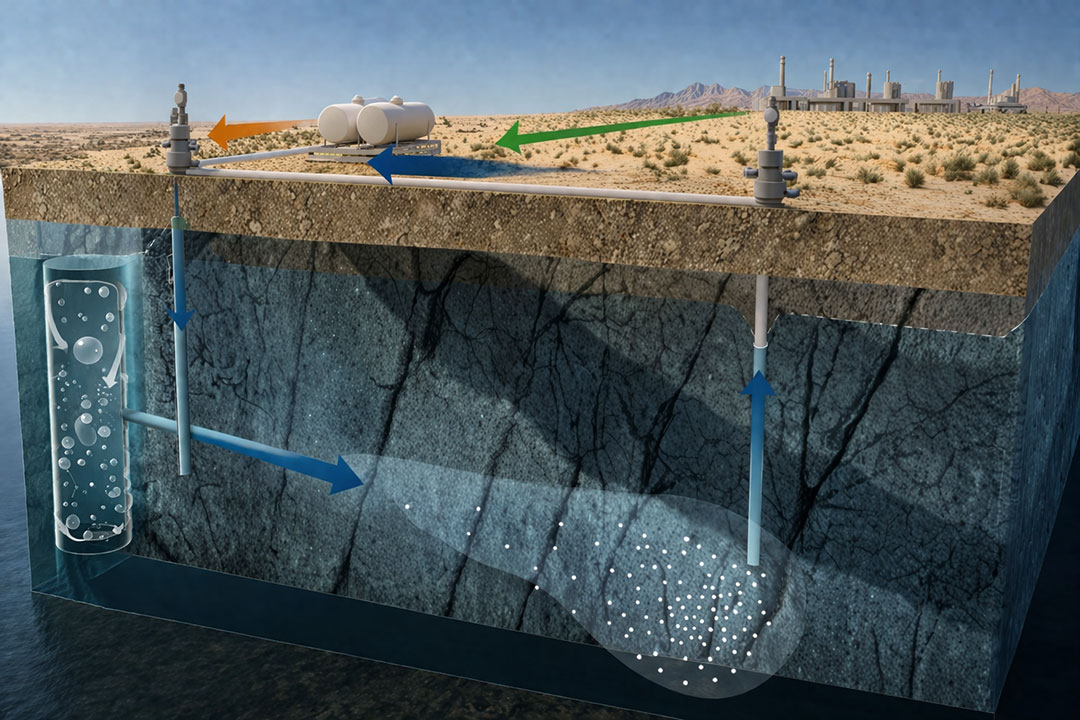
Overview of the CO₂ mineralization pilot system, showing surface operations, subsurface wells, and the geological setting near Jizan on the Red Sea coast. Image adapted from Oelkers et al., Nature (2026), CC BY 4.0. http://creativecommons.org/licenses/by/4.0/.
Researchers at King Abdullah University of Science and Technology (KAUST) have demonstrated that carbon dioxide (CO₂) can be permanently converted into solid rock underground using a system that recycles water already present deep underground, removing one of the main barriers to deploying this approach in arid environments.
In a field trial in western Saudi Arabia, researchers injected CO₂ deep underground into volcanic rock in the Jizan region. Rather than relying on scarce freshwater, the system uses a closed-loop system that recirculates water from deep underground. As CO₂ moves through the rock, it reacts with surrounding minerals and slowly hardens into stone, trapping the carbon in a stable, permanent form.
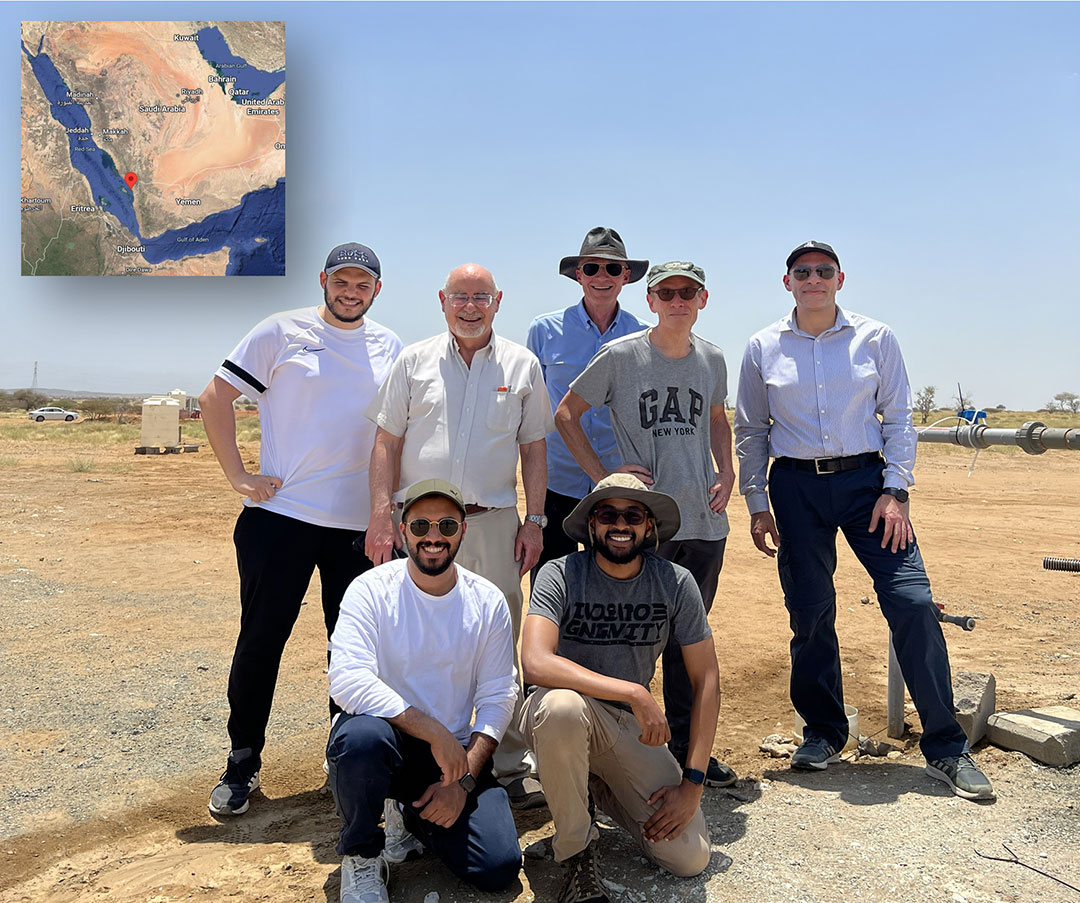
Carbon mineralization is not a new concept, but until now it has depended heavily on access to large volumes of water and highly reactive volcanic rock. Previous estimates suggested the process could require up to 20–50 times more water than the amount of CO₂ stored, limiting its use outside specific geological settings.
What this study shows is that these constraints can be overcome.
In the KAUST-led pilot, 131 tons of CO₂ were injected underground, with monitoring indicating that around 70 percent had been converted into solid minerals within ten months. The work was carried out in basalt formations estimated to be between 21 and 30 million years old, significantly older than those used in earlier flagship demonstrations, suggesting that suitable sequestration conditions may be more widespread than previously assumed.
“Carbon mineralization has long been seen as one of the most secure ways to entrap CO₂, but its practical application has been limited by water availability,” said Hussein Hoteit, Professor in Energy Resources and Petroleum Engineering at KAUST. “What we have shown here is that by working with the subsurface system, rather than depending on surface resources, it is possible to make this approach viable in environments where water is scarce.”
The research was led by KAUST scientists and delivered through a field trial in collaboration with Saudi Aramco, which operated the site and supported injection and monitoring activities. KAUST researchers analyzed the subsurface processes to confirm how CO₂ is converted into solid minerals underground. The study also draws on international expertise in carbon mineralization from the University of Iceland.
Basalt formations are found across multiple regions globally, including parts of the Middle East, Africa, and Asia. The ability to mineralize CO₂ in older formations using recycled subsurface water expands the potential footprint of this approach, particularly in industrial regions where emissions are concentrated but water resources are limited.
Unlike conventional carbon storage, which keeps CO₂ in a compressed form underground, mineralization locks it into solid rock. By showing this can be achieved using recycled subsurface water, the study opens new possibilities for deploying permanent carbon storage in regions where water resources are limited and industrial emissions are concentrated.
References
CO2 subsurface mineral storage by its co-injection with recirculating water. Nature 651, 954–958 (2026). https://doi.org/10.1038/s41586-026-10130-5