

From reefs to resilience: Global experts convene at KAUST to advance One Health
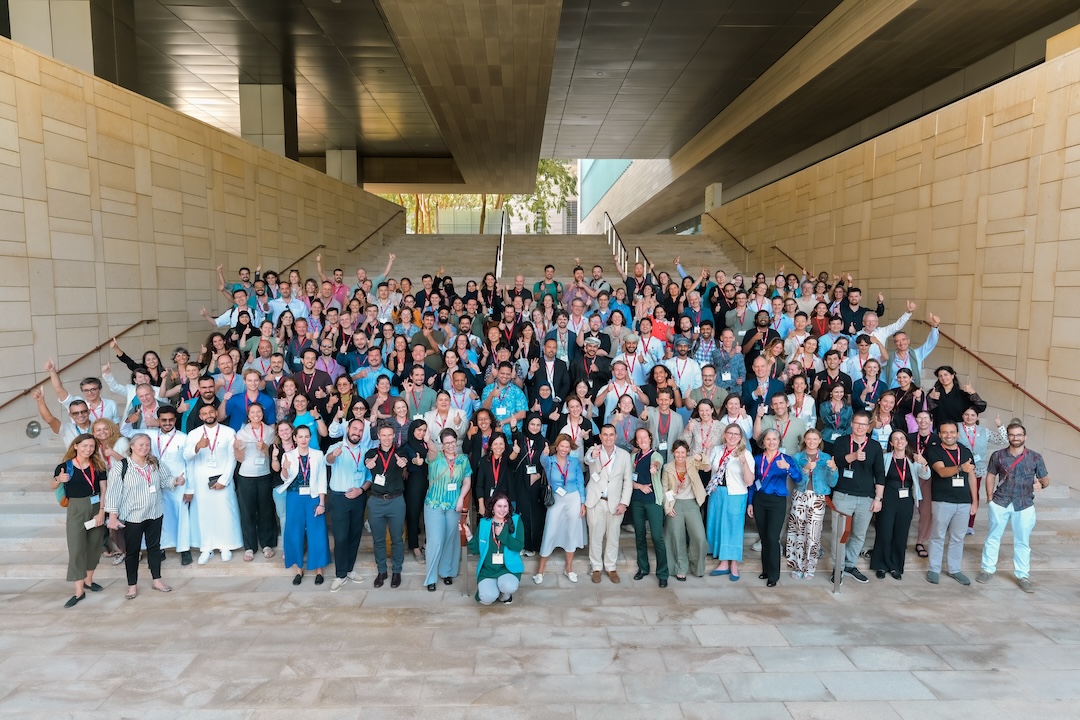
Conference participants gather at KAUST for the Nature Conferences: Corals, Coasts and One Health.
Once viewed primarily as a biodiversity concern, reef decline is increasingly understood as a systemic risk — one that affects fisheries, food security, storm protection, and tourism-dependent economies.
At King Abdullah University of Science and Technology (KAUST), marine researchers are working alongside counterparts from around the world to better understand and address these interconnected risks, linking reef science with food security, coastal protection, and economic resilience in alignment with Saudi Vision 2030.
“The Red Sea provides unique opportunities for marine sciences research,” Professor Pierre Magistretti, vice president for research, told attendees at Nature Conferences: Corals, Coasts and One Health. He said the conference exemplifies an interdisciplinary, solution-oriented research model grounded in marine systems. “Marine science, particularly Red Sea research, is of great importance to the University and the Kingdom.”
Organized by Nature, the February 14–16 conference convened international researchers and representatives from Saudi national entities, including SHAMS, Red Sea Global, and the National Center for Wildlife, underscoring growing collaboration to advance marine conservation, coastal resilience, and ecosystem health. Approximately 120 participants attended — a record for a Nature Conference.
Professor Raquel Peixoto, professor of marine science and co-organizer of the conference, said a strong consensus emerged that reef science must shift from observation to coordinated, cross-sector intervention grounded in a One Health framework, recognizing that the health of ecosystems, animals, and people is interconnected.
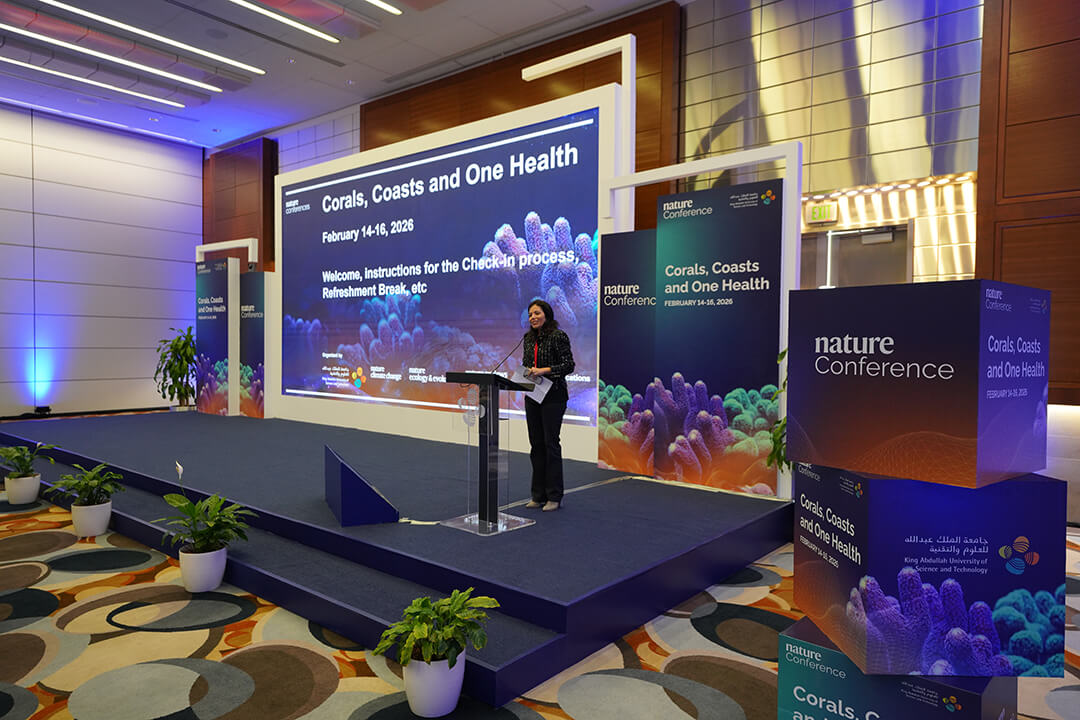
Professor Raquel Peixoto, professor of marine science and co-organizer of the conference, says rebuilding coral reefs and fish stocks begins with microbes.
The consequences cascade across ecosystem services, coastal economies, and human well-being, she noted. “We must keep corals alive. We need to keep these ecosystems functional and capable of restoration.”
Her pioneering probiotics research focuses on the microbial foundations of reef resilience. Peixoto and her team select, test, and deploy beneficial microbes to help corals withstand heat stress, degrade toxic compounds produced during bleaching, and strengthen the broader reef ecosystem through scalable, field-tested technologies. “Rebuilding coral reefs and fish stocks actually depend on us starting from the microbes,” she said.
Corals can adapt to environmental pressures, Peixoto added, but only if they survive long enough. “Even if these solutions are temporary, we give them as medicine. We’re keeping corals and reefs alive. Even if probiotics won’t last forever, they give corals a chance to adapt.”
The One Health approach
During the conference, speakers adopted a One Health lens, underscoring the links between reef ecosystems, coastal environments, and human well-being. Professor Jessica Zamborain-Mason, assistant professor of marine science at KAUST, said One Health must move from a conceptual framework to an operational tool in reef and coastal management, particularly in public health and policy.
“We need to integrate indicators of reef health into policies that aim to improve nutrition,” she said. “When we think about coral reef management, we also need to integrate nutritional outcomes. We achieve it by thinking of reef socio-ecological systems as an entire connected system.”
In her presentation, Zamborain-Mason outlined research linking reef ecosystem health, sustainable fisheries management, and human nutrition. She said nutrition-sensitive management of reef fisheries could improve food security, reduce diet-related disease, and strengthen resilience in tropical coastal communities.
Reef management must move beyond coral-centric, siloed strategies and instead integrate connected habitats, different values, cumulative impacts, and land–sea policy to build resilience, she added. “We need to integrate the humannutrition and public health relevance a lot better. That would be my take-home message, from a fisheries and conservation perspective, but also from a public and planetary health perspective.”
When reefs degrade, pathogens proliferate, with consequences that extend to livelihoods, food systems, and economic stability, Peixoto said. “It’s one planet, one health, and everything is connected.”
Building for resilience
Resilience was a central concept throughout the conference. Professor David Suggett, director of the KAUST Coral Restoration Initiative (KCRI), argued that reef resilience depends on scaling restoration through robust, data-driven monitoring and adaptive decision-making, using digital tools to match corals to optimal conditions, improve survivorship, and make restoration more effective and financially viable at scale.
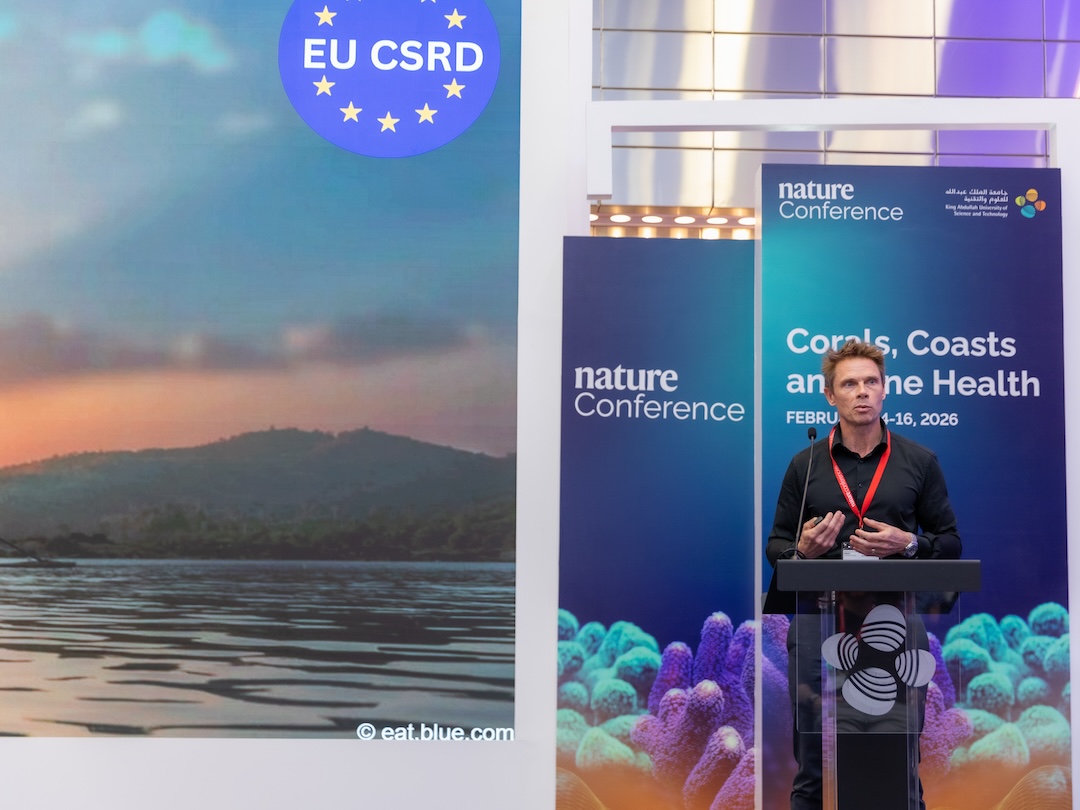
Professor David Suggett, KCRI director, argues that reef resilience depends on scaling restoration through robust, data-driven monitoring and adaptive decision-making.
“The world is going through a transition, deploying novel tool sets as we expand global restoration efforts spanning regenerative to full ecological recovery,” he said. “[An] urgent need to preserve and rebuild reefs is catalyzing innovation and investment, and we are going through a boom.”
KCRI, a large-scale coral reef restoration program at NEOM’s Shushah Island along the Red Sea, anchors its work in comprehensive monitoring tools. Suggett highlighted the initiative’s full digital twin as a centerpiece for scaling reef restoration, enabling real-time monitoring, adaptive decision-making, and more precise restoration practices to maximize survivorship and long-term resilience.
Since 2022, KCRI’s pilot phase has resulted in more than 150,000 corals propagated in both its in-situ and land-based (pilot) facility, and more than 30,000 transplanted back to the reef. In 2026, KCRI transitions to its restoration scale-up phase with the opening of the primary land-based facility (coral farm), designed to significantly expand capacity to more than 400,000 propagated corals at any one time.
The initiative offers elements that other coral restoration efforts around the world can tailor to their needs to undertake scalable restoration, Suggett said. “We are working more closely with many smaller-scale programs on how they define what they’re doing to achieve scalability and how our tools enable them to operate more effectively.”
An impactful conference
Throughout conference discussions, the message was clear: even communities far from reefs are economically and environmentally connected to their fate.
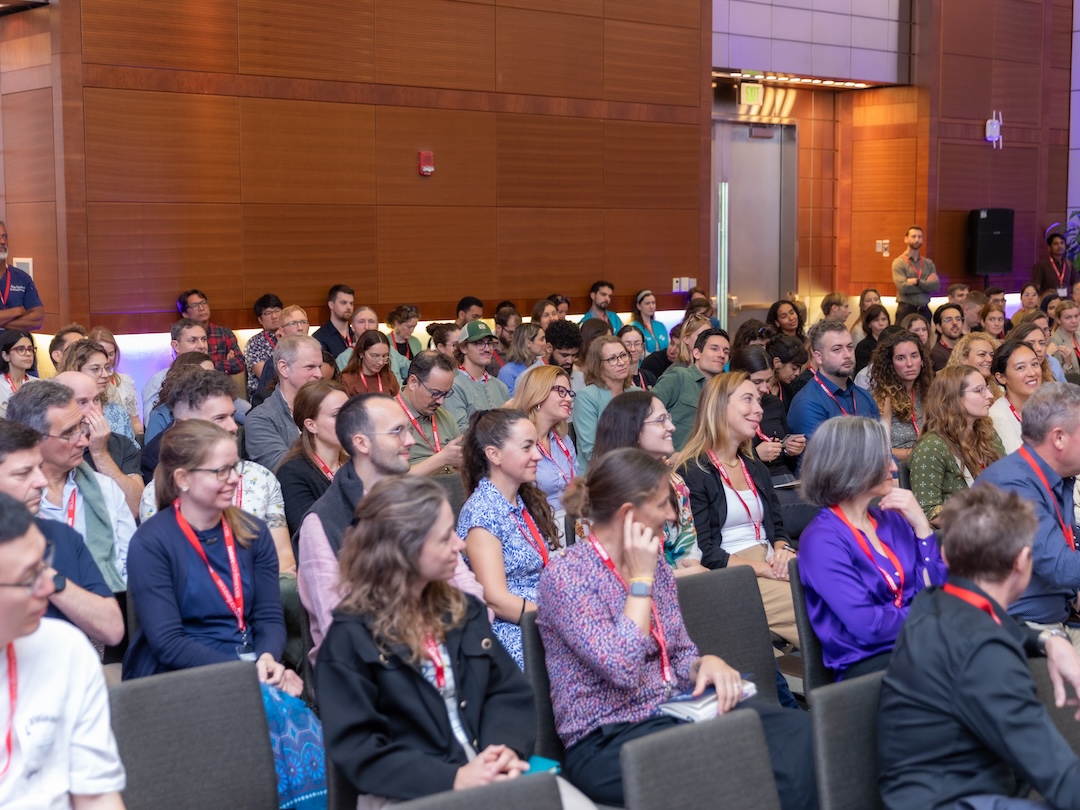
All eyes on the speakers during the Nature Conferences: Corals, Coasts and One Health at KAUST.
KAUST co-hosted the conference as part of its role as a national research university advancing interdisciplinary marine research and convening global expertise in Saudi Arabia. The University organized the event in partnership with Nature Reviews Earth & Environment, Nature Ecology & Evolution, Nature Climate Change, and Communications Biology, providing an international platform for scientific exchange and collaboration.
A shared recognition that coral reef research must move beyond monitoring ecosystem decline toward scalable protection and restoration informed by scientific findings emerged as a central conference outcome. Exchanges between global reef scientists and Saudi institutions responsible for conservation, restoration, and coastal development generated new research collaborations and networking opportunities for early-career scientists.
Across the panels and presentations, speakers returned to shared themes: moving beyond siloed observation toward coordinated implementation; redefining resilience beyond static coral metrics; anticipating unintended consequences of restoration; incorporating time and scale into planning; embedding trust and humility in community and Indigenous partnerships; and recognizing reefs as dynamic social–ecological systems requiring aligned governance and investment.
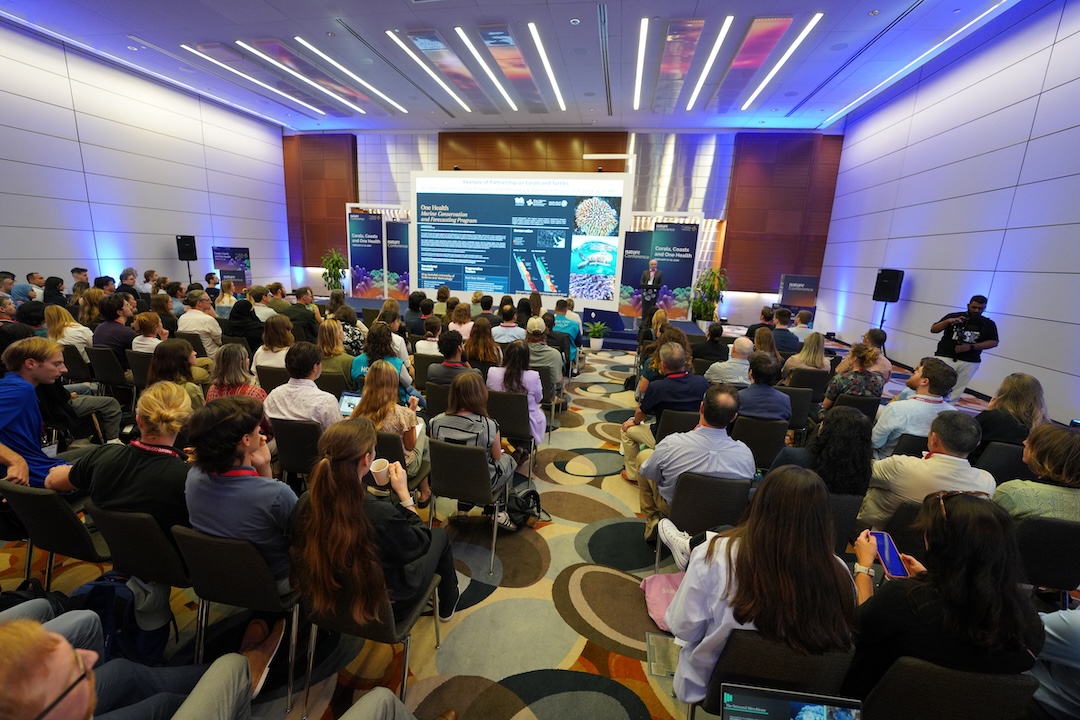
Professor Pierre Magistretti, vice president for research, delivers opening remarks during the conference at KAUST.
For KAUST, the event reinforced its role not only as a center of reef science, but as a platform where research, policy, and innovation align around measurable impact. Magistretti described Blue KAUST — the University’s integrated marine science and innovation platform — as the embodiment of that commitment in the Red Sea.
“It’s not just our backyard; it’s a living laboratory,” he said. “It shaped the original vision of KAUST as a globally leading research university anchored in place-based excellence.”