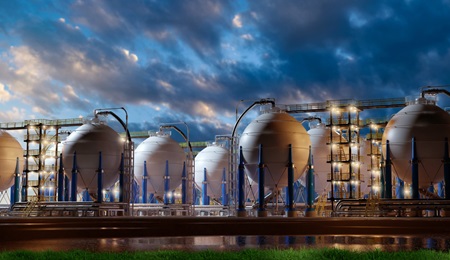
A cloud simulation that captures the development and evolution of clouds based on atmospheric physical processes is more accurate than other models.
“Our model describes atmospheric conditions and thermodynamic processes as well as the fluid dynamics that govern the motion of air in the atmosphere,” says Torsten Hädrich, a KAUST Ph.D. student in the international research team. “This allows us to simulate cloud phenomena more realistically compared with previous methods.”
The model can take known atmospheric information at any time, such as temperature, humidity and wind, and simulate cloud formation, which is used for “nowcasting” of imminent cloud phenomena.
“For example, our model is able to simulate the formation of cumulonimbus clouds by considering varying temperature gradients in the atmosphere,” says Hädrich. “The gradients lead to temperature inversions at certain altitudes, which are responsible for the characteristic flattened top of cumulonimbus clouds. We can also model different types of supercell thunderstorms, which has not been addressed previously.”
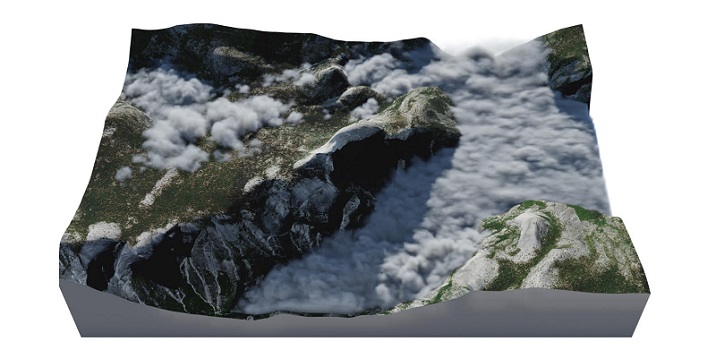
The framework developed simulations of high fog around Half Dome in Yosemite National Park.
© Hädrich et al 2020
The model was developed by KAUST’s Hädrich and Dominik Michels in collaboration with researchers from Adam Mickiewicz University in Poland, the University of New Mexico in the U.S. and Google AI.
To create the model, the team had to resolve a number of physical processes, such as condensation and evaporation, and the complex interplay of physical quantities, such as temperature and humidity, within the simulation.
“Our main challenge was then to determine which parameters contribute to the formation of specific cloud types. We were able to define the physical parameters in our simulation in such a way that we could create specific cloud formations without specific knowledge,” Hädrich says.
Evolution of a supercell thunderstorm cloud
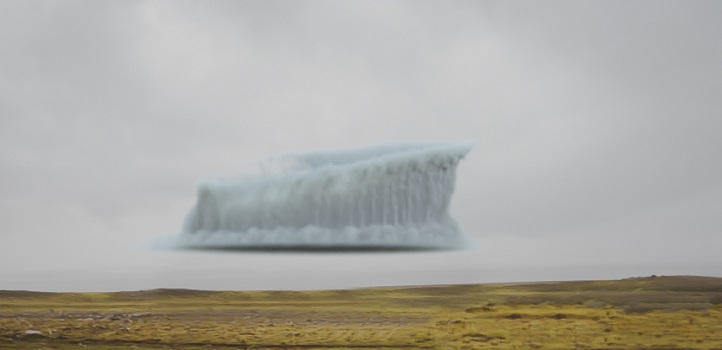
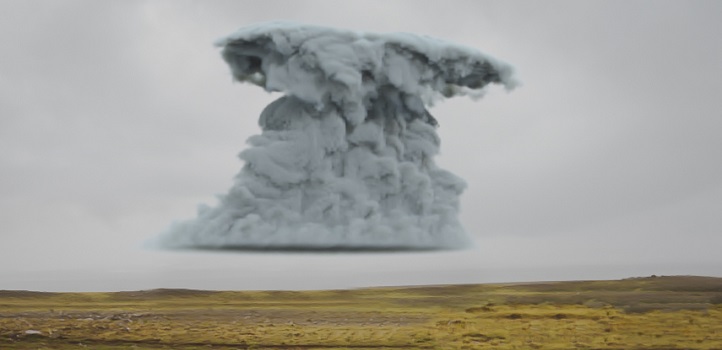
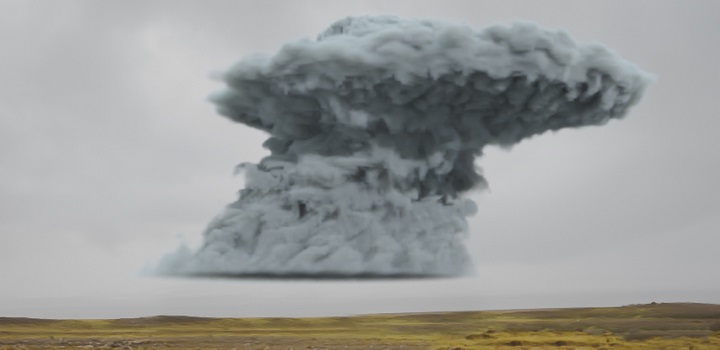
The framework is able to simulate different thunderstorm supercells. Here, the temporal evolution of a classic supercell is shown (from top to bottom).
© Hädrich et al 2020
References
- Hädrich, T., Makowski, M., Palubicki, W., Banuti, D., Pirk, S. & Michels, D. Stormscapes: Simulating cloud dynamics in the now. ACM Transactions on Graphics 39, 175 (2020).| article