

Ministerial support for namya strengthens pathway from KAUST innovation to food security
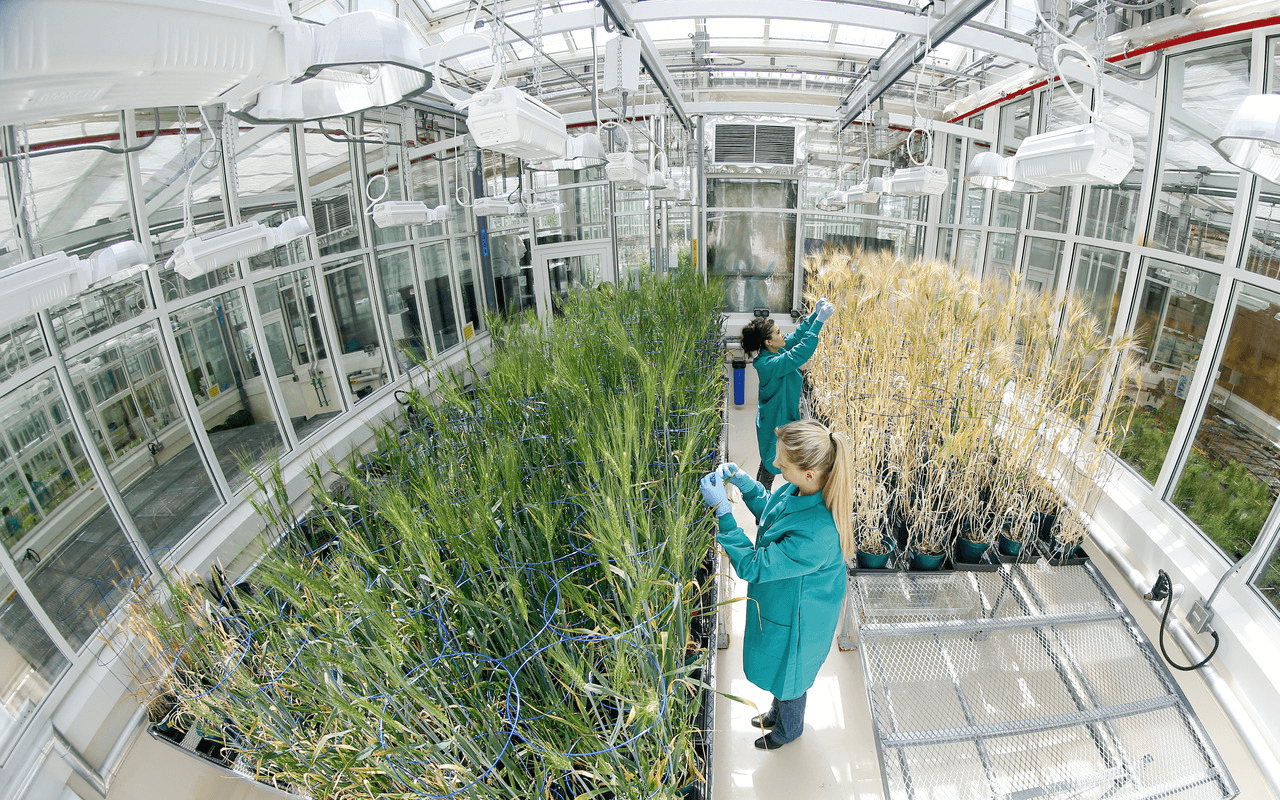
More than a decade of plant science research at King Abdullah University of Science and Technology (KAUST) has led to the launch of namya, a new venture that will deliver advanced bioactive products, based on KAUST’s MiZax technology, to farmers in Saudi Arabia and around the world — helping them use fewer inputs and grow higher yielding, more resilient crops.
Namya was officially inaugurated in the presence of His Excellency Eng. Abdulrahman Abdulmohsen Al-Fadley, Minister of Environment, Water and Agriculture, during the 4th MEWA–KAUST Strategic Partnership Committee Meeting. The inauguration reflects the strategic importance of translating homegrown research into practical agricultural solutions that can support food security and more sustainable farming in the Kingdom.
Created through close collaboration between KAUST and SEQUENCIVE, a Riyadh-based venture builder, namya will bring MiZax technology to market for agricultural applications in Saudi Arabia and internationally. The company provides a pathway for research developed at KAUST to move from the laboratory into products that can be used by farmers.
“MiZax is the result of more than a decade of research to understand biological mechanisms that govern plant growth and resilience,” said Professor of Plant Science Salim Al-Babili. “Our goal has been to translate fundamental discoveries in plant science into solutions that can help address agricultural challenges in Saudi Arabia and beyond.”
Developed by Professor Al-Babili and a multidisciplinary team of researchers, MiZax emerged from KAUST’s research into zaxinone, a naturally occurring metabolite that plays an important role in regulating plant growth and development.
Through years of molecular, laboratory, greenhouse, and field research, the team identified how zaxinone influences plant performance and developed — in collaboration with colleagues from the University of Tokyo — synthetic compounds that mimic its biological activity.
The result was MiZax, a technology designed to enhance crop productivity and resilience under normal as well as challenging growing conditions. The product has been evaluated in many independent field trials involving potatoes, different cereals, and pepper crops in Saudi Arabia. Trials performed with rice in Taiwan revealed the capability of MiZax to reduce fertilizer requirements by half. Across the trials, researchers observed improvements in plant growth, yield-related traits, and overall crop production and resilience.
In field studies, Professor Al-Babili and his team found that MiZax promoted plant growth and productivity at application rates far lower than those required for conventional biostimulants used for comparison, highlighting its potential as a resource-efficient agricultural input.
In Saudi Arabia, where farmers face challenges including extreme heat, water scarcity, and environmental stress, improving crop performance with lower input requirements is especially important for achieving food self-sufficiency and supporting more productive and resource-efficient farming.
Synthetic fertilizers and other agricultural inputs have helped increase crop production for decades, but their long-term use contributes to environmental pressures, including soil degradation, water contamination, and greenhouse gas emissions. As climate change places increasing stress on agricultural systems, KAUST is investigating biological approaches that can help crops maintain productivity while reducing dependence on resource-intensive inputs.
Namya was established through a collaboration between KAUST and SEQUENCIVE to commercialize an agricultural innovation developed within KAUST's laboratories. The venture pairs KAUST's scientific discovery and intellectual property with SEQUENCIVE's commercialization and go-to-market expertise, creating a public-private partnership that translates research into real-world impact, first in Saudi Arabia and then in international markets.
“This joint venture represents a new way for KAUST to commercialize research,” said KAUST’s National Transformation Institute Senior Vice President Dr. Ian Campbell OBE. “By combining KAUST’s MiZax technology and scientific discovery with SEQUENCIVE’s specialist commercialization expertise, namya creates a faster and more focused pathway to market adoption. For global challenges such as food security, that speed and market focus are essential to turning years of validated research into scalable, economically beneficial solutions.”
The research and the launch of namya address a growing challenge for agriculture worldwide. The initiative reflects KAUST’s commitment to reimagining how food is grown, produced, and sustained in arid environments.
By combining advances in biotechnology, plant science, engineering, and innovation, KAUST is helping accelerate Saudi Arabia’s emergence as a global testbed for food innovation in extreme conditions.
“Two years ago, we seized the opportunity of MiZax at KAUST as a solution to tackle the current challenges in the agri-food value chain,” said SEQUENCIVE Chief Scientific Officer Dr. Ayman Karam. “At SEQUENCIVE, we bridge the gap between proven science and scaling its impact. The framework we built with KAUST is specifically designed to translate proven science from labs to fields, and from Saudi Arabia to global markets.”