

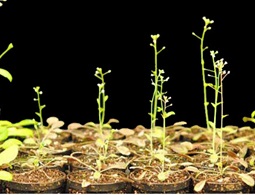
Herbicide resistance: shedding light on the shikimate pathway
Resistance to a popular herbicide provides insight into the control of a key biosynthetic pathway.
Resistance to a popular herbicide provides insight into the control of a key biosynthetic pathway.
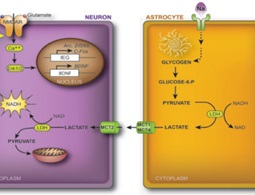
Lactate plays an unexpected role in brain function.
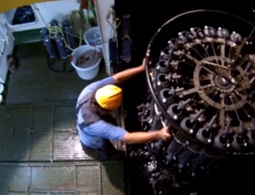
Single-cell analysis of microbes from Red Sea deep brine pools reveals the genetic innovations needed to thrive in extreme conditions.

Nanoscale thin films containing unconventional, glass-like magnetic states can lead to the development of novel charge-spin coupled devices.
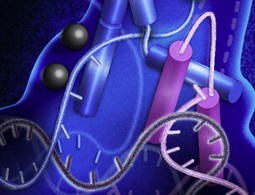
An enzyme involved in maintaining genome fidelity goes through seven steps to recognize its DNA substrates.
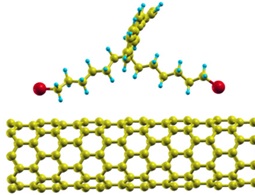
Theoretical studies analyze the nature of the bonding relationship between conjugated polymers and carbon-based materials.
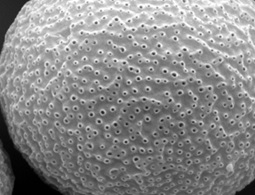
Nanoparticles with pores that expand and shrink could prove valuable for biochemical research and drug delivery applications.
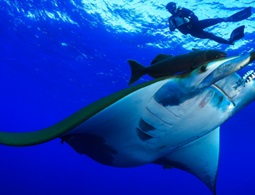
Devilrays soak up the sun’s heat then make some of the deepest and fastest dives ever recorded in the ocean.
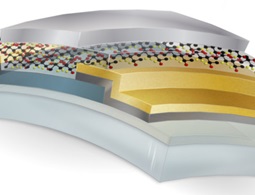
Multitasking ferroelectric polymer could store or process data faster than its rivals.
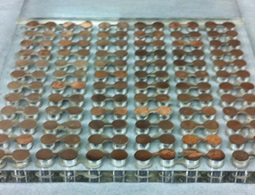
Generators embedded in windows produce electricity from the temperature differential between an air-conditioned interior and a sunny outside world.

A single photon can free two electrons within a nanocrystal of silver sulfide, revealing its promise as a solar cell material.
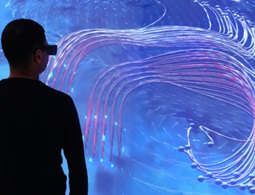
First-time reports of the statistical properties of ‘whirlpools’ show they are frequent and seasonal.
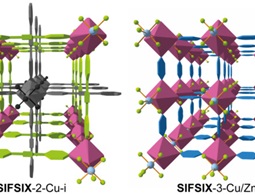
Chemically fine-tuning the structure of a class of light porous materials allows efficient and selective removal of CO2 from air.
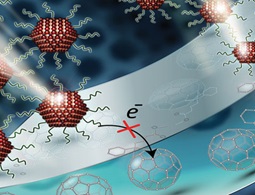
Light absorption capacity of quantum dot solar cells may soon reach the infrared.
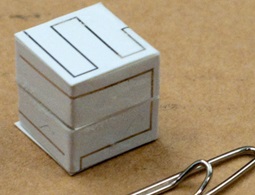
Floating paper cubes containing low-cost, inkjet printed electronic sensors can wirelessly monitor floods in real time.
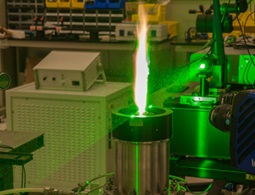
KAUST’s Clean Combustion Research Center aims to develop technologies for future fuel formulations, more efficient engines, and new methods for power generation.
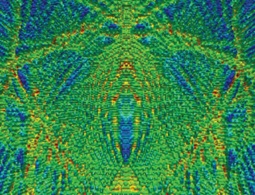
Chaotic optical resonators can trap more light energy than their orderly counterparts.

A novel algorithm promises faster functionality for the world’s largest optical-near infrared telescope.
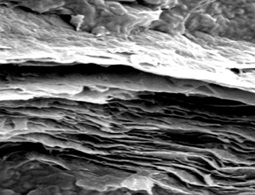
Graphene-based capacitors prove useful in advanced non-linear electronics.
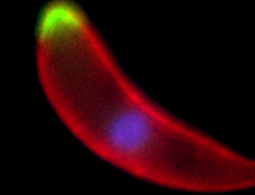
Enzymes crucial to parasite growth offer clues in fight against malaria.