

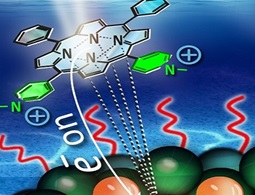
On-off switches for quantum devices
Efficiently extracting the charge required by quantum dot solar cells can be controlled by chemically configuring molecules.
Efficiently extracting the charge required by quantum dot solar cells can be controlled by chemically configuring molecules.

A statistical approach that can find patterns in large data sets, even in the event of missing or incorrect figures, is proving useful from genomic studies through to planning a marine reserve.
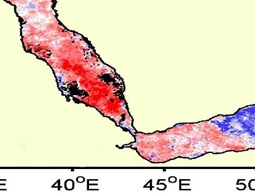
A warmer Red Sea may be more productive due to the influence of winter monsoons.

DNA sequencing of reef fish microbiomes shows that diet is all-important.

A microchip designed to generate and control rogue waves of light on the nano-scale has many potential applications.

Analyses of marine bacteria offer insights into processes of carbon storage and release beneath the sea.

A woven carbon cloth coated in a conducting polymer and an oxide-material provides a stable way of storing energy.

Highlighting sustainability and the work of female researchers was a strong focus of the international KAUST-US NSF electronics conference.
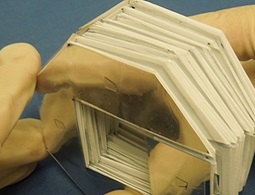
Lightweight and low-cost device uses friction inside paper-based coils to transform mechanical motion into electricity.
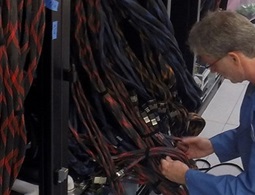
KAUST’s new supercomputer will enable ground-breaking scientific modeling and analysis in Saudi Arabia and worldwide.
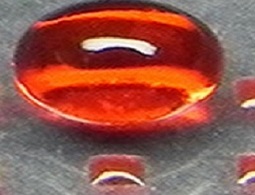
An inkjet-printed surface can turn fog into drinking water using bio-inspired micropatterning and adhesion technology.
A fast and cost-efficient fabrication process for high-quality perovskite crystals bridges the gap to silicon.
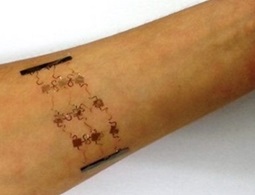
Smart, stretchable pads open up a new approach for thermotherapy.
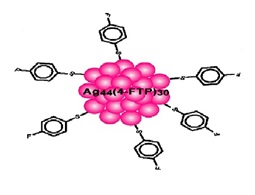
Replacing the organic molecules surrounding atomically precise silver nanoparticles prepares them for practical applications.

An underwater landslide triggered by the 2011 earthquake in Japan may have exacerbated the resulting tsunami.
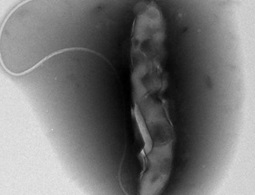
Whole-genome sequencing of the bacterium responsible for a cholera outbreak reveals a population structure missed by traditional methods.
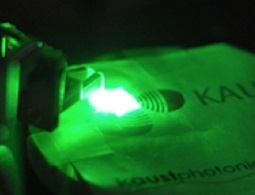
The discovery of the incandescent light bulb has transformed human existence. New LED technologies promise to be the next step forward.
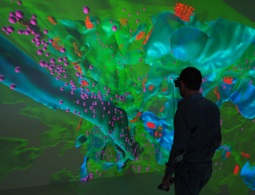
A new collaboration could lead to supercomputers emulating the efficiency of the brain.

Electron-rich organic polymers boost power conversion in solar cells.
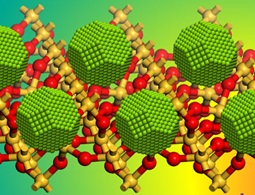
Researchers reveal a low-impact synthetic strategy for producing supported small nickel nanoparticles – a powerful catalytic form of the metal.