

When autocomplete results are available use up and down arrows to review and enter to select.
Filters 1
Clear filters
Date
Categories
Topics
- Applied Mathematics and Computational Sciences 0
- Applied Physics 0
- Artificial Intelligence 0
- Awards & Recognition 3
- Bioengineering 0
- Bioscience 0
- Chemical Engineering 0
- Chemistry 0
- Computer Science 0
- Coral 0
- Earth Science and Engineering 1
- Electrical Engineering 0
- Energy 0
- Energy Resources and Petroleum Engineering 0
- Environmental Science and Engineering 0
- Food 0
- Health 0
- Marine Science 0
- Material Science and Engineering 0
- Mechanical Engineering 0
- Plant Science 0
- Press Release 10
- Red Sea 0
- Statistics 0
- University 8
- Water 0
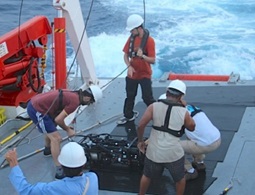
An ocean observatory for the Red Sea
Studies conducted at the Saudi Aramco-KAUST Marine Environmental Research Center provide new insights into the physical and biological aspects of the Red Sea.
Shaping rate rules to fuel the future
Precise rate constants could provide high-fidelity combustion models for cleaner and more efficient fuels.
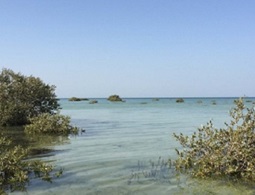
Coastal creep by Red Sea mangroves
Satellite imagery shows that the Red Sea’s mangrove forests have increased, not decreased, over the last 40 or so years.

Noisy cells produce bursts of protein
A new mathematical model explains how random factors affect the production of proteins within the cells.
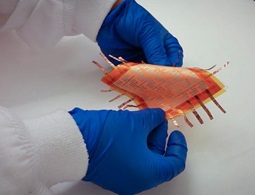
Artificial skin sensors made from sticky notes
A paper-based sensor that mimics the sensory functions of human skin has been developed for the first time from low-cost and commonly available household materials.
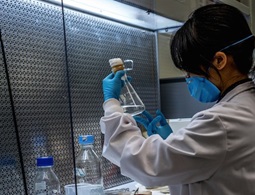
Designing the perfect surface catalyst
Learning how an aluminum compound binds to silica may pave the way to a reliable petrochemical catalyst.
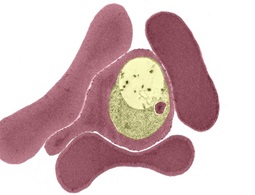
Pathogen expertise boosted with latest genomics
Expert knowledge in the field of DNA and RNA sequencing puts KAUST at the forefront of high-impact pathogen research.

Wireless devices tune-in to cloud power
Next-generation mobile networks can use cloud computing algorithms to manage the increasingly high data demands of users.
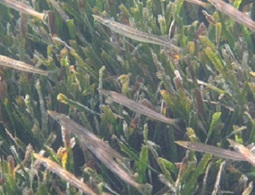
Ready for the high seas?
Seagrass genome reveals the structural and physiological adaptations needed for plants to survive and thrive in the marine environment.
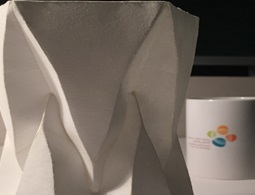
Bringing computational engineering into the fold
An interactive computational tool opens new possibilities for "developable" surfaces.
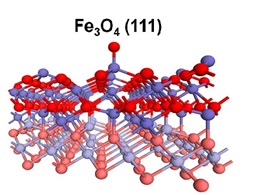
New lessons for an old magnet
The surface structure of magnetite is crucial to its performance in magnetism-based electronic applications.
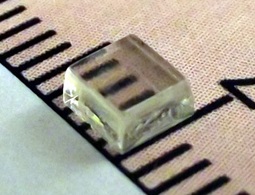
Clear detection of ultraviolet light
Transparent crystals that grow from heated solutions offer an improved material for detecting ultraviolet light.
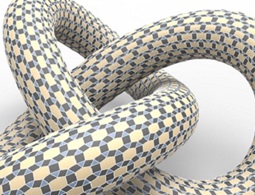
Aesthetic patterns for freeform architecture
Planar designs are used to model complex curved surfaces, with applications from architecture to 3D prints.
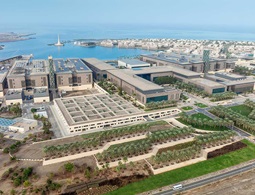
Reality check for Red Sea wave predictions
Current models that predict ocean surface conditions overestimate wave patterns in the middle of the Red Sea.
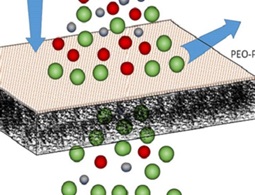
Graphene oxide sifts out CO2
Graphene oxide combined with a polymer membrane creates a barrier that is selectively permeable to carbon dioxide.

The brain gamers
Novel use of gaming technology enables researchers to 'step inside' the brain.

Catching a glimpse of the double helix
Direct imaging of a single DNA molecule provides insights into fundamental biological processes.
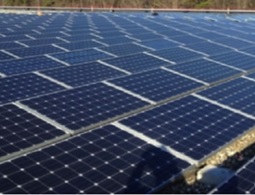
A smoother route to smart sensors
Growing high-quality films of hybrid perovskite materials takes solution-processed phototransistors to new levels of performance.
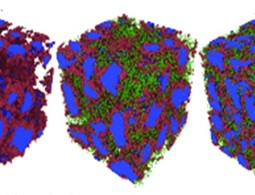
Faster, finer filtration
The right blend of polymers enables rapid and molecule-selective filtering of tiny particles from water.