


When autocomplete results are available use up and down arrows to review and enter to select.
Filters 1
Clear filters
Date
Categories
Topics
- Applied Mathematics and Computational Sciences 0
- Applied Physics 0
- Artificial Intelligence 0
- Awards & Recognition 7
- Bioengineering 0
- Bioscience 0
- Chemical Engineering 0
- Chemistry 0
- Computer Science 0
- Coral 0
- Earth Science and Engineering 0
- Electrical Engineering 0
- Energy 0
- Energy Resources and Petroleum Engineering 0
- Environmental Science and Engineering 1
- Food 0
- Health 1
- Marine Science 0
- Material Science and Engineering 0
- Mechanical Engineering 0
- Plant Science 0
- Press Release 8
- Red Sea 0
- Statistics 0
- University 92
- Water 0
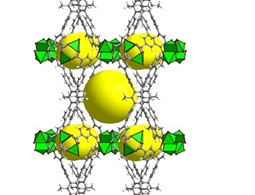
Building blocks for methane gas storage
Tweaking the structure of metal-organic frameworks could transform the capacity to use methane as a fuel.
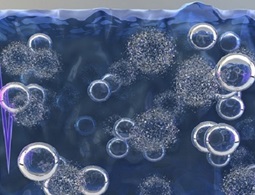
A good idea bubbles to the surface
Imploding bubbles improve the growth of single-crystalline perovskite solar cell thin films.

Filling in the blanks of virtual cities
New software generates three-dimensional models of buildings, with applications for disaster relief support.
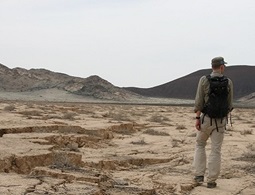
Surface fractures as magma moves
Surface deformation caused by magma rising within the crust may in turn have prevented a volcanic eruption in Saudi Arabia.
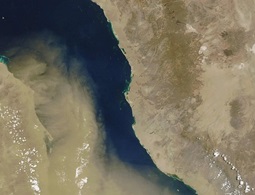
Modeling dust flow from Africa to Arabia
High-resolution modeling improves understanding of dust flow from Africa across the Red Sea toward the Arabian peninsula.

Crafting technology from nature’s darkest secrets
Exploiting the properties of disordered chaotic systems leads to low-cost energy harvesting and innovative micro-surgery applications.

Step into the white light for faster communication
Nanocrystals that generate white light could help combine lighting and communications systems into one.
See-through circuitry
Atom-by-atom deposition leads to low-cost, high-performance transparent electronic materials.

Enhancing understanding of genetic regulation
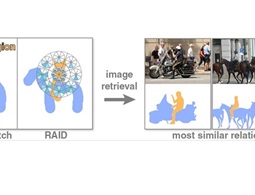
Technology search for relationships
A sketch-based query for searching for relationships among objects in images could enhance the power and utility of image search tools.
Catalysis steps into the third dimension
How tiny imperfections impede performance
Understanding the impact of surface defects underpins improved efficiency of hybrid organic/inorganic solar cells.
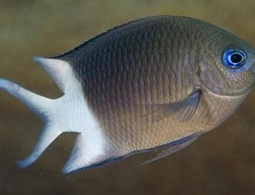
Rhythm adjustment for CO2 rise
Evolutionary alterations to circadian rhythm genes help reef fish adapt to the higher levels of carbon dioxide of future oceans.
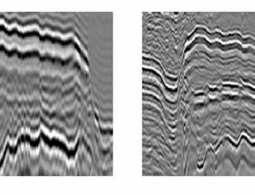
Seismic echo turns into super-resolution images

The bioprospects of mangrove roots
Researchers uncover a potential treasure trove of microbes living with mangroves.
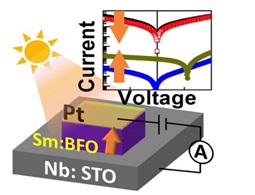
Memory device sees the light
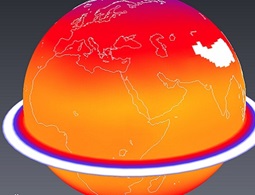
Making space for climate simulations
A statistics-based data compression scheme cuts data storage requirements for large-scale climate simulations by as much as 98 percent.
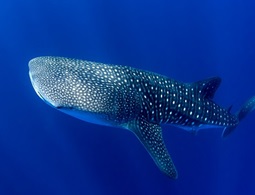
Whale shark populations are young and transient
A population study of whale sharks in the Red Sea reveals unique group dynamics.

Exploring artificial biosynthesis
Metabolic route explorer helps to optimize the pathways for artificial biosynthesis of valuable products.