


The tipping point for marine agriculture
“Historians will look back on this era as the tipping point for marine agriculture,” said Carlos Duarte.
“Historians will look back on this era as the tipping point for marine agriculture,” said Carlos Duarte.
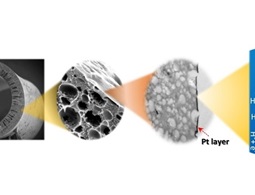
A material made by combining a metal and a polymer can help generate hydrogen and fresh water from wastewater.

Pairing two catalysts in a single, illuminated reaction flask proves to be a light-bulb moment for organic synthesis.

The dynamic three-dimensional organization of chromosomal structure can profoundly influence plant gene expression.

Hybrid organic-inorganic materials can self-assemble into tiny doughnut-like structures.

A highly efficient mathematical solver designed to run on graphics processors gives scientists and engineers a powerful new tool for a common computational problem.

Reliable processing of an efficient solar cell material depends on how the solvent is removed.
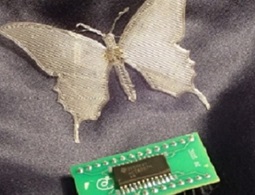
High-speed fabrication developed at KAUST can turn out adhesive and flexible electronic devices in any shape imaginable.

A new data-mining strategy that offers unprecedented pattern search speed could glean new insights from massive datasets.
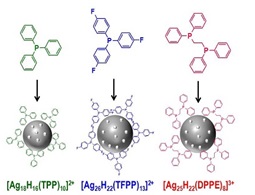
Surrounding silver nanoclusters with hydrogen-rich shells offers new opportunities in catalysis and opto-electronics.

Identification of candidate pathways in clownfish shows they can control responses to population alterations.
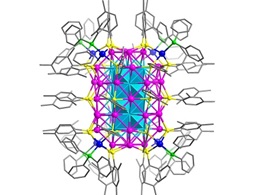
Research at KAUST finds that silver atoms can be crafted into a box-shaped nanocluster by careful selection of ligand molecules.
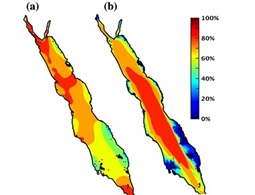
Advanced numerical models are helping researchers identify potential sites to exploit offshore wind and wave energy in the Red Sea region.
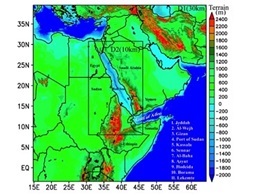
An advanced numerical model is helping researchers better understand the variability of the Red Sea’s climate patterns.

The characterization of compounds produced in combustion could lead to cleaner, more efficient power stations.
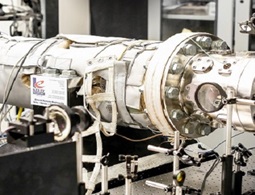
New technique lays the foundation for greener transport fuels and next-generation engines.

A statistics-driven method for the early detection of emerging problems in industrial processes could improve industrial safety, reliability and productivity.
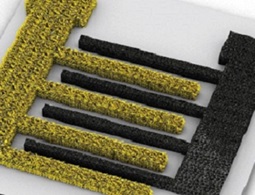
Microscale energy storage units for wearable and miniaturized electronic devices are improved using porous materials.

Wafer-thin, scratch-proof films can generate a rainbow of colors using random metallic nanostructures.
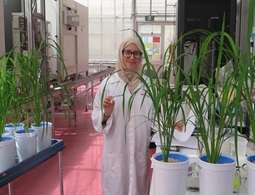
Real-time genetic detailing of rice plants highlights the roles of different loci in response to salt stress during growth.