

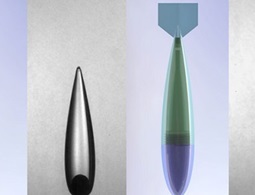
Giant air pockets win the drag race
Creating teardrop-like gas cavities around metal spheres enables practically friction-free travel through liquids.
Creating teardrop-like gas cavities around metal spheres enables practically friction-free travel through liquids.
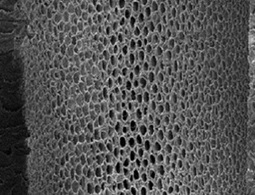
Tailor-made membranes offer a cleaner method for the industrial-scale separation of chemical mixtures, says Suzana Nunes. But first we need to make their manufacture greener.
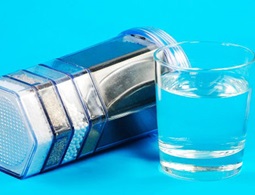
Trapping molecules on custom-designed porous surfaces becomes easier with a new model that unifies previous theories of adsorption.
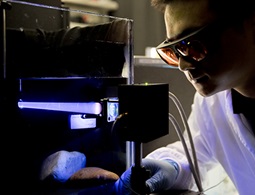
High-speed communication systems based on ultraviolet radiation are now in sight.

Silicon microelectronics and biomedical fields could benefit from a safe and cost-effective way to synthesize nanoparticles.

Large-area, two-dimensional semiconductors wired through transparent oxide conductors produce high-performance see-through electronics.
A new soil classification system, and tools to implement it, helps understanding of the properties of the ground underpinning geo-engineering projects.

A loudspeaker design could allow small devices to produce powerful low-frequency sounds.
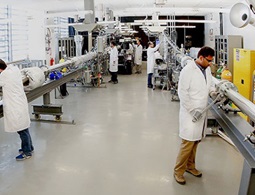
Simple two-component mixtures are good surrogates for studying the ignition properties of next-generation gasolines.

Study design allows more rigorous evaluation of complex healthcare interventions.
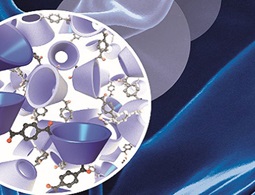
Cone-shaped sugar structures can be connected together to form selectively porous nanofiltration membranes.
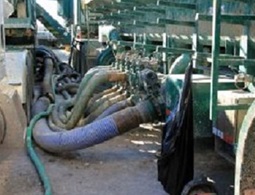
Physicists are playing unexpected roles in meeting future global energy challenges by modeling technologies such as fracking.
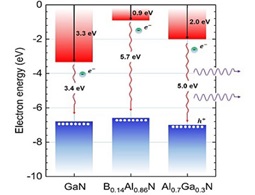
Efficiency gains come from tuning the properties of semiconducting materials by combining layers of different composition.
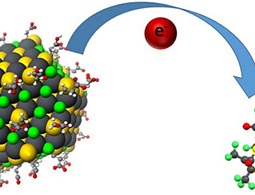
A mild post-fabrication doping approach can boost the solar conversion of quantum dot-based photovoltaic cells.
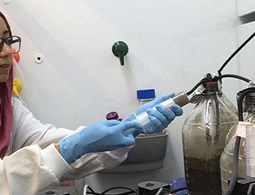
Treating wastewater with solar irradiation shows promise in reducing two E. coli strains but a resilient strain persists.
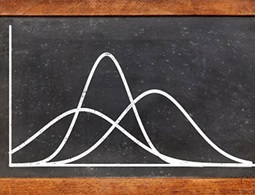
Study of the mismatch between spatial environmental data and a commonly used statistical analysis suggests simpler statistics are sufficient in many cases.
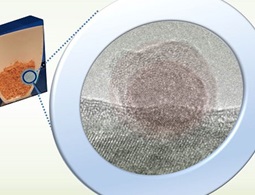
A method for creating nanoparticles without using solvents could lead to environmentally friendly electronics.
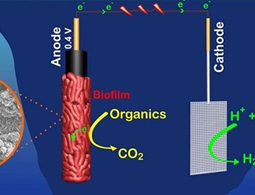
Promising electrochemical technologies for cleaning wastewater are boosted by discovery of extremophilic microbes in the Red Sea.

A powerful statistical tool could significantly reduce the burden of analyzing very large datasets.
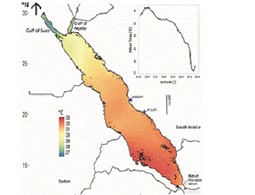
The world’s warmest sea is heating up faster than the global average, which could challenge the ability of the Red Sea’s organisms to cope.