

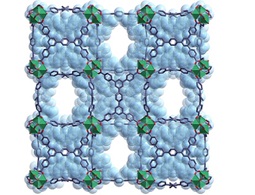
Super-adsorbent MOF to control humidity
A metal-organic framework that can take up twice its weight in water and then release it when humidity falls.
A metal-organic framework that can take up twice its weight in water and then release it when humidity falls.
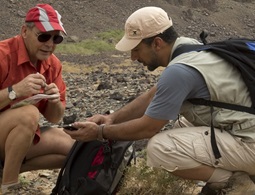
Genetic analyses of a desert bacterium show it could help to improve crop production in arid lands.
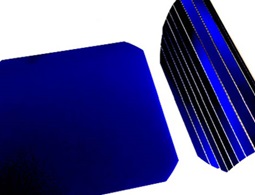
Ultrathin, rigid silicon segments that are wired through interdigitated metal contacts produce ultraflexible high-performance solar cells.
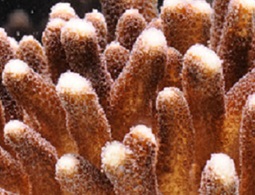
A comparison of the genomes of two species of coral demonstrates unexpected genetic diversity.
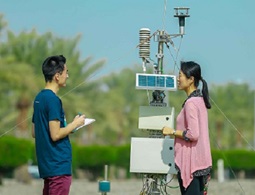
A method to visualize hidden statistical structure helps make sense of environmental data.
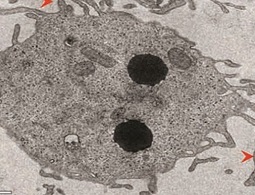
The protein CD34 is predominantly regarded as a marker of blood-forming stem cells but it helps with migration to the bone marrow too.
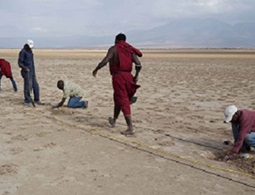
Geophysical modeling of one of the world’s most important fossil sites reveals the history of the site where early humankind evolved.
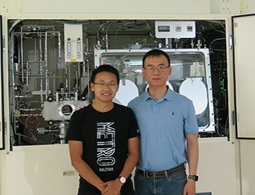
Fine tuning the composition of nitride alloys can further the development of optical and electronic interface devices.
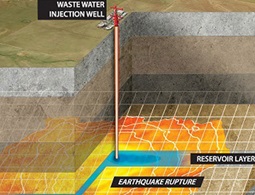
A model incorporating the physics of ruptures provides valuable information about human-induced earthquakes.
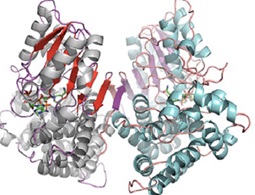
Genomes of single microbial cells isolated from the Red Sea could yield a goldmine for biotechnology.
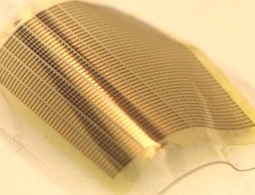
Wavy transistors that vertically gain width without increasing their on-chip footprint could drive future flexible displays.
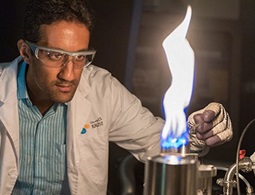
The transition to renewables will take decades, so we must rush to clean up conventional fuel combustion, says Mani Sarathy.
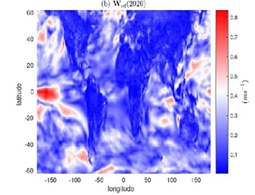
A new statistical technique could be used to more accurately locate global wind resources.
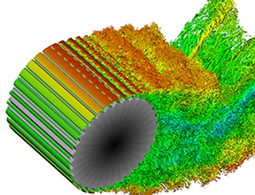
Theoretical simulations reveal how subtle changes in friction on an object’s surface can have a large effect on drag.

The Red Sea has relatively low amounts of floating plastic debris in its surface waters due to fewer sources or faster removal.
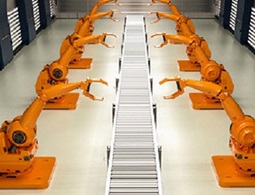
Coordinated robot swarms can achieve amazing feats, but even a single faulty unit can have serious consequences.
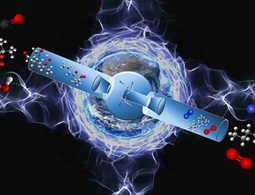
Synchrotron study reveals oxygen’s influence on the chemistry that surrounds us.
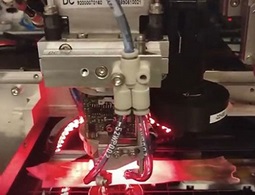
An easy and reliable assembly approach, inspired by building blocks, challenges the current fabrication of electronic systems.
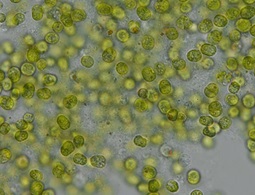
Jumping genes could make an alga, and its coral host, more tolerant to warming sea temperatures.
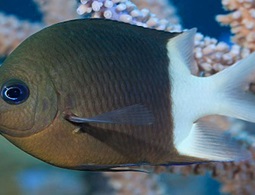
Some species of fish have special adaptive mechanisms that could improve their chances of surviving the greenhouse effect.