

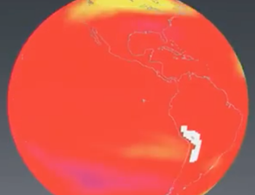
New stats apps show a virtual reality
Harnessing the power of virtual reality will help to visualize data and improve statistical models.
Harnessing the power of virtual reality will help to visualize data and improve statistical models.
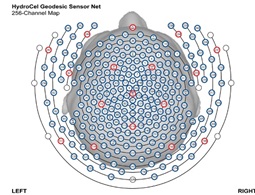
A new statistical tool for collectively analyzing large sets of brainwaves promises to accelerate neurofunctional research.
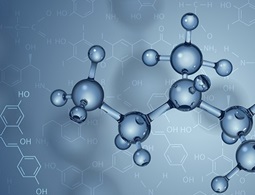
A metal-organic framework that selectively removes impurities from natural gas could allow greater use of this cleaner fossil fuel.
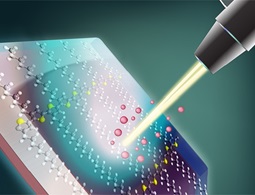
A window opens for analyzing the distribution of small molecules in biological and medical tissue samples.
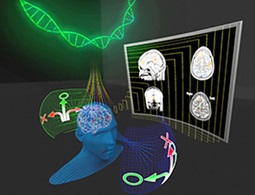
Modeling changes in brain activity over time provides deeper insights into learning and behavioral responses.
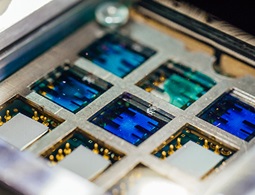
Printable solar materials could soon turn many parts of a house into solar panels.

Xin Gao’s research is building bridges between computer science and biology.
Tantalum nitride as thin layers improves the extraction of electrons from silicon solar cells.
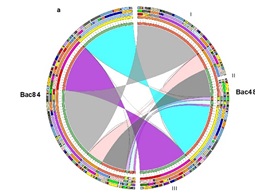
Genome sequencing of two Red Sea bacteria highlights their potential as industrial workhorses.
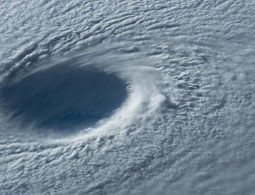
A more efficient approach to modeling spatial data involving thousands of variables keeps computation time in check.
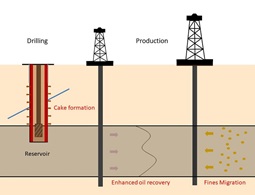
A comprehensive model for simulating mudcake growth during oil extraction could transform well-drilling protocols.
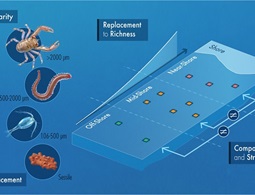
Composition in cryptic fauna assemblages changes across a shelf gradient, a recent study of the Red Sea shows.

KAUST places great emphasis on translating university know-how into real-world impact, say Kevin Cullen, vice president of Innovation and Economic Development, and John Tannaci, associate vice president for research.
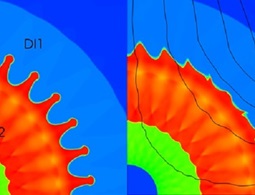
A numerical study reveals how to reduce instabilities in the complex flow of plasma in converging geometry of particles in fusion reactions.
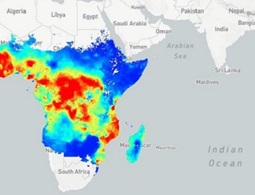
A tool developed by Håvard Rue has transformed data analysis, interpretation and communication. It has been applied broadly: from modeling the spread of infectious diseases to mapping fish stocks.
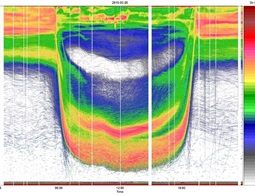
A carbon source stemming from daily fish migrations is implicated in the global carbon cycle.

Nanoparticles with a shell structure improve the performance of zinc-oxide photodetectors.
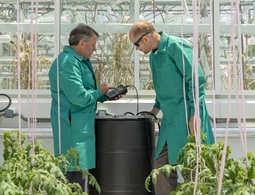
Research to optimize aquaponics systems could inform a new era of urban food production.
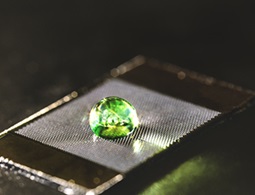
Tiny nature-inspired cavities that trap air can stop liquids from sticking to surfaces without the need for coatings.
Rethinking industry-scale catalytic processes could slash global energy consumption and even turn carbon dioxide into a valuable commodity.