

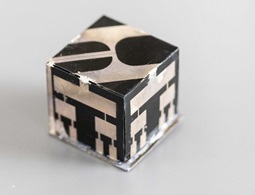
3D-printed cube dials into energy harvesting
Ambient energy emitted by cellular phones and modems can be captured and converted into electricity using unusually shaped technology.
Ambient energy emitted by cellular phones and modems can be captured and converted into electricity using unusually shaped technology.
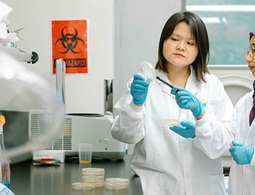
A combined treatment may help tackle the rise of E. coli PI-7 in Saudi Arabia’s wastewater systems.
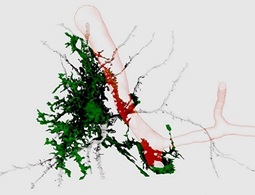
State-of-the-art techniques and software help researchers recreate cellular brain structures and model biochemical processes that support the brain’s energy demands.
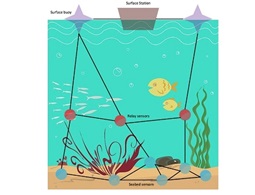
An optical system for monitoring underwater sensor positions could enable large networks of devices to be deployed for ocean measurements.
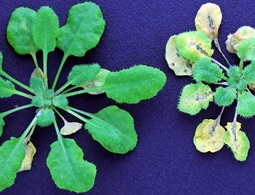
A key protein is shown to be responsible for activating and controlling plant immune responses to bacterial infection.
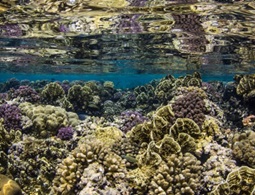
Determining the growth dynamics of Red Sea coral reefs has enabled researchers to establish a baseline to assess the effects of environmental change.
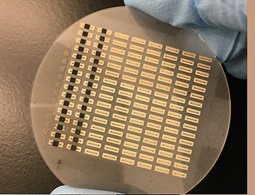
Inkjet-printed switches make multiple frequency bands easier and cheaper to manage in wireless devices.

For researchers seeking entrepreneurial opportunities, KAUST can provide the perfect springboard.
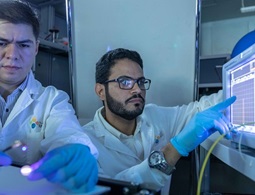
High-performance blue-light-emitting diodes could boost white-light, high-speed data transmission.

Flexible skin for soft robots, embedded with electrical nanowires, combines conductivity with sensitivity within the same material.
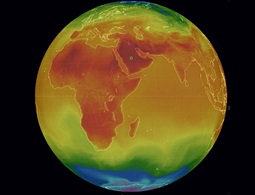
Investigating links between surface air temperatures and large-scale circulation patterns builds understanding of climate variability in the Arabian Peninsula.
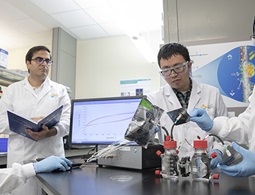
Helpful microbes inhale CO2 through a porous cylindrical electrode and exude useful chemicals.

Ultrafast video capture of droplet cloud formation should help minimize the risk of gas-leak explosions.
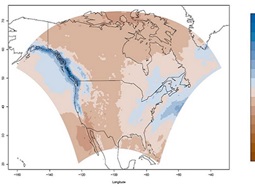
A more accurate way of resolving spatial patterns in weather could lead to better predictions of climate change.
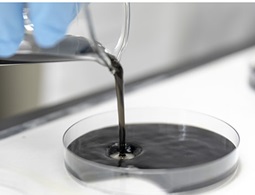
An inexpensive hydrogel-based material efficiently captures moisture even from low-humidity air and then releases it on demand.
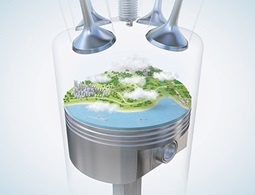
A compound made from the glycerol by-product of biodiesel production could promote cleaner burning in vehicle engines.
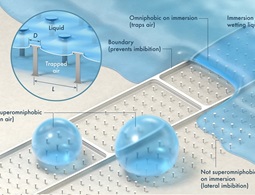
Immersion could become the ultimate test for assessing the wetting properties of coating-free microtextured surfaces.

Investigating plankton communities' reaction to rising water temperatures may improve modeling of marine ecosystem responses to global warming.
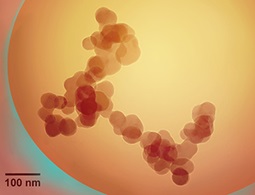
Understanding the effect pressure has on soot production during fuel combustion could help reduce polluting emissions.

Modeling shows that the Indian summer monsoon can trigger heatwaves and sandstorms on the Arabian Peninsula.