

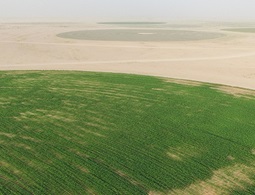
A drone on crop resources
Aerial imaging of plant heights could help farmers manage field crops more effectively to increase yields and preserve resources.
Aerial imaging of plant heights could help farmers manage field crops more effectively to increase yields and preserve resources.
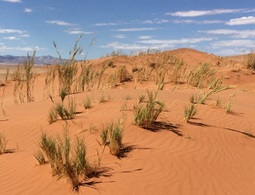
In the harsh sand of the Namib Desert, the sheaths of speargrass roots co-opt any growth-promoting bacteria they can find.
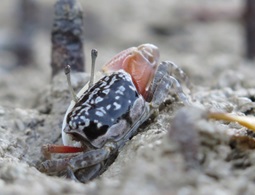
The types of bacteria living in and around fiddler crab burrows vary widely between mangroves, but their functional activities are remarkably similar.
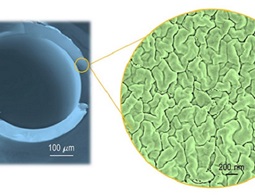
Environmentally friendly method for making membranes adds greener options for processing industrial waste.

Unravelling the genes behind salt tolerance in crop plants is made easier using the latest sequencing and phenotyping technologies.
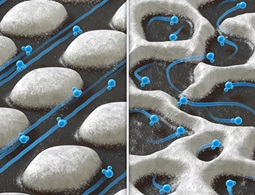
Self-assembled channels in a polymer membrane could greatly enhance extraction of water from gases.
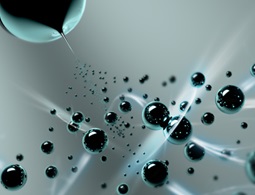
Electrosprays of water cannot reliably probe the air-water interface.
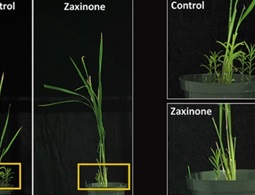
A metabolic compound that regulates growth of rice plants and limits witchweed infestation could boost crop yields.
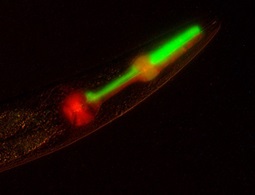
Laboratory model breaks laws of heredity, opening up new research possibilities in genetics and synthetic biology.
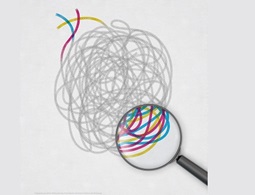
Recreating the human mind’s ability to infer patterns and relationships from complex events could lead to a universal model of artificial intelligence.

Computer model learns to identify Twitter users’ evolving interests by analyzing their Tweets.
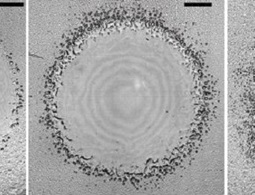
Rapid-fire photography reveals how even a nanoscale amount of surface roughness can unleash microbubbles that may interfere with coating technology.
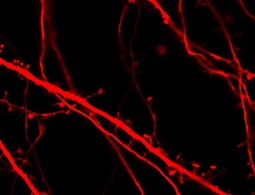
Study illustrates the links between brain energy metabolism and neuronal activity.
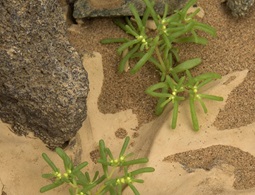
Desert bacteria protect food crops from salt toxicity.
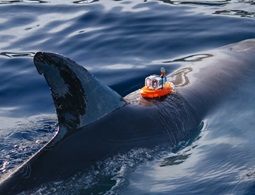
Laser-induced graphene formation creates tailor-made sensors for monitoring ocean creatures and ecosystems.
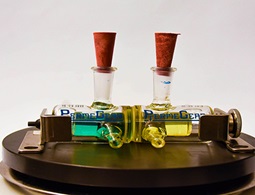
Covalent organic crystal networks generate high-selectivity and high-flux membranes for organic solvent filtration.
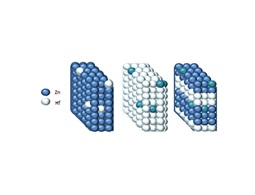
Small tweaks in component ratios generate electronically different layers from the same material to create transparent transistors.
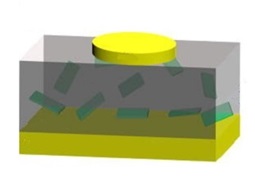
Combining a polymer and microparticles enables a new type of capacitor that could mimic the way the brain processes information.
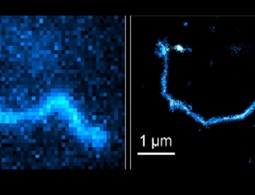
A Nobel-winning method for observing single molecules in action provides the basis for unprecedented insights into polymer chain dynamics.
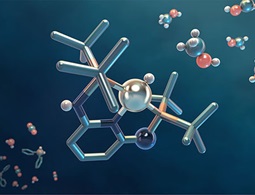
Hydrogen-powered cars and recycling CO2 are just two of the myriad of applications that could spring from catalysts based on a new ligand platform.