

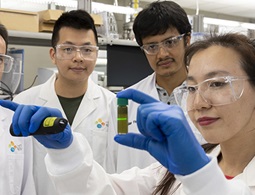
A flaky option boosts organic solar cells
Tungsten disulfide helps to channel charge in flexible photovoltaics.
Tungsten disulfide helps to channel charge in flexible photovoltaics.
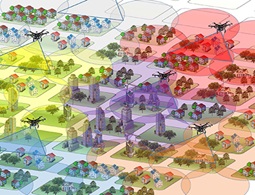
Hovering airborne vehicles could connect smart sensors to the internet of things.
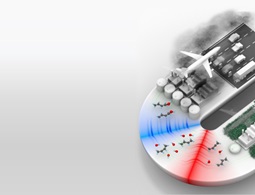
Studying the wake of reflected shockwaves reveals the cascade of chemical reactions involved in combustion processes.

Better prediction of extreme winds at sparsely observed locations could help optimize the design of wind farms.
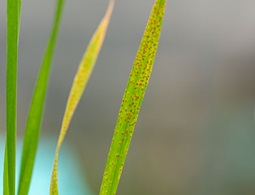
Identifying genes that confer resistance to leaf rust infections could help generate durably resistant cereal crops.
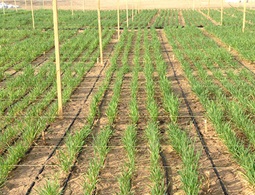
Factors influencing the tolerance of barley to saline soils have been uncovered using an advanced robust statistical technique.
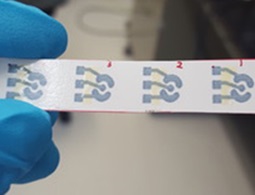
What do an electrical engineer, an organic chemist, a materials scientist and a cell biologist all have in common? They invent and improve applications at the interface of biology and electronics.

Plant scientist Salim Al-Babili and his team are working across many fronts to save sub-Saharan African cereal crops from a menacing weed.
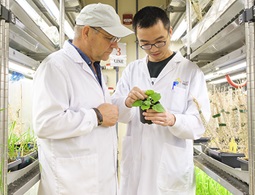
Discovery of signaling intermediary could lead to more pest-resistant crops.
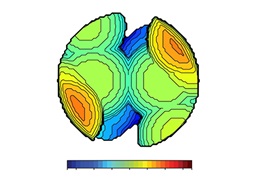
Mapping the three-dimensional structure of catalytic centers helps to design new and improved catalysts.
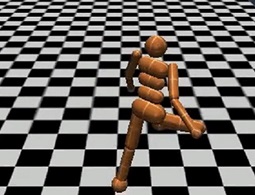
New methods for training machine learning models are quicker and more accurate than current approaches, previously considered state-of-the-art.
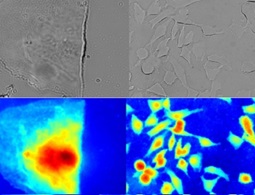
An innovative optical component and a reconstruction algorithm provide more detailed images.
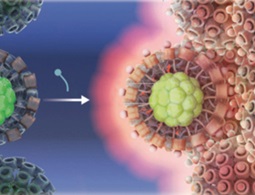
Large cylindrical ligands increase stability and enhance light emission of silver nanoclusters.
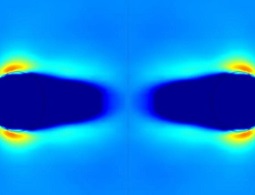
Ultrapure solvents prove there is more than meets the eye when oil and water mix.
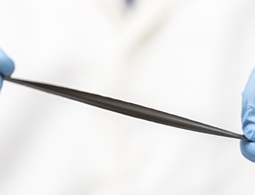
A magnetic skin that is safe and comfortable to wear could open the door to a wide range of wireless, remotely controlled applications.
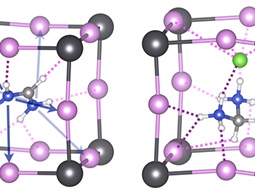
Solar perovskite materials could be spiked with organic cation dopants to suppress decomposition and degradation.
Catalyst switch strategy is the key step in the production of a four-component crystalline tetrablock quarterpolymer.
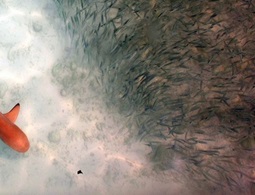
No evidence of infection found in the bacterial community around shark wounds.
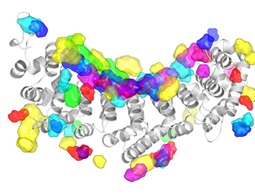
A deep learning tool could help in structure-based drug discovery.
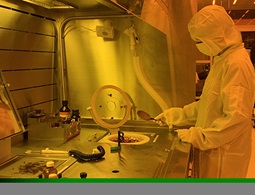
Asrar Damdam is setting up her own biotech company in Silicon Valley while pursuing a Ph.D. at KAUST