

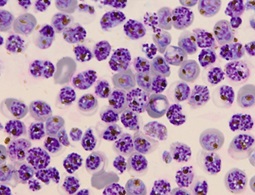
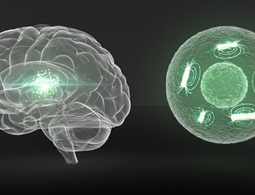
Clocking in with malaria parasites
Discovery of a malaria parasite’s internal clock could lead to new treatment strategies
Discovery of a malaria parasite’s internal clock could lead to new treatment strategies

Extreme weather patterns and regions at risk of flooding could be easier to spot using a new statistical model for large spatial datasets.
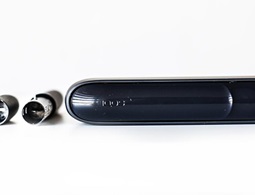
A more sensitive technique shows a cigarette alternative seems to emit more chemicals than manufacturer testing had found.

Understanding how storms unleash more rain over cities in the desert could improve water security in Saudi Arabia.
By training a search agent to make smarter exploratory decisions, relational data can be classified more accurately and efficiently.
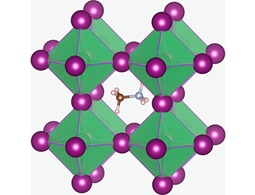
Solar cells based on single-crystal perovskite films hit a new efficiency record of 21.9 percent.

Predictions reveal how pressure and temperature fluctuations in engine cylinders can suppress damaging fuel combustion events.
Customizable magnetic iron nanowires pinpoint and track the movements of target cells.
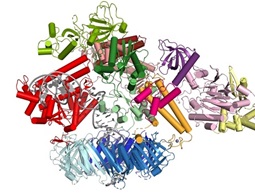
Structural details of an enzyme complex shed light on DNA replication.

A study of marine Halobates species highlights how their waterproofing techniques, size and acceleration capability helped them colonize the ocean.
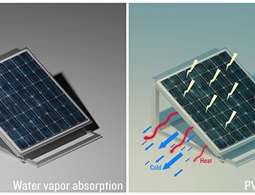
Polymers that absorb water from the atmosphere can make it easier to run photovoltaic devices in hot climates.

First high-intensity, low-voltage red LEDs made from nitride semiconductors.

Optical fibers wrapped around date palm trunks could help detect this tree’s most destructive pest early enough to save it.
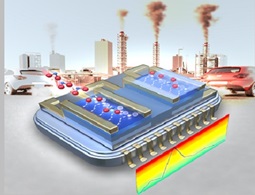
An integrated detector device could form the basis of a distributed air-quality sensor network.
Device controlled solely by voltage paves the way for spintronics with ultralow power consumption.

Reef fish species uniquely respond to climate change, with some more vulnerable than others.

Transforming spatial statistics to capture the skewness and tail of the statistical distribution gives a clearer picture of weather and climate data.

A layer-based approach raises the efficiency of training artificial intelligence models.
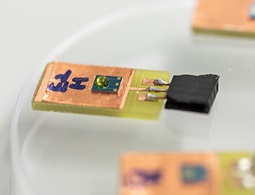
Nanomaterial-based electronic device monitors a key heart health biomarker.
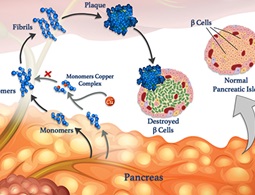
Copper ions could play a key role when peptide folding goes wrong and leads to harmful aggregates.