

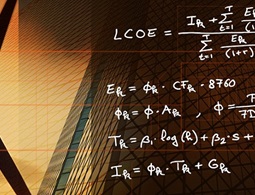
Blueprint may power up KSA’s wind energy future
High-resolution analysis of wind speed across Saudi Arabia can help fast track the expansion of the Kingdom’s emerging world-class wind energy industry.
High-resolution analysis of wind speed across Saudi Arabia can help fast track the expansion of the Kingdom’s emerging world-class wind energy industry.
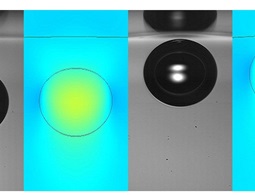
Collisions of tiny air bubbles with water surfaces can reveal fundamental characteristics of foamy mixtures.
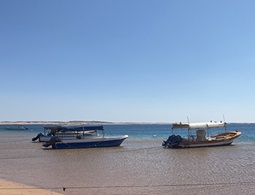
A high-resolution atmospheric assessment for the northern Red Sea coast in Saudi Arabia shows the region has some of the best air quality in the Kingdom.
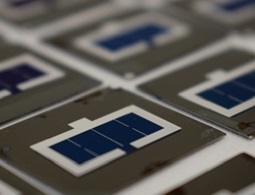
The successful partnering of perovskite and silicon solar cells leads to solar cells with higher efficiencies that can also be mass produced.
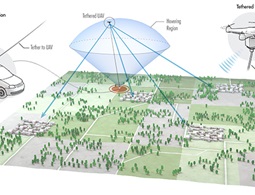
Wire-connected drones may complement or replace the fixed-base stations of cellular communications networks.
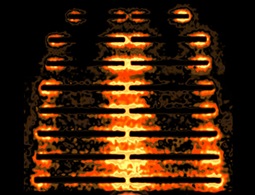
Scientists working in KAUST’s Core Lab facilities are continuing to push the boundaries of what the university’s major instruments can do.
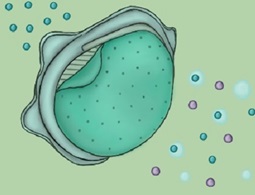
A polyimide membrane with regularly sized and spaced pores turns the N95 respirator into a reusable mask for protection against COVID-19.
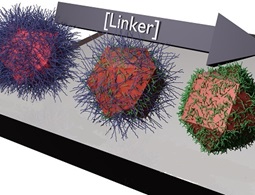
Understanding the optimal process for fabricating coupled nanocrystal solids could help researchers to improve optoelectronics devices.
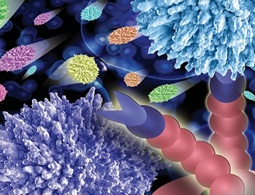
An assay for imaging the physical interactions between multiple cell populations could help cancer research and treatment assessment.
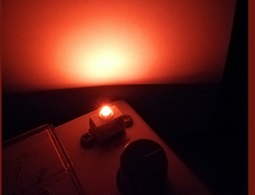
Novel red LEDs are more temperature stable than those made using the conventional semiconductor of choice.
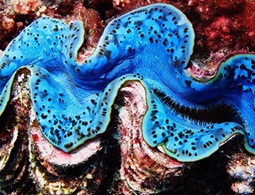
Giant clams manipulate light to assist their symbiotic partner.
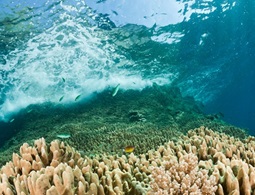
Modeling shows that coral reefs off the east coast of Saudi Arabia play a vital role in protecting the coastal zone.
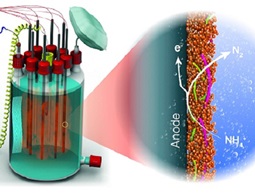
More energy-efficient wastewater treatment may be possible by harnessing anammox bacteria’s surprising ability to "breathe" solid-state matter.
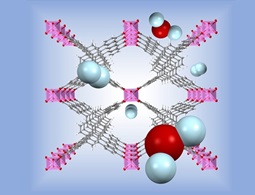
Highly modular metal-organic framework-based materials show great potential for photocatalytic hydrogen production.
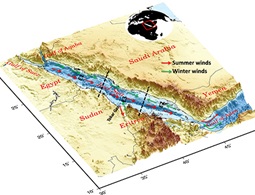
Extra caution is required in developing climate forecasts of enclosed seas.
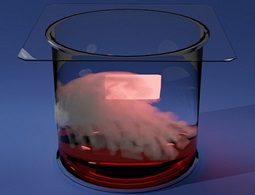
A facile and mild bromine treatment eliminates surface and bulk defects from perovskites to boost the materials’ optoelectronic properties.
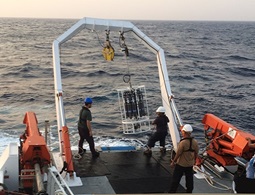
Studies of plankton communities in Red Sea waters provide insights into seasonal variations and dominant control mechanisms.
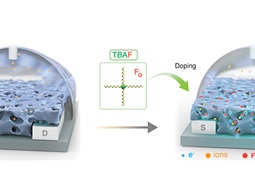
A water-stable dopant enhances and stabilizes the performance of electron-transporting organic electrochemical transistors.

An old branch of mathematics finds a fertile new field of application.
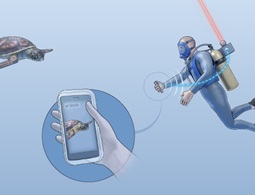
Scuba divers could send sea life shots in real time using an aquatic internet service.