

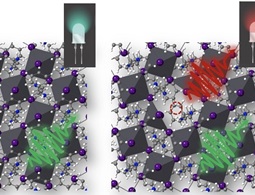
Perovskite LEDs embrace their flaws
Chemical treatments enable low-cost light sources to emit specific colors on demand.
Chemical treatments enable low-cost light sources to emit specific colors on demand.

Stem cell trafficking to the bone marrow is improved by an enzyme manufactured in silkworms and yeast.
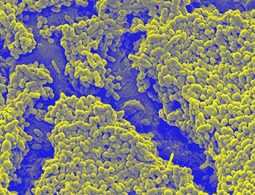
A new electroactive bacterium could help fuel wastewater treatment reactors.

In probably the first observation of its kind, a tricky triggerfish is seen beaching itself before attacking a crab walking along the shoreline.
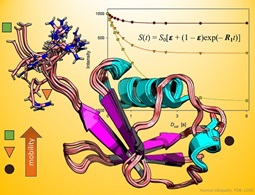
A decades-old technique for probing protein motions proves more accurate than current practices.

A two-dimensional material mimics the human temperature-sensing system.

Analysis of abnormally deep earthquakes may lead to improved seismic forecasting.
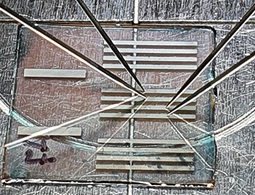
Air-stable coatings can improve the longevity of wearable devices that tap into body heat.
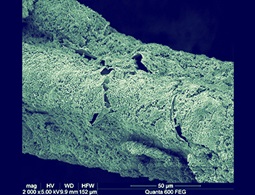
Combining solar-harvesting materials with carbon-dioxide–consuming microbes could be an efficient way to generate clean fuels.

Custom-fabricated lenses make it easy to attach high-tech microscopes directly to cell incubators.

A nutritious millet crop grown mainly in West Africa could be genetically improved for large-scale agriculture in Saudi Arabia.

A molecular mimic designed to promote plant growth and limit witchweed infestation shows promise in initial trials.

Prediction of wind speed and direction for up to several hours in advance improves Saudi Arabia’s wind energy potential.
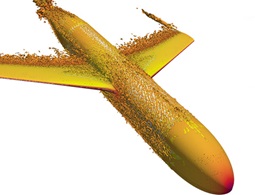
The ability to efficiently simulate the noise generated by wings and propellers promises to accelerate the development of quieter aircraft and turbines.

A multisensory graphene-based skin can sense in extreme environments where other sensors cannot be used.
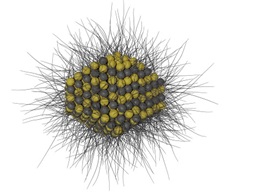
Ultrathin charge-transport layers enable low-cost solar cells to avoid premature degradation from ultraviolet light.
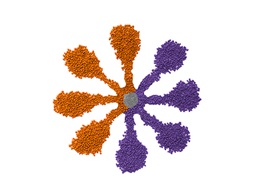
Unique star-shaped polymers have highly tunable properties that will open up a range of new applications.

Multistakeholder collaboration is key for the adoption of molecular approaches that can facilitate accurate, cheaper and faster monitoring of marine ecosystems.

Researchers develop a better understanding of how novel solar cells developed in the lab will operate under real conditions.
Imaging artifacts discovered in high-resolution electron microscopes may impact development of next-generation electronic devices.